Local customsGuangdong
Cantonese Morning Tea
'One pot, two pieces': the Lingnan art of living, in which drinking tea is less about tea than about a social rite.
'One pot, two pieces': the Lingnan art of living, in which drinking tea is less about tea than about a social rite.
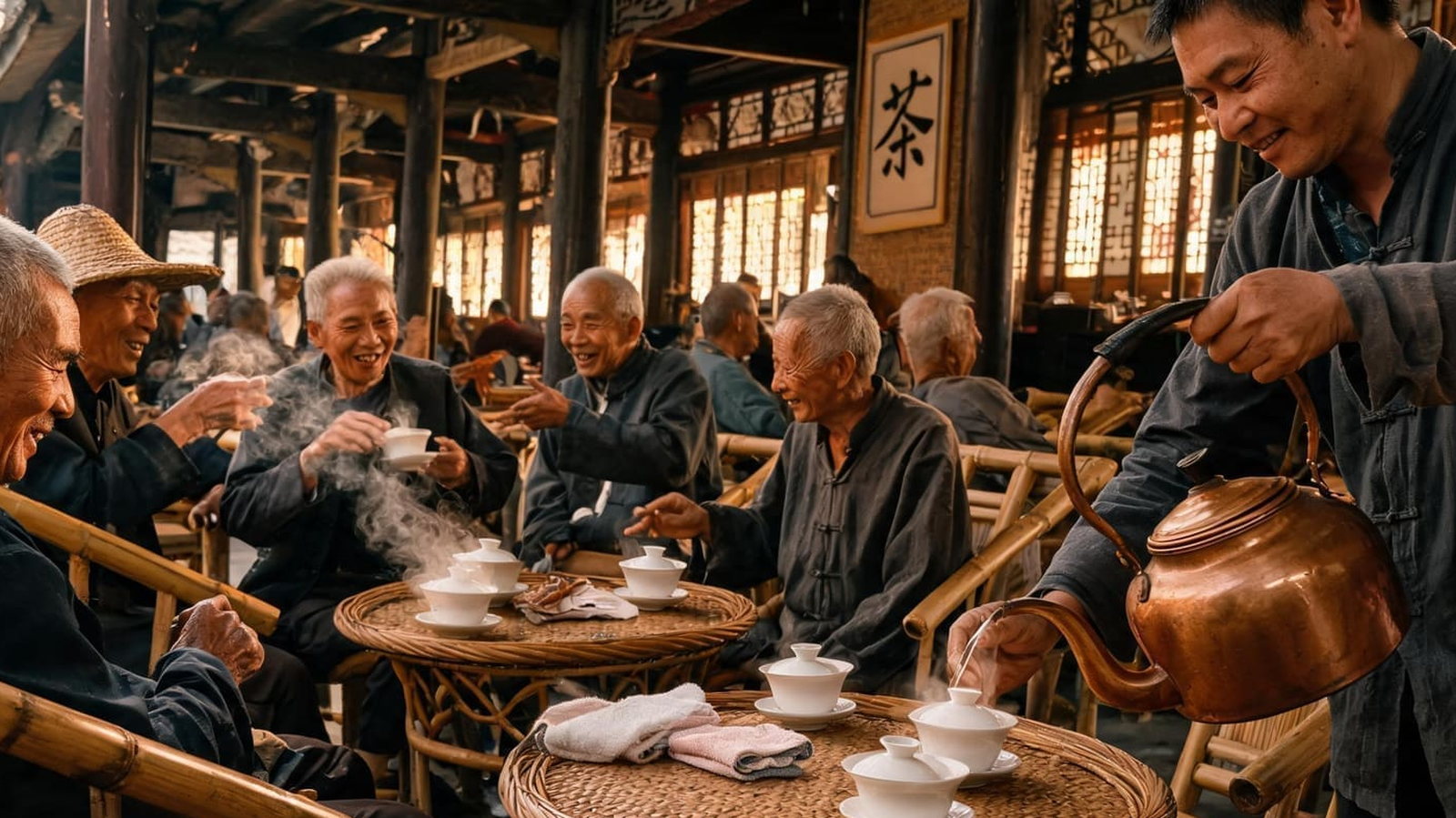
In the teahouse at first light, cups click against saucer rims. An old woman with a birdcage takes her usual seat, the waiter passes between the tables with a long-spout copper kettle, and the bamboo steamers of har gow are lifted one after another, a white cloud of steam in the face. A younger member of the family pours for an elder, and the elder crooks two fingers and taps the table twice.
One pot, two pieces: the teahouse is Guangdong's open-plan living room, where business, family and gossip all rise and fall over a pot of tea.
History · Customs · Cultural meaning
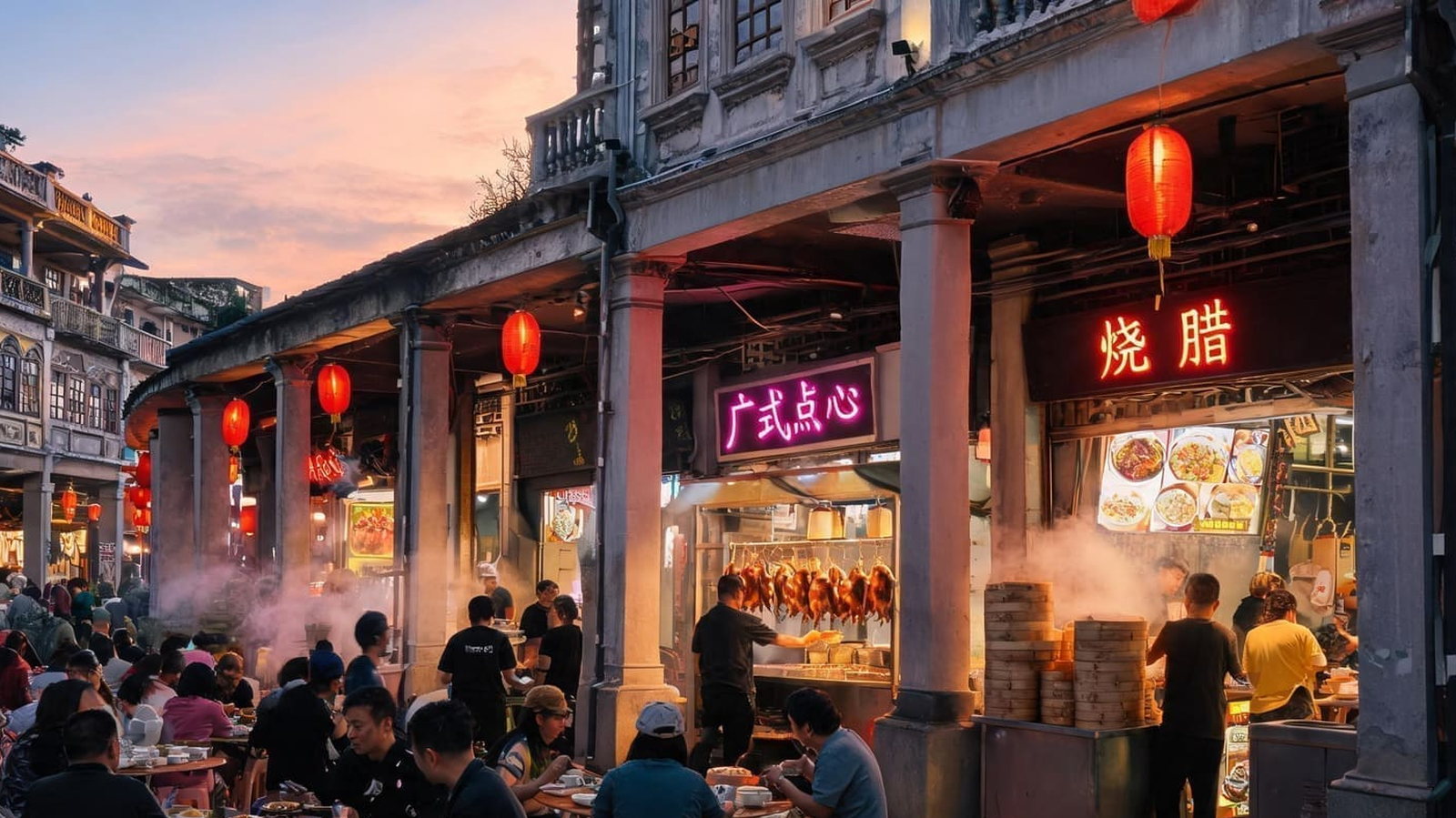 Cantonese Morning Tea · Historical Origins
One continuous line · back to the source
Cantonese morning tea grew out of the 'two-li teahouses' of the Qing — rough tea stalls by the roadside. As Guangzhou became a treaty port, teahouses developed into places combining eating, socialising and business. The Guangzhou teahouse reached its height in the late Qing and early Republic, and a distinctive teahouse culture took shape.
Cantonese Morning Tea · Customs and Practice
Seasonal rites · everyday life
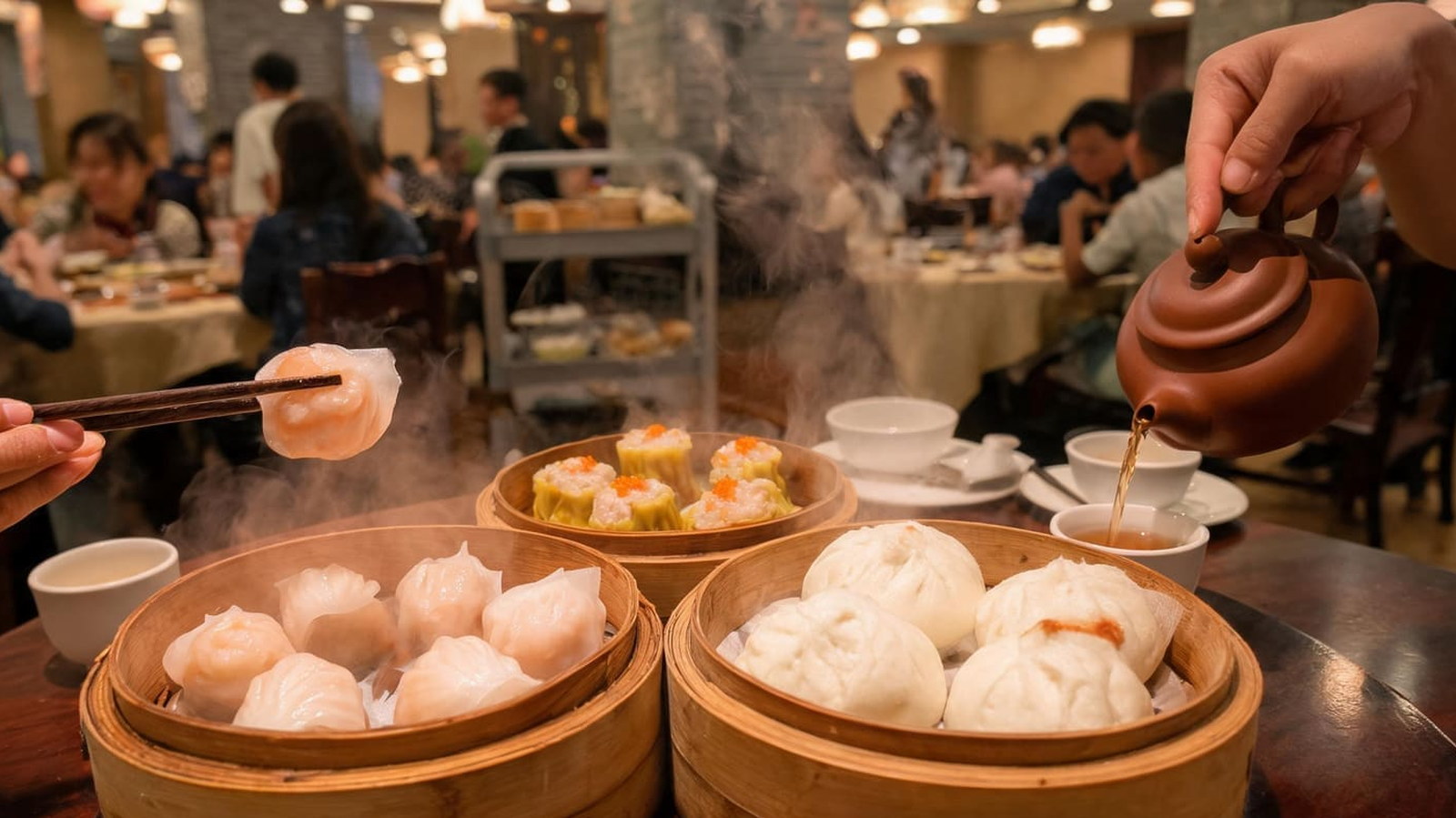
The basic order is 'one pot, two pieces' — a pot of tea with two baskets of dim sum. The classics include har gow, siu mai, char siu bao, rice noodle rolls, chicken feet and egg tarts. Tea drinking has its own etiquette: when an elder pours, the younger taps two fingers on the table in thanks; a teapot lid left half open asks for more water. People read the papers, talk, do business, entirely at ease.
Cantonese Morning Tea · Cultural Significance
What the heart turns toward · handed down through generations
Cantonese morning tea is Lingnan culture in miniature, expressing a philosophy that is practical, fastidious and centred on relationships. 'Let me take you to morning tea' is one of the most important ways of socialising in Guangdong, and its cultural weight goes far beyond the food.
Related customs
← Scroll sideways for more →
Fact-checked October 2026 · every citation traceable
Primary sources are Chinese-language publications, cited for traceability. Bodies without a standard English name are listed by domain.