FestivalXinjiang
Corban Festival
A sacrifice offered, relatives visited, the poor remembered — the most solemn of the year's festivals, also called the Festival of Loyalty and Filial Piety.
A sacrifice offered, relatives visited, the poor remembered — the most solemn of the year's festivals, also called the Festival of Loyalty and Filial Piety.
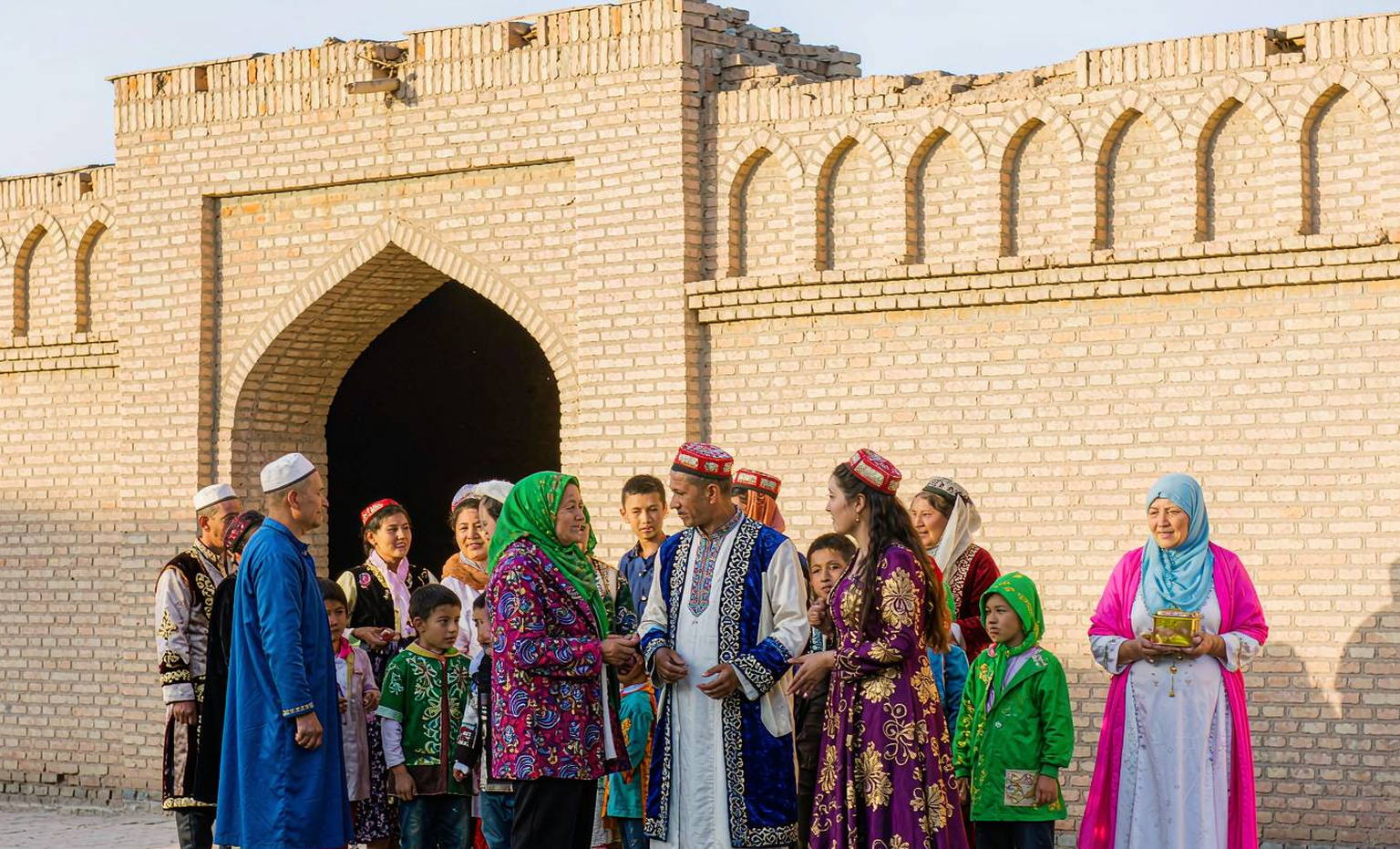
Early on the festival morning the square before the Id Kah Mosque is packed, the chant of the congregational prayer solemn and far-carrying. When it ends, people slaughter their animals and divide the meat: one share to eat, one for relatives and friends, one for those in need. Mutton simmers fragrant on the stove, children in new clothes run through the lanes — generosity and sharing are the strongest taste of the day.
Give away what is most precious, divide it among those who need it most: Corban turns generosity into a rite.
Traditions, echoed by a new generation
Xinjiang's own great reunion festival: congregational prayer, the slaughter, and the whole city fragrant — the atmosphere rivals New Year's Eve and Spring Festival together.
The congregational prayer is solemn and on a remarkable scale — superb material for documentary photography
Boiled mutton, baked samsa and pilaf in turn: a festival for anyone who loves food
Come to understand a culture built on sharing and gratitude; one trip here teaches more than a stack of books
History · Customs · Cultural meaning
 Corban Festival · Origins
One line of descent · tracing the root
Corban, also called the Festival of Sacrifice and known in Arabic as Eid al-Adha, is the most solemn festival of the Hui, Uyghur, Kazakh and other Muslim peoples of China. It falls on the tenth day of the twelfth month of the Islamic calendar, the last day of the hajj.
Its story comes from the tradition of the Prophet Ibrahim, who was willing to offer his beloved son in obedience to God; later generations commemorate that loyalty and submission by slaughtering sheep and cattle as a sacrifice, which is why the festival is also called the Festival of Loyalty and Filial Piety.
Corban Festival · Customs
Seasonal rites · the life of people
On the morning of the festival Muslims bathe, dress in their best and go to the mosque for the congregational prayer. Those with the means then sacrifice an animal — a cow, a sheep or a camel — and divide the meat in three: to eat, to give to relatives and friends, and to give to the poor. Neither the blood nor the meat of the sacrifice may be sold.
Every household entertains guests through the day: pilaf, boiled mutton, sanzi and pastries fill the table, and people visit relatives, sweep ancestral graves and sing and dance, the celebration running for several days.
Corban Festival · Cultural meaning
What the heart turns to · handed down through generations
Corban is built around a rite of sacrifice and sharing, stressing reverence, care for parents and relief for the poor; the threefold division of the meat is a vivid expression of the charitable ethic of Islam.
In Xinjiang, Corban is a regional public holiday alongside the Spring Festival, under the regional rules on holidays for the customary festivals of ethnic minorities, and people of every background exchange greetings — the table and the visits between households are the most everyday testimony to harmony among peoples.
Related customs
← Scroll sideways for more →
Fact-checked October 2026 · every citation traceable
Primary sources are Chinese-language publications, cited for traceability. Bodies without a standard English name are listed by domain.