Folk artsGuizhou
Grand Song of the Dong
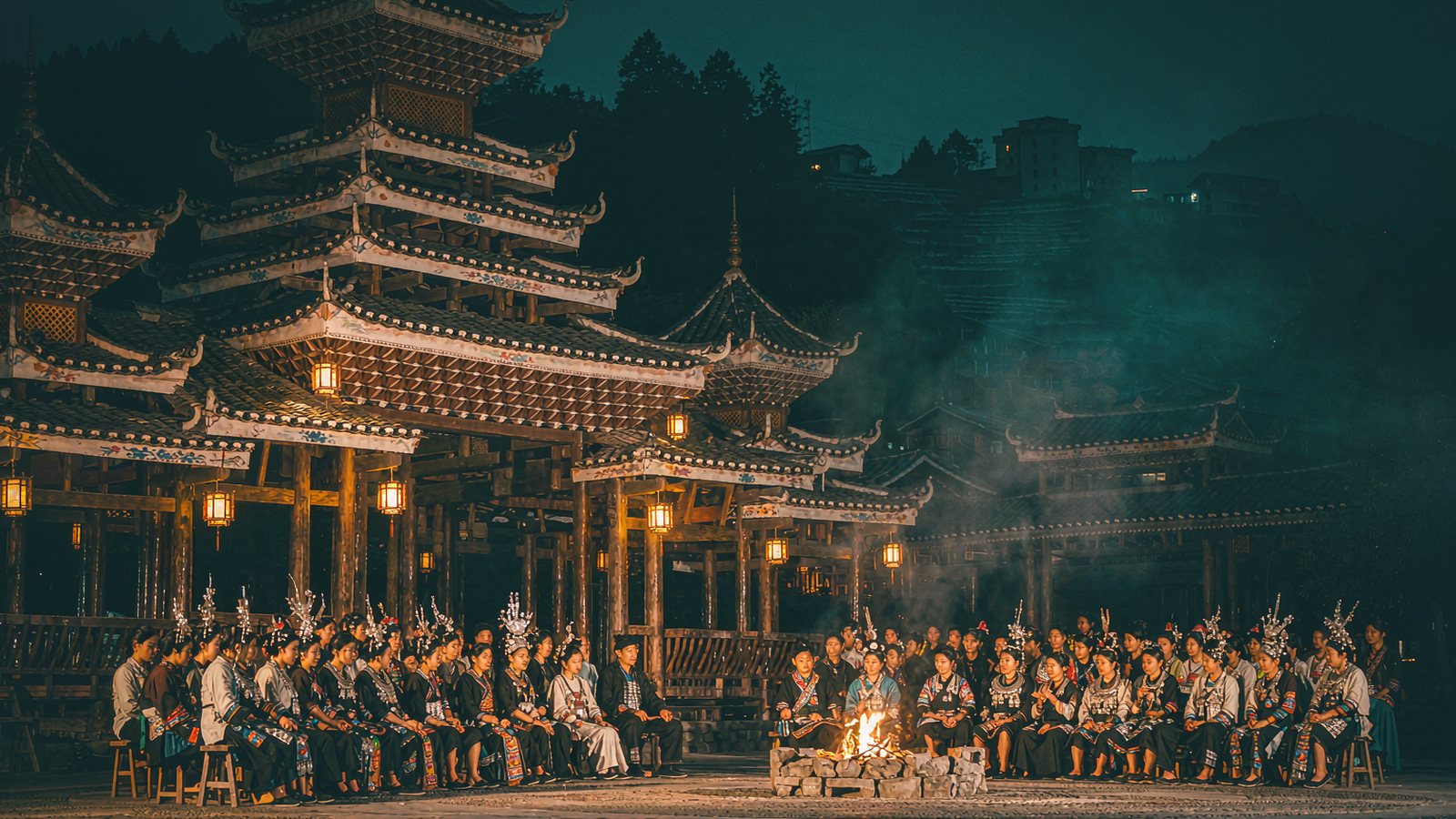
The Dong call it ga lao. In the drum tower there is no conductor and no accompaniment: one high voice leads, a crowd of low voices carries it, and the song climbs the fir columns to the roof.
The Dong call it ga lao. In the drum tower there is no conductor and no accompaniment: one high voice leads, a crowd of low voices carries it, and the song climbs the fir columns to the roof.
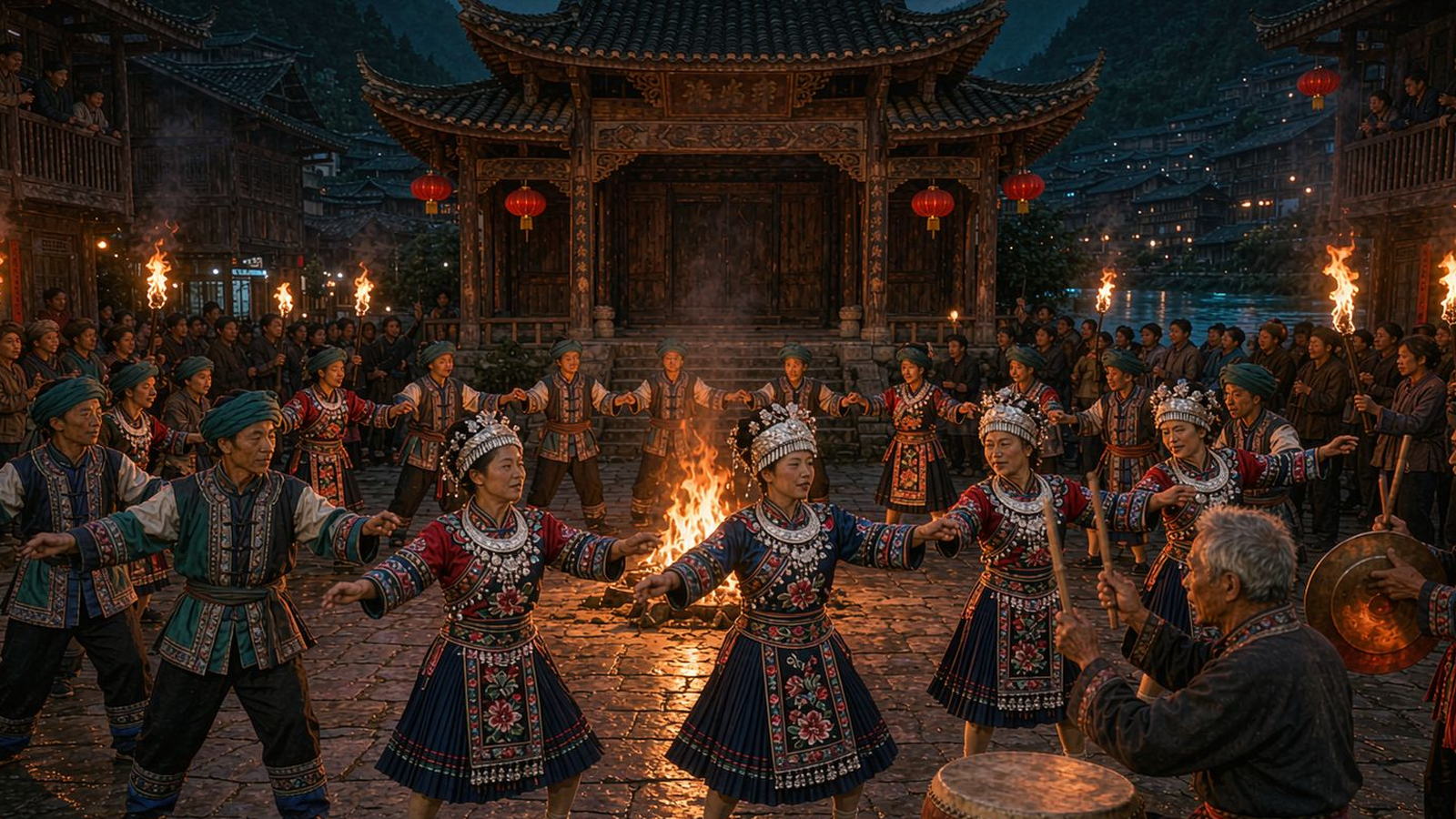
Night settles over a Dong village and the fire pit in the drum tower burns bright. The choir takes its places along the benches; the girls' silver ornaments sway with the melody. One voice lifts, and the low parts spread like river water around your feet — cicadas, running water, wind in the trees, all of them sung into the song.
Rice feeds the body, song feeds the heart. The Dong entrust a lifetime of stories to the singing voice.
Traditions, echoed by a new generation
No score, no instruments — a roomful of people opens their mouths and out comes polyphony. It is a harmony class written into village life.
Nobody reads staves; you learn line by line from a song master, and your ear becomes the score
'Song of the Cicada' folds the insect's whirr into the harmony — the brightest track on repeat
Drum-tower singing duels run all night: here song is courtship, social life and nightlife at once
History · Customs · Cultural meaning
 Grand Song of the Dong · Historical Origins
A thousand years by word of mouth · the name ga lao
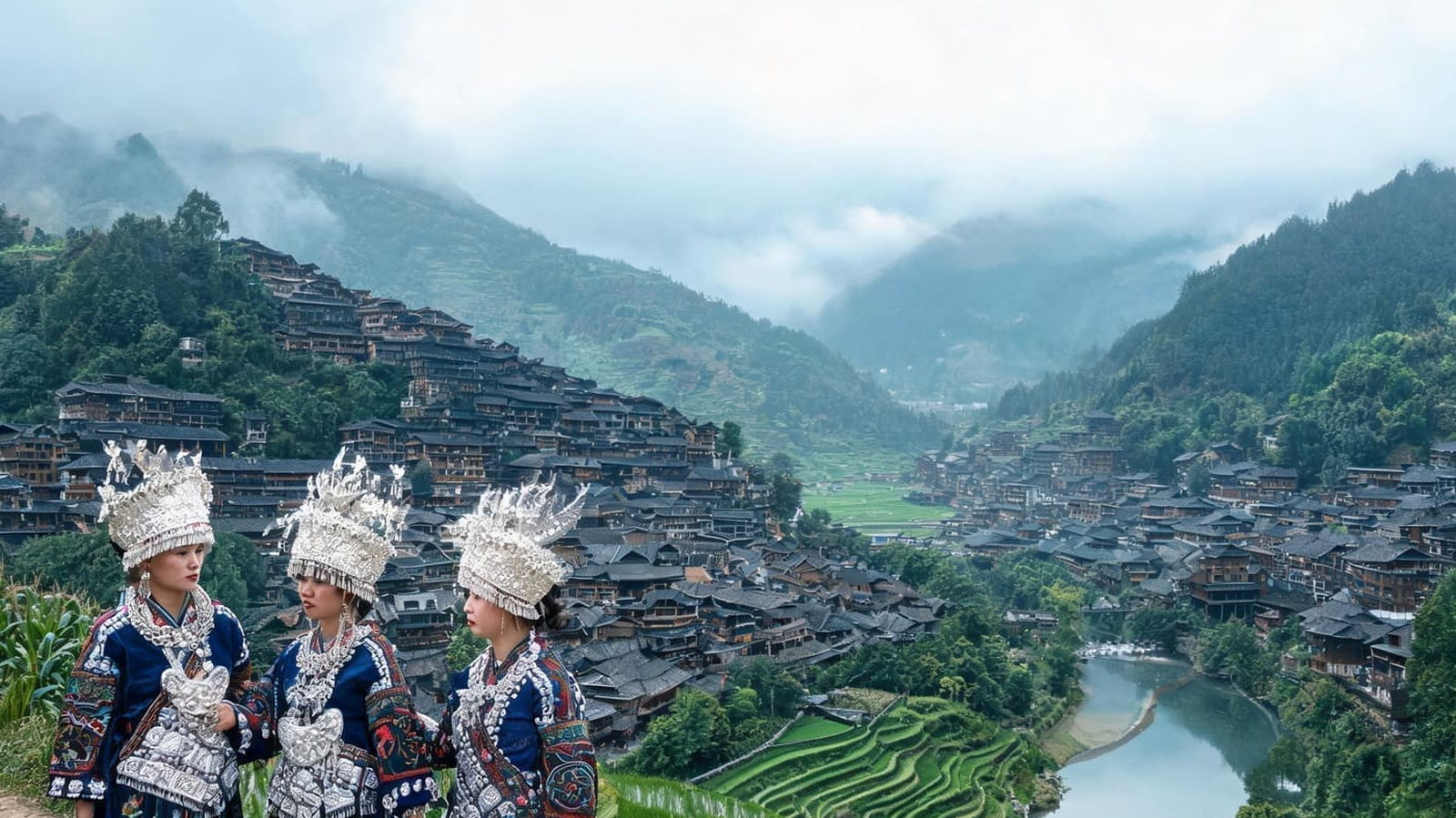
In the Dong language the grand song is ga lao: ga means song, lao means both grand and ancient. This polyphonic choral singing is of great antiquity, and village tradition puts it at more than two and a half thousand years old. In documentary terms it was already well developed by the Song dynasty: Lu You's Notes from the Old School Hut describes Dong communities visiting one another in groups and singing, and the Ming-dynasty Guang Lu records in his Chiya the scene of Dong singers with eyes closed in long song. The Dong had no writing of their own, so history, ritual and the rules of conduct were taught line by line by song masters and carried generation by generation by the choirs. Where the song is, memory is.
Grand Song of the Dong · Customs and Practice
Answering songs in the drum tower · many low, one high
A grand song needs a choir, and the smallest unit is three: one voice takes the high lead, the rest sing low to support it — the rule of many low, one high, with no conductor and no instruments. Choirs are formed by clan, by sex and by generation; song masters teach in the slack season and go on until the group is ready to sing in the drum tower. At Dong New Year, the New Rice Festival and Spring Festival, the men's choir of one village and the women's choir of another face each other across the tower and often sing until dawn. Signature pieces include 'Song of the Cicada', 'How Beautiful the Great Mountains Are' and 'Song of the Squirrel'; in the sound-imitation songs the singers take over from instruments, copying cicadas, streams and birds.
Grand Song of the Dong · Cultural Significance
Rice feeds the body · song feeds the heart
The Dong say that rice feeds the body and song feeds the heart. Those who know many songs are the most respected people in the village; children join choirs early and elders sing into their eighties and nineties. In Xiaohuang village, Congjiang county, a community of some four thousand people supports more than a hundred choirs. In 1986 the grand song travelled to the Paris Autumn Festival and was described as music glittering like a spring, a melody skimming the edge of an ancient dream. It was inscribed on the first national list of intangible cultural heritage in 2006 (No. Ⅱ-28) and on the UNESCO Representative List of the Intangible Cultural Heritage of Humanity in 2009.
To admire and to use · Tradition in everyday life
Experience
Spend a night in a timber house at Zhaoxing or Xiaohuang; if a festival falls right, hear an all-night singing duel in the drum tower.
Case: Spend a night in a timber house at Zhaoxing or Xiaohuang; if a festival falls right, hear an all-night singing duel in the drum tower.
 Craft
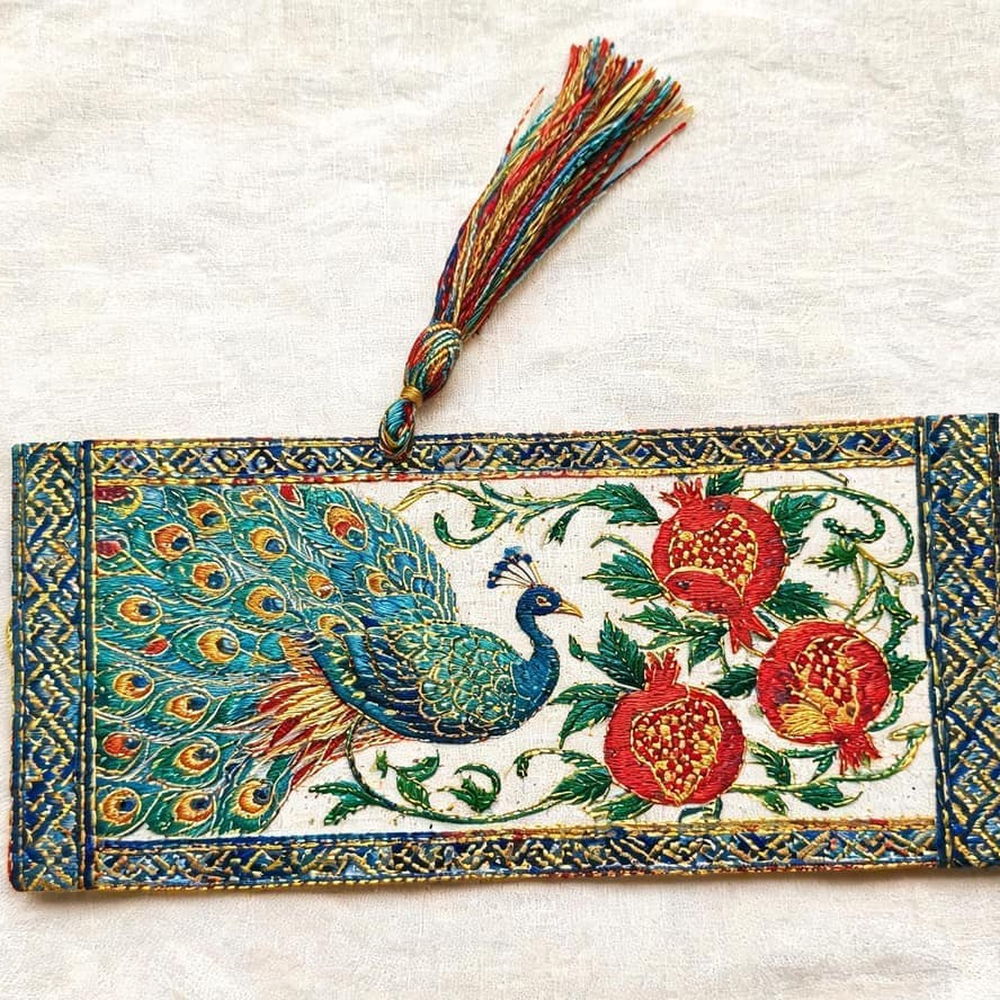
Geometric weaves worked into tote bags and coasters — drum-tower patterns you can carry.
Case: Geometric weaves worked into tote bags and coasters — drum-tower patterns you can carry.
 Food
When the singing runs past midnight, a hot cup by the fire pit is what keeps you awake.
Case: When the singing runs past midnight, a hot cup by the fire pit is what keeps you awake.
← Scroll sideways for more →
Links lead to third-party marketplaces. This site has no promotional relationship with them.
Travel proposals · Meet the custom in its real setting
← Scroll sideways for more →
Related customs
← Scroll sideways for more →
Fact-checked October 2026 · every citation traceable
Primary sources are Chinese-language publications, cited for traceability. Bodies without a standard English name are listed by domain.