FestivalFuzhou, Fujian
Youshen in Fujian
Through the first lunar month the firecrackers in the villages of Changle, Fuzhou, do not stop: youshen is the most boisterous spring rite on the Fujian coast.
Through the first lunar month the firecrackers in the villages of Changle, Fuzhou, do not stop: youshen is the most boisterous spring rite on the Fujian coast.
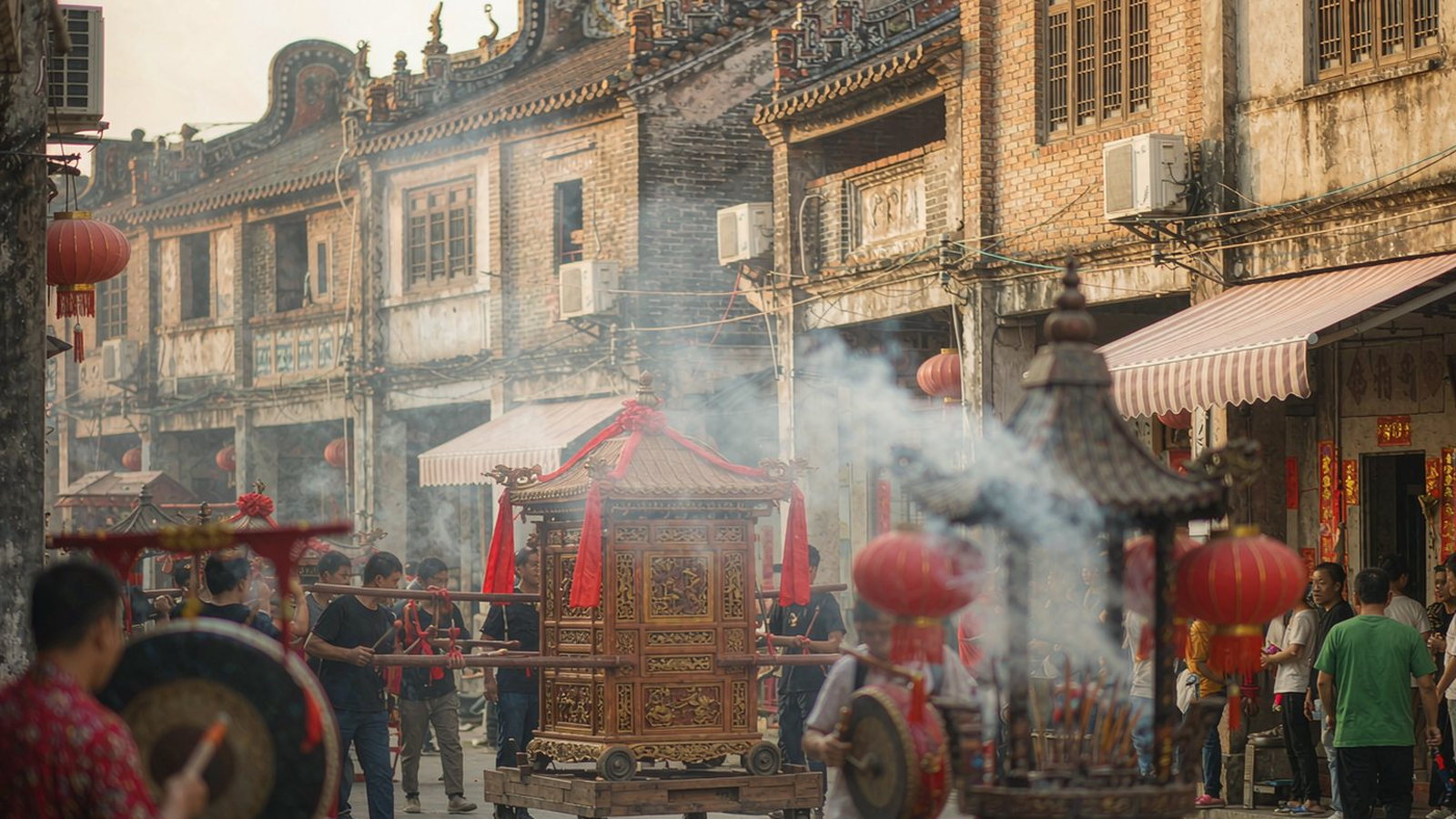
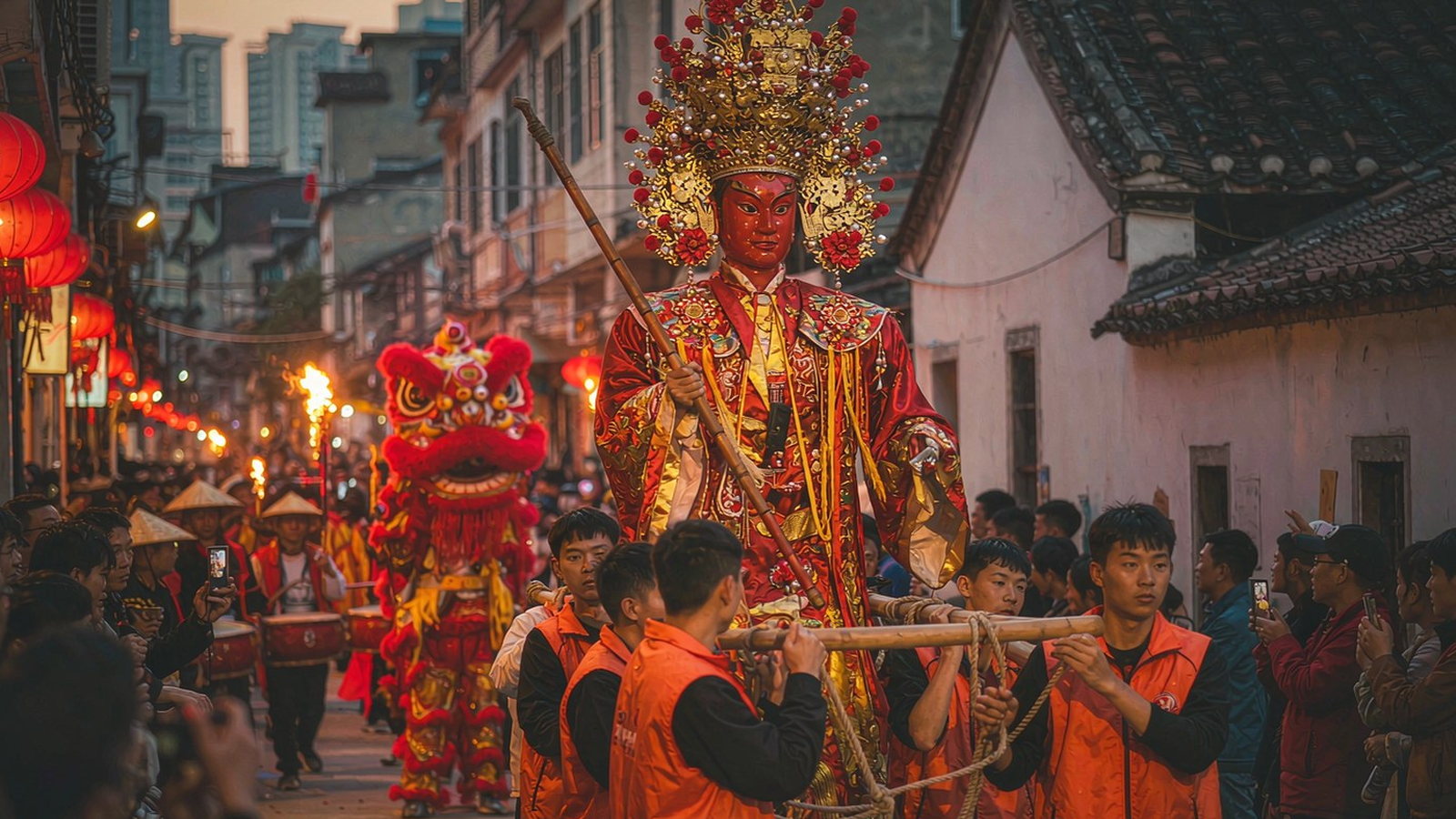
Before daylight the ground in front of Yingwu Temple is already paved with red firecracker paper. Hundreds of tagu divine generals rise one after another in the morning mist; the village head walks ahead with a bamboo switch, and the drums roll from the east end of the village to the west. Households set their incense tables out at the mouth of the lanes and watch the generals sway left and right as their palanquins process — the gods are inspecting their parish, and this is the moment the village pushes the New Year to its height.
The gods patrol the parish, the drums clear the way: the first month in Fujian is carried on men's shoulders.
Traditions, echoed by a new generation
Short videos of the 'prince generals' broke this old custom out of its region overnight; in person it is more overwhelming than on a screen.
Hundreds of tagu generals on procession at once: a moving exhibition of deity figures
Village head, horse groom and drum-and-clapper band each have their part, and every role is a performance
Young people now design new generals and carry the tagu themselves — the tradition turns fashionable in their hands
History · Customs · Cultural meaning
 Youshen in Fujian · Origins
One line of descent · tracing the root
Youshen, also called welcoming the gods, is the great folk observance of the Fujian coast between the Spring Festival and the Lantern Festival. In the Fuzhou area it was anciently called yashen: each village or parish (jing) brought the chief deity out of the temple to tour the neighbourhood, praying for good weather and peace within the parish.
The procession at Houfu village in Tantou, Changle, is more than four hundred years old. Legend has it that a flood in the late Ming destroyed Yingwu Temple and the image of the martyred prince Jiu Shi Gong floated to the village entrance, where the people drew it out and built a temple for it; the custom has continued ever since and is now among the most influential New Year observances in Houfu and in Changle at large. In 2008 the Lantern Festival, including the Mawei–Matsu lantern custom, was inscribed on the second national list of intangible cultural heritage, a tradition that includes the 'sea god' lanterns on both banks of the Min River mouth.
Folk religion runs strong in Fujian: almost every coastal village has a temple and every parish its god. Youshen knits these scattered devotions into a moving net, and ties the feelings of all the village folk into a single procession.
Youshen in Fujian · Customs
Seasonal rites · the life of people
The core of youshen is the parish patrol. The column sets out from the temple with the drum band ahead, the village head carrying a bamboo switch and a wine pot to lead the way, then the tagu generals of every kind, and last the palanquin of the chief god. A tagu is a large hollow figure built on a bamboo frame; a man climbs inside and carries it, which is called 'shouldering the general'. One can weigh seventy or eighty jin, and four or five men take turns.
Houfu holds its youshen on the tenth and twenty-sixth of the first lunar month, covering a dozen natural villages, the column stretching for li and often running from dawn into the small hours. Villagers set out incense tables at the lane mouths and light firecrackers to receive the gods, and when the procession ends the images are carried back to the temple and re-enthroned.
Alongside the tagu come dragon and lion dances, drum-and-clapper bands, the Eight Household Generals, stilt walking and shoulder puppet theatre. In recent years some villages have invited Chaoshan Yingge dance teams, making the old New Year custom a meeting point of many folk arts.
Youshen in Fujian · Cultural meaning
What the heart turns to · handed down through generations
For these emigrant coastal villages youshen was never only about blessing. Those who work away come home for the day, the young men of the village shoulder the same tagu, the old press their palms together before the incense table, children run behind the column — the boundaries of the village and the belonging of the clan are confirmed again in the procession.
Youshen is also the training ground for craft. The bamboo frames of the tagu, the lacquered heads, the embroidered divine robes all demand years of a craftsman's work; the drum bands, lion dances and Yingge dance survive only because they are performed once a year.
At the Spring Festival of 2024 the Houfu procession went viral on social media, and new generals such as 'Prince Zhang' and 'Prince Zhao' were redesigned by young people to suit present-day taste. The old rite has not changed; what has changed is that those who take part are younger every year.
To admire and to use · Tradition in everyday life
 Craft
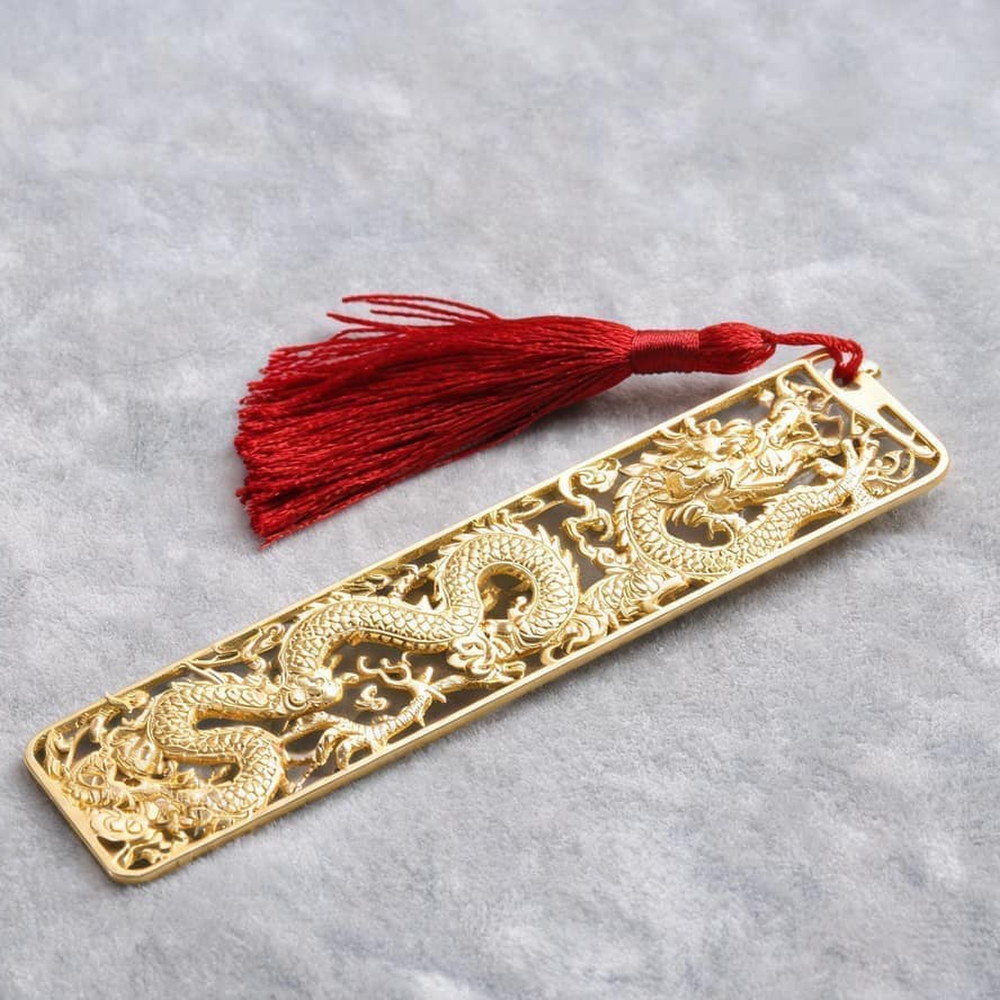
The same lacquer craft as the tagu heads, shrunk to fit between the pages
Case: Bodiless lacquer is light yet tough, one of the three treasures of Fuzhou
 Craft
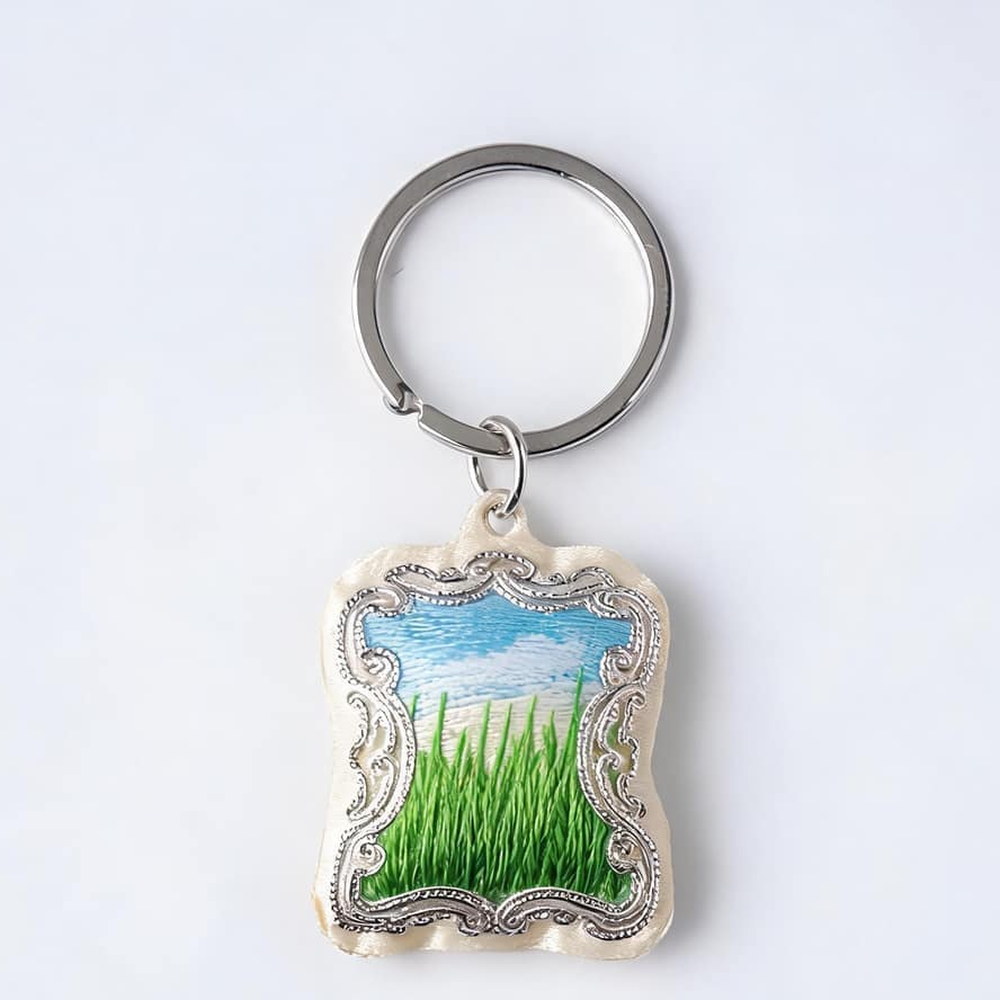
A general from the parish patrol made into a small charm for your bag.
Case: The tagu silhouette as a keyring: a souvenir and a fashion item at once
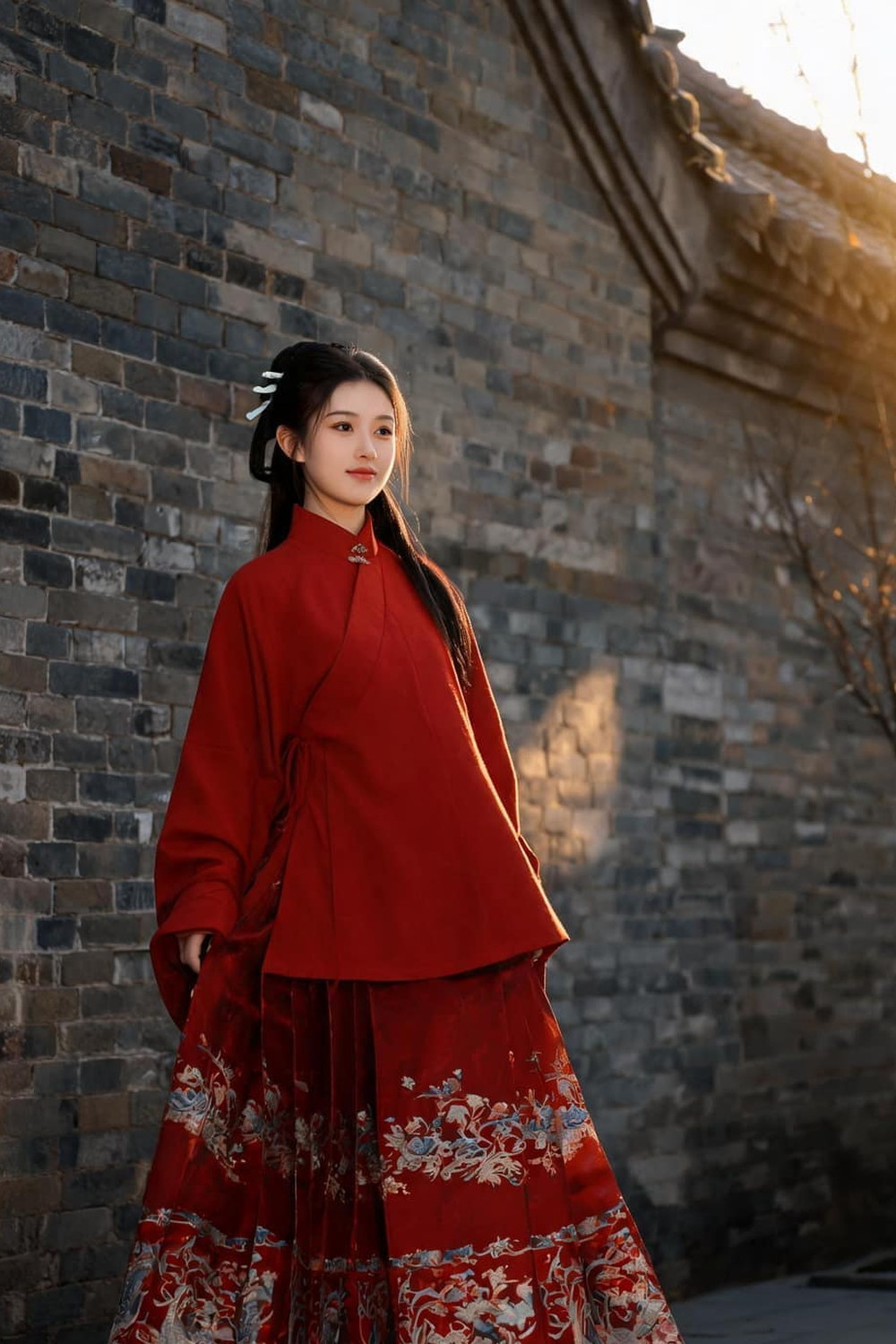 Costume
Cinnabar red with woven gold: it fits right in among the procession
Case: Red skirt, divine robes and red lanterns all in one colour
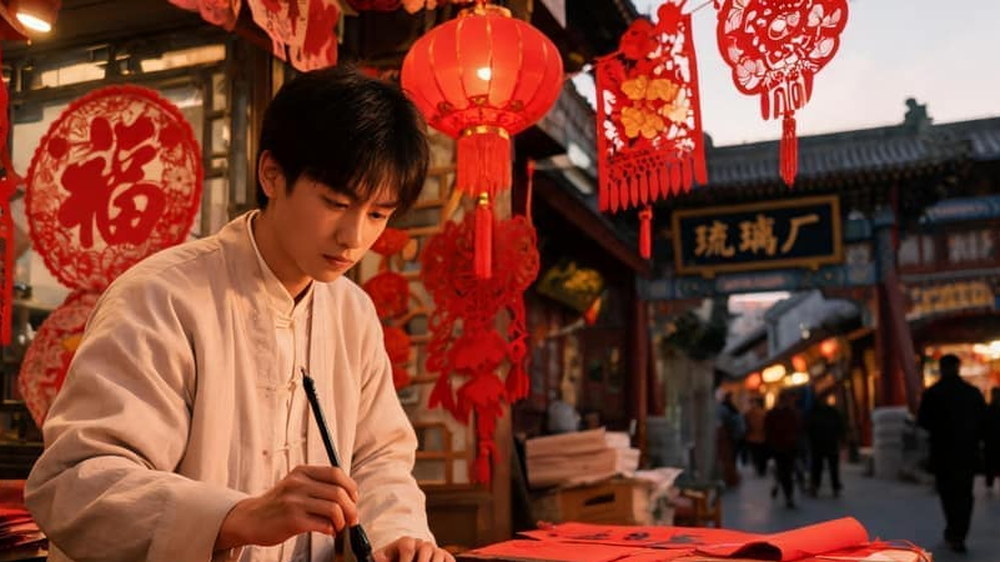 Experience
Couplets and fu characters before the procession, until the doorheads are full of New Year
Case: Grind the ink, lay out the paper and paste up a fu you wrote yourself
 Home
After the procession, sit down and brew a pot of Tieguanyin
Case: In a Fuzhou house tea is the standard between stages of the procession
← Scroll sideways for more →
Links lead to third-party marketplaces. This site has no promotional relationship with them.
Travel proposals · Meet the custom in its real setting
← Scroll sideways for more →
Related customs
← Scroll sideways for more →
Fact-checked October 2026 · every citation traceable
Primary sources are Chinese-language publications, cited for traceability. Bodies without a standard English name are listed by domain.