Folk artsLiaoning
Haicheng Stilt Yangge
A dance on wooden stilts more than two feet tall: the art on wooden legs of southern Liaoning, where danger and comedy arrive together.
A dance on wooden stilts more than two feet tall: the art on wooden legs of southern Liaoning, where danger and comedy arrive together.
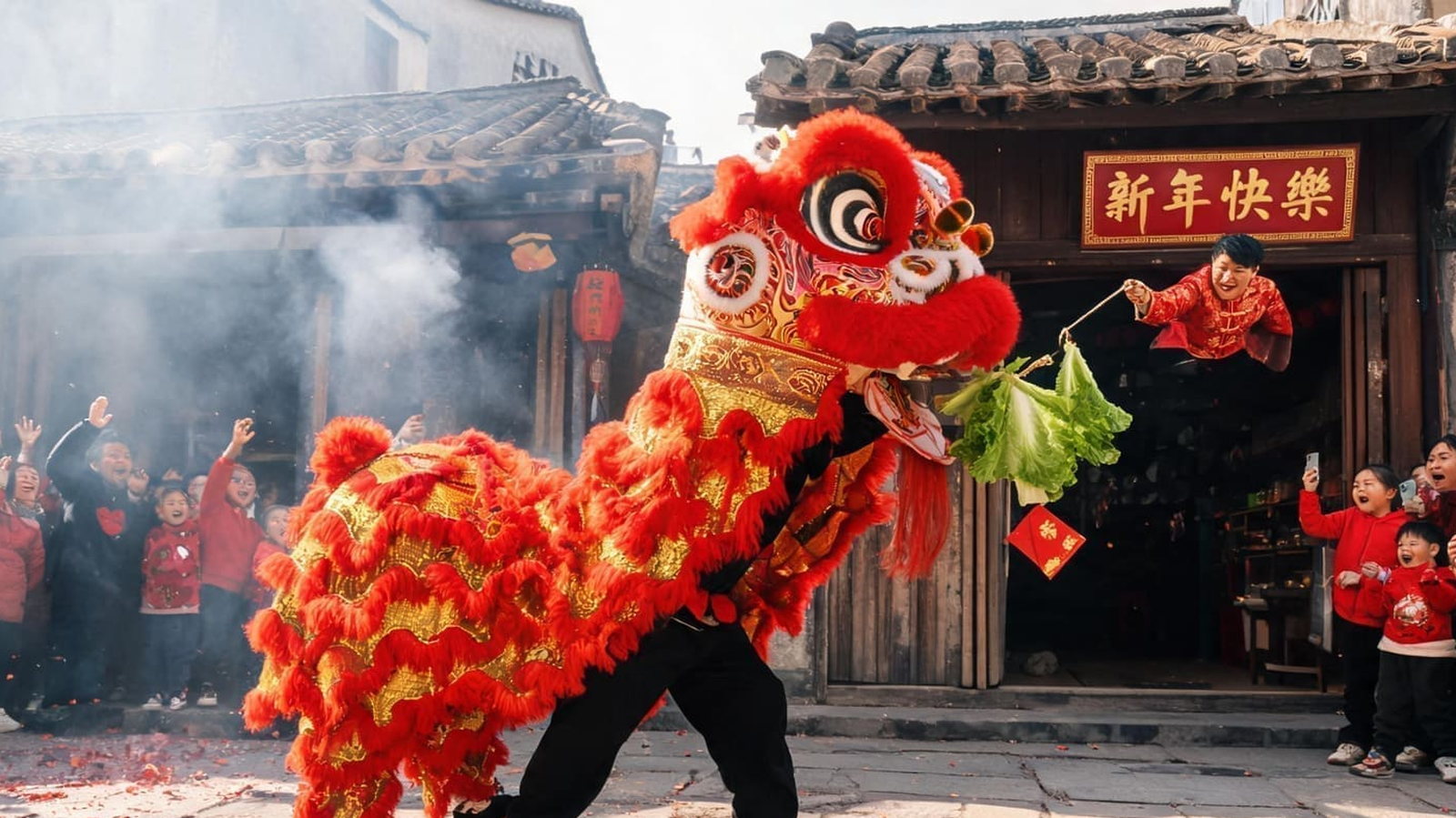
To the sound of the suona, the upper and lower roles come surging in on stilts two feet and more above the ground, stepping to the drum. The pretty maiden whirls her handkerchief, the clown pulls faces, and then suddenly a full split, a sparrowhawk's turn in the air — on wooden legs they move as if on flat ground. The street draws a collective breath, and then the cheers break like thunder.
Two feet of wood, a whole grade higher in skill: on stilts, the Chinese twist ordinary days into something that steams.
Traditions, echoed by a new generation
You can do the splits and a somersault on stilts two feet high? This limited-edition southern Liaoning street dance is aimed at anyone who doubts it.
High-difficulty stunts and comic acting in the same body: thrills and punchlines take turns
The characters are painted and costumed to exaggeration — every frame is ready-made meme material
Temple fairs and Spring Festival, one after another: see one show and you know what northeastern warmth means
History · Customs · Cultural meaning
Haicheng Stilt Yangge · Historical Origins
One continuous line · back to the source
Haicheng stilt yangge is current around Haicheng in Liaoning. It took shape in the Qing, drawing on northeastern great yangge, southern Liaoning opera and acrobatics, and it is often called the oriental ballet on wooden poles: the representative form of southern Liaoning stilt dancing.
In 2006 stilt walking — the Haicheng variety — was approved by the State Council for the first national list of intangible cultural heritage (No. Ⅲ-9), and it has appeared repeatedly on stages at home and abroad.
Haicheng Stilt Yangge · Customs and Practice
Seasonal ritual · everyday life
The performers walk on stilts two to three feet high or taller, divided into upper roles, the female parts, and lower roles, the male parts, accompanied by suona, big drum and big gong. The corps moving through the streets is called treading the street; once it reaches the open ground it takes the ground, and the business begins — large and small set pieces, teasing scenes, drum poses, human pyramids, flying trapeze work, one after another.
The style is summed up as steady but saucy, saucy but smart: the prettiness of the upper roles plays against the buffoonery of the lower ones, and the clown improvises gags on the spot, with no distance at all between performers and crowd.
Haicheng Stilt Yangge · Cultural Significance
Where the heart points · carried down the generations
Haicheng stilts carry the festival memory and the collective temperament of farming society in southern Liaoning: the optimism that twists hard years into a rousing song, which is the brightest colour in northeastern culture.
Today the troupe works temple fairs and international exchanges, and a new generation of inheritors keeps somersaulting on wooden legs, taking this dangerous romance higher every year.
Related customs
← Scroll sideways for more →
Fact-checked October 2026 · every citation traceable
Primary sources are Chinese-language publications, cited for traceability. Bodies without a standard English name are listed by domain.