Folk artsGuangdong and Guangxi
Lion Dance (Southern Style)
The signature folk dance of Lingnan, folding martial arts, dance and music into one.
The signature folk dance of Lingnan, folding martial arts, dance and music into one.
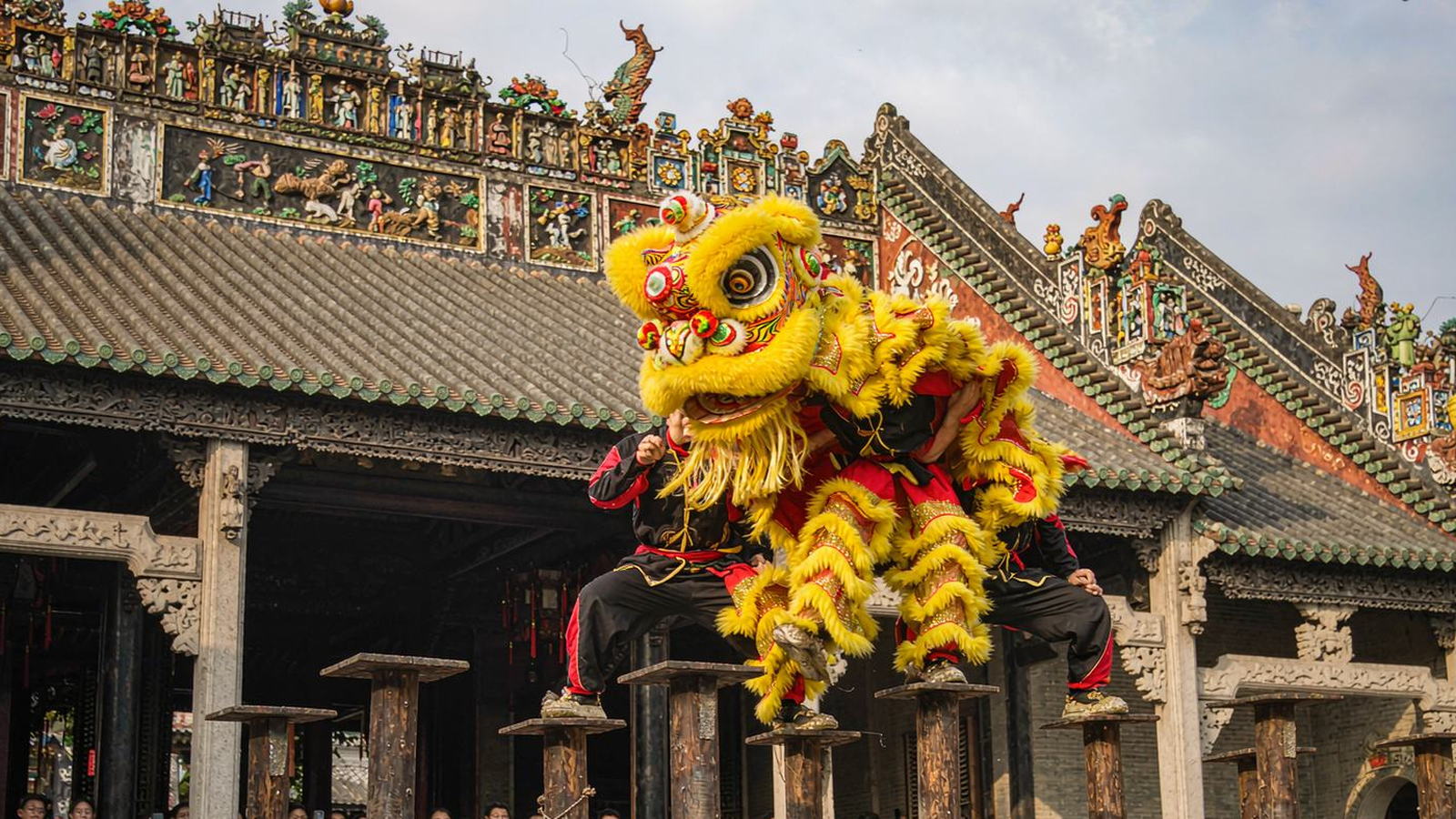
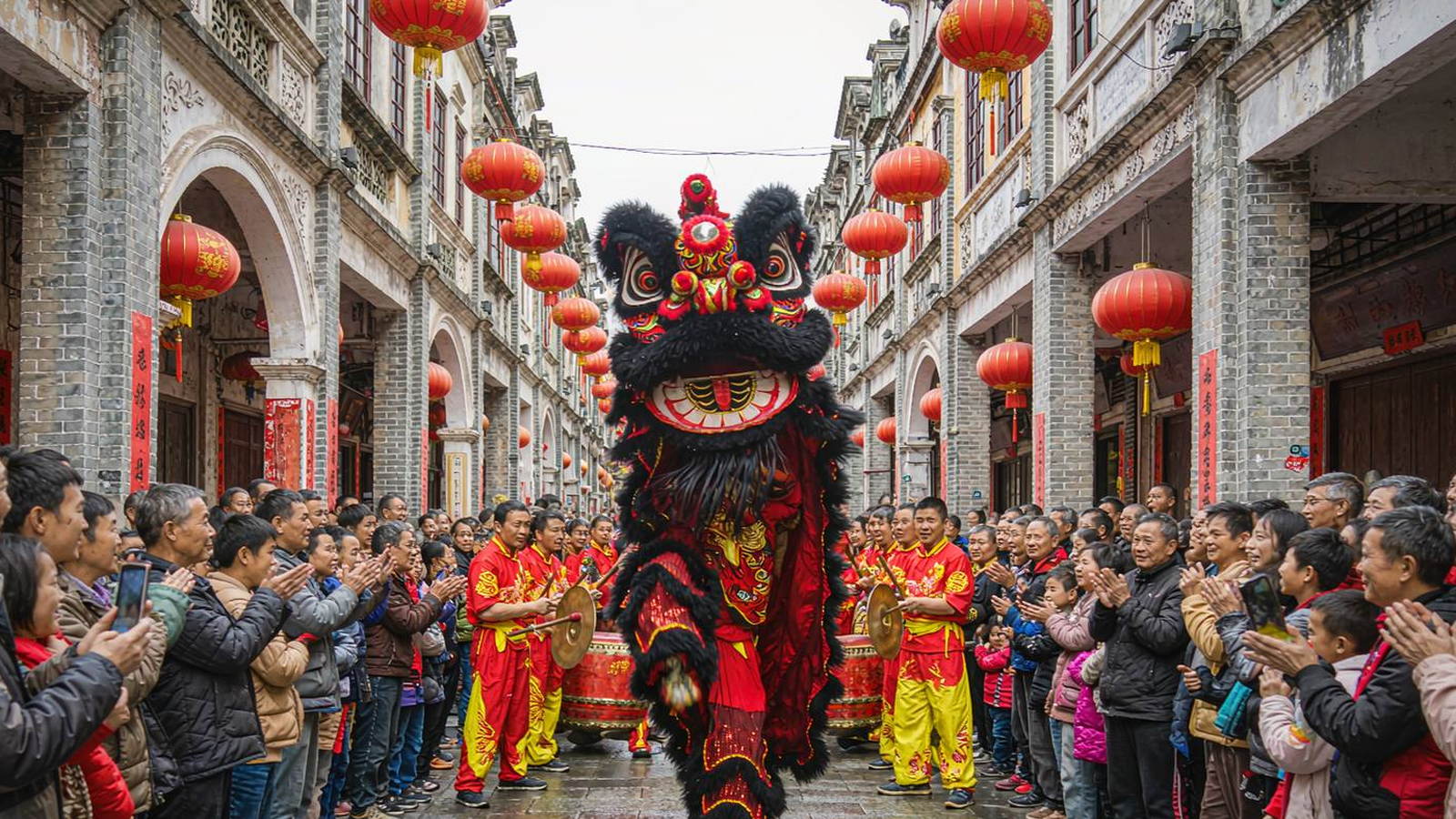
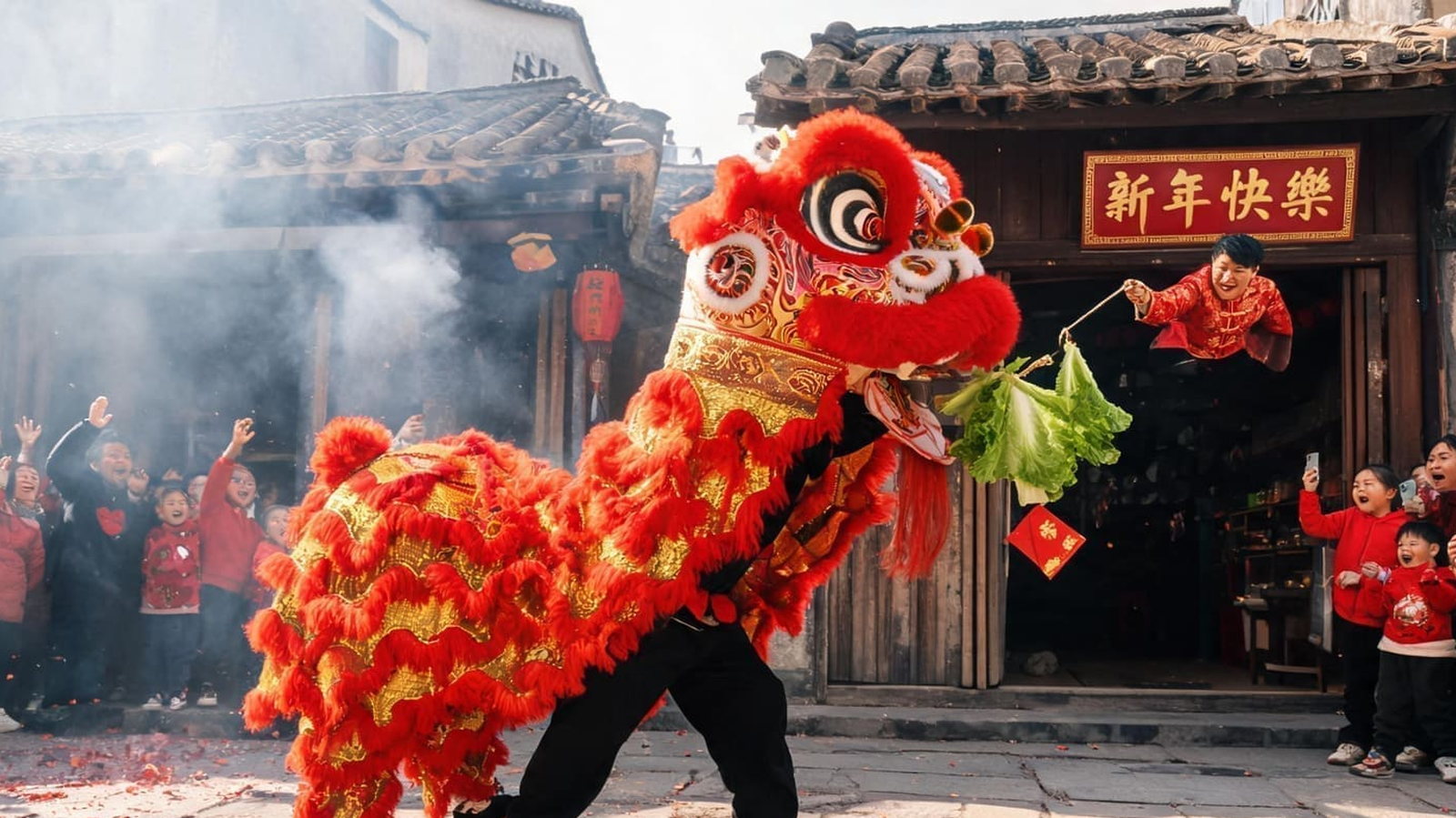
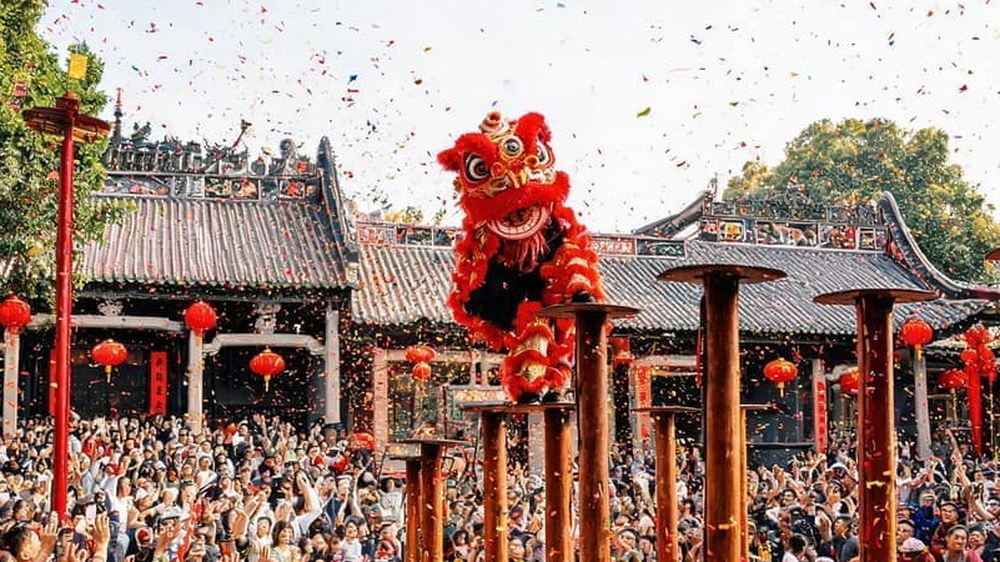
The smoke of New Year firecrackers has barely cleared when the gongs and drums break out. The red-and-gold southern lion surges up — blinking, scratching, plucking the greens — and leaps several metres between the plum-blossom stakes without a waver. The shopkeeper hangs lettuce and a red envelope high above; the lion seizes the greens in one bite and tosses them into the crowd, and cheers, drums and laughter set the whole old street alight.
Let the lion dance and ill luck withdraw, blessing come in — that leap into the air is the Chinese spirit of seeing out the old year at its most alive.
Traditions, echoed by a new generation
The drums sound and the lion wakes. Lion dance is the Chinese street battle, and the moment it leaps the high stakes, the whole crowd goes up.
Blinking, scratching, plucking the greens — fierce and adorable at once, a top-tier generator of atmosphere
Leaping and twisting on high stakes is close to extreme sport; pulses and applause do not come down
Warding off ill luck and opening the way for fortune — the plainest, hottest hopes the Chinese carry
History · Customs · Cultural meaning
 Lion Dance (Southern Style) · Historical Origins
One continuous line · back to the source
The awakening lion, or southern lion, arose in the Ming and is practised across Guangdong, Guangxi and Chinese communities overseas. Legend has it that in the early Qing, men resisting the dynasty used lion dance as cover for passing messages, and that 'awakening lion' carried the sense of awakening the people. The southern and northern lions differ sharply: the northern is realistic, the southern expressive, known for its exaggerated face and wide range of expression.
Lion Dance (Southern Style) · Customs and Practice
Seasonal rites · everyday life
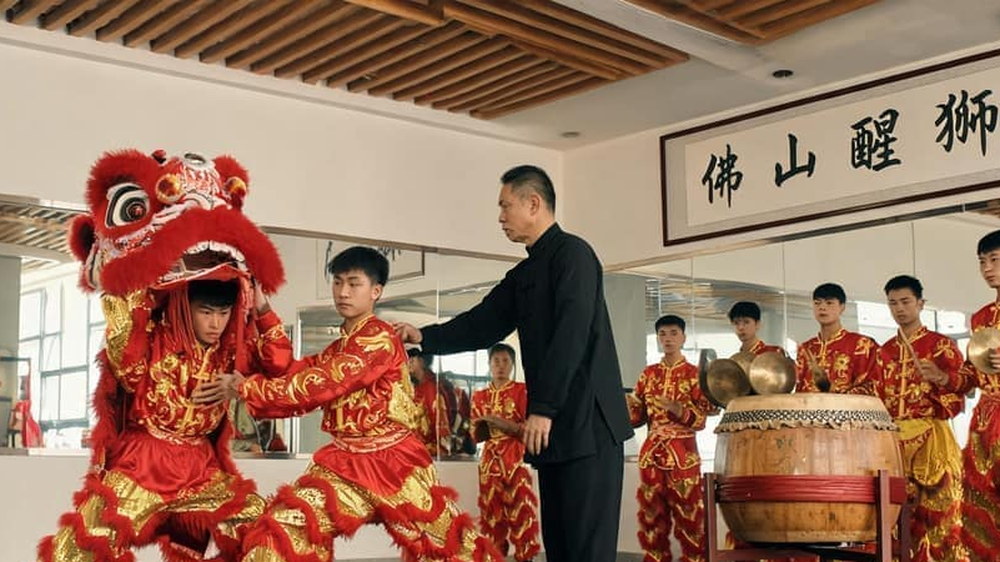
A performance normally uses two dancers to a lion, one working the head and one the tail, and both need solid martial training. The lion's expression shifts constantly: joy, anger, sorrow, delight, movement, stillness, alarm, suspicion. A traditional programme runs through 'leaving the cave', 'crossing the bridge' and 'plucking the greens' — the last the climax, in which the lion climbs to take the lettuce hung out of reach, the word for lettuce punning on 'growing wealth'. The accompaniment is drum, gong and cymbals, at a driving tempo.
 Lion Dance (Southern Style) · Cultural Significance
What the heart turns toward · handed down through generations
The awakening lion is a spiritual emblem of Lingnan culture and a focus of Chinese identity abroad. Festivals, shop openings and celebrations are hardly complete without it. With Chinese migration the dance has travelled worldwide, and it has become one of the country's most recognisable cultural calling cards.
To admire and to use · Tradition in everyday life
 Craft
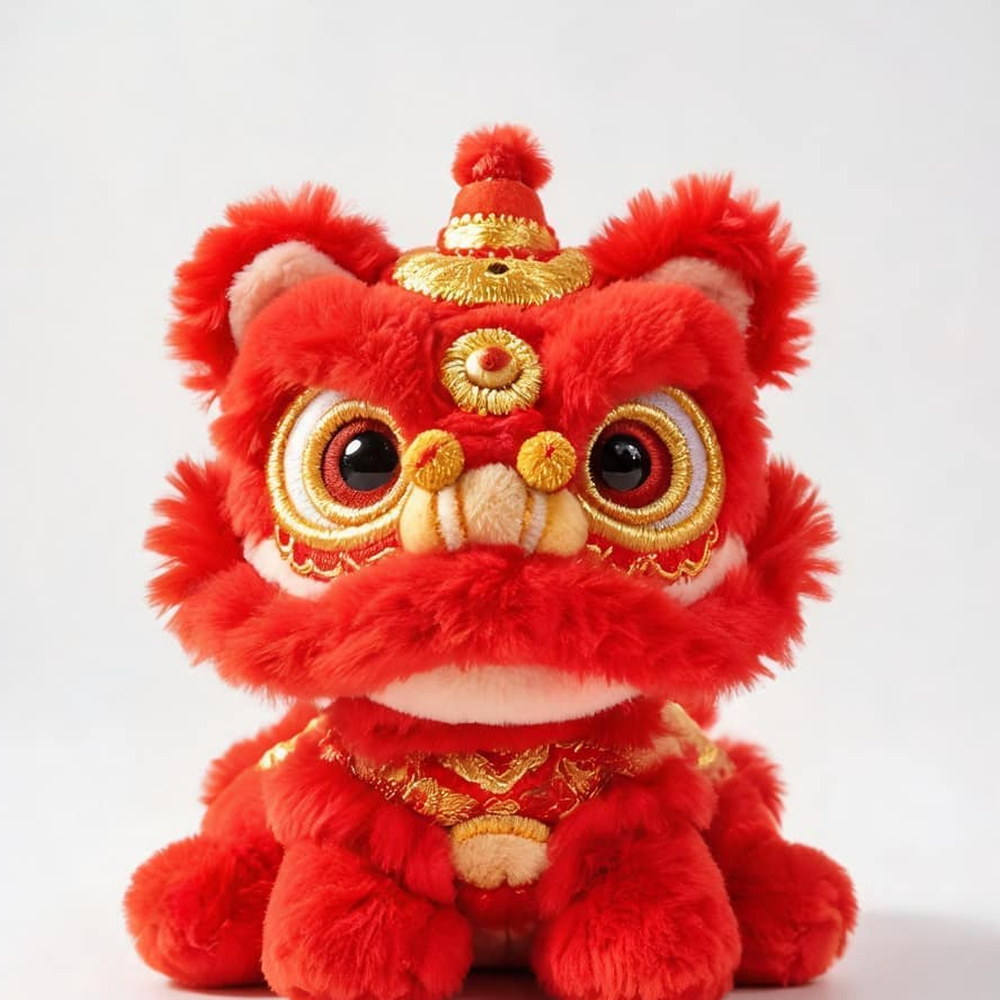
The cute lion rises: a lucky beast for a new generation of collectors
Case: The cute lion rises: a lucky beast for a new generation of collectors
 Craft
Modelled on the Foshan Li family lion — wealth on the bag, ill luck kept off
Case: Modelled on the Foshan Li family lion — wealth on the bag, ill luck kept off
 Experience
Lift the head, hit the beat — a workout that doubles as stress relief
Case: Lift the head, hit the beat — a workout that doubles as stress relief
 Costume
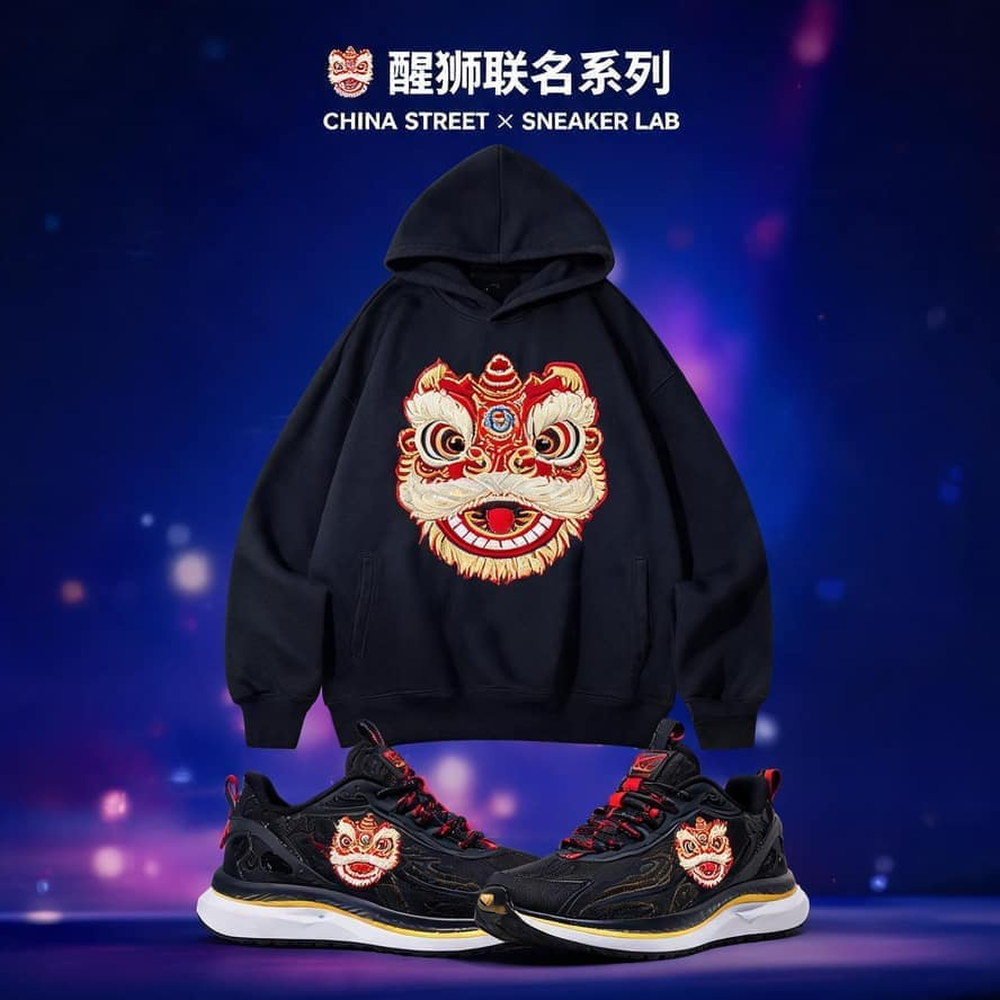
Lion motifs at full volume, new-Chinese sportswear
Case: Lion motifs at full volume, new-Chinese sportswear
 Experience
Watch the high-stake plucking live — the atmosphere raises goosebumps
Case: Watch the high-stake plucking live — the atmosphere raises goosebumps
← Scroll sideways for more →
Links lead to third-party marketplaces. This site has no promotional relationship with them.
Travel proposals · Meet the custom in its real setting
← Scroll sideways for more →
Related customs
← Scroll sideways for more →
Fact-checked October 2026 · every citation traceable
Primary sources are Chinese-language publications, cited for traceability. Bodies without a standard English name are listed by domain.