Shadow Puppetry
Home/Categories/Folk arts/Shadow Puppetry
Folk artsShaanxi, Hebei, Gansu and beyond

Shadow Puppetry

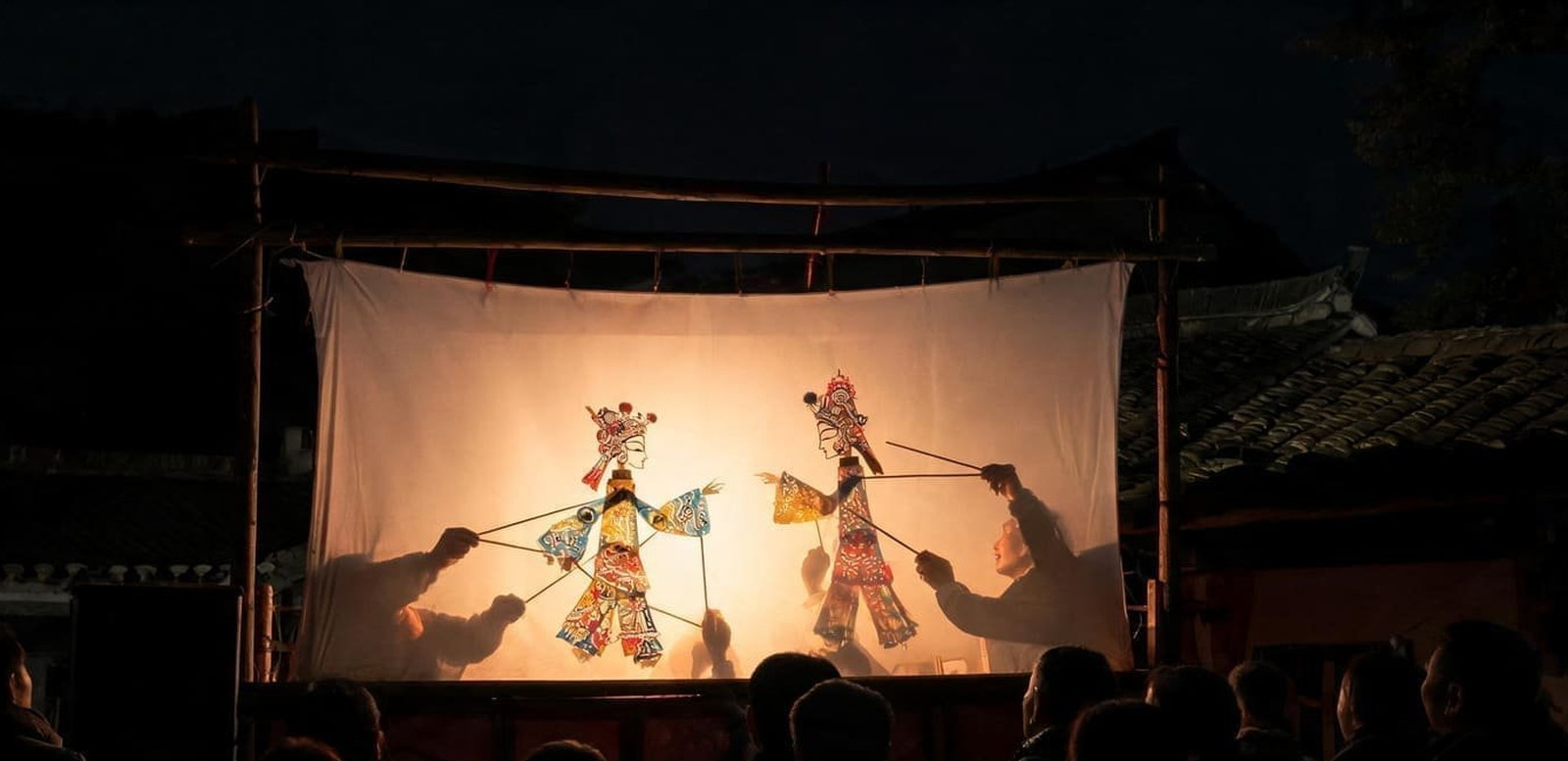
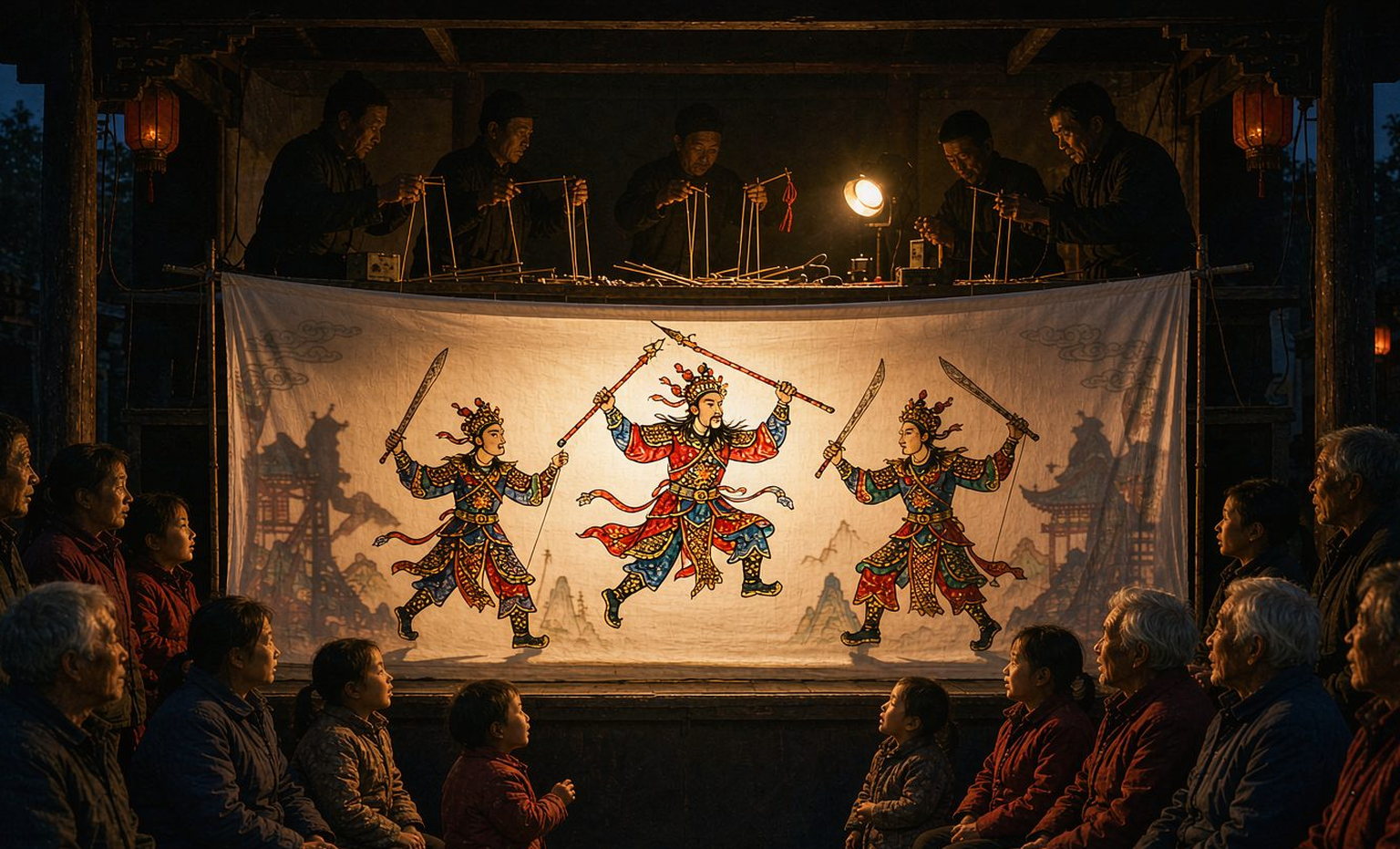
Darkness falls and a paper screen goes up in the courtyard — three feet high, five wide, which the puppeteers call the 'bright'. An oil lamp is lit behind it and the paper glows warm yellow. At the first gong, a figure leans in from the side, flicks its helmet, and an army of thousands arrives on stage.

UNESCO ICH Intangible Cultural Heritage lists · national list, inscribed 2008 · Second batch (2008) Ⅳ-91 · UNESCO ICH Representative List, inscribed 2011 Heritage List →
Season Best time Year-round; liveliest at temple fairs and festivals Travel →

The screen is braced, the lamp wick trimmed. The puppeteer sits behind it with three bamboo rods between the fingers: one for the body, two for the hands. Lift the wrist and the figure snaps its sleeve; drop it and the figure kneels and knocks its head. When the singing tightens and the voice rises, the shadow on the paper straightens its back too.

One voice recounts a thousand years of history; two hands set a million soldiers dancing.

01

Why young people fall for it

Traditions, echoed by a new generation

One hide, three bamboo rods, one oil lamp — enough for a whole night. The screen is five feet wide, and gods, generals and young ladies take turns on it, all at the mercy of a pair of hands behind the paper.

01

The Dongjing Meng Hua Lu records the shadow players of Bianliang's entertainment quarters — Dong Shiwu, Zhao Qi, Cao Baoyi and six others — who made a living from the craft

02

Figures are cut from oxhide or donkey hide: hair and blood scraped away, carved, coloured, then pressed flat with heated bricks — leave a warp and the lamp turns the figure into a black blot

03

In 2011 Chinese shadow puppetry was inscribed on UNESCO's Representative List of the Intangible Cultural Heritage of Humanity

02

Origins & Practice

History · Customs · Cultural meaning

Shadow Puppetry·Historical Origins Shadow Puppetry · Historical Origins
1

Historical Origins

One continuous line · back to the source

The art is usually traced to the Western Han. The Book of Han's 'Biographies of Imperial Consorts' tells how Lady Li died young and Emperor Wu could not stop grieving; the alchemist Shao Weng of Qi claimed he could summon her spirit. That night lamps were lit, a curtain hung and wine and meat set out, and the emperor sat in another tent and saw, far off, a shape within the curtain that looked exactly like Lady Li. Later ages read this passage as the earliest shadow of the shadow play.

By the Song dynasty, shadow plays were a proper trade in the entertainment quarters of Bianliang. The Dongjing Meng Hua Lu lists them as a category of their own among the capital's performers, with Dong Shiwu, Zhao Qi, Cao Baoyi and six others known by name. A Jin-dynasty mural in the Manjusri Hall of Yanshan Temple in Fanshi, Shanxi, still preserves a performance of the period: spectators seated before the screen, hands working the figures behind it.

Through Song, Jin, Yuan and Ming the plays spread, and by the Qing they had reached north and south alike. The leather-cutting was much the same everywhere; the singing split apart first. Shaanxi has Huaxian, Huayin laoqiang, agong qiang and xianban qiang; Gansu has the Huanxian daoqing; Shanxi has Xiaoyi's wanwan qiang; Hebei has Tangshan and southern Hebei; Zhejiang has Haining; Hubei has the Jianghan plain; Guangdong has Lufeng; Liaoning has Fuzhou and Lingyuan. The figure is still one profile, but at the first gong each region sings to its own tune.

Shadow Puppetry·Customs and Practice Shadow Puppetry · Customs and Practice
2

Customs and Practice

Seasonal rites · everyday life

The figures are carved, not painted. Oxhide or donkey hide is scraped free of hair and blood and worked into a translucent sheet, then traced, pierced, carved and coloured. Head, body and limbs are made separately: the head wears a helmet, the body takes colour, and a final coat of oil paint goes on before the piece is pressed flat under heated bricks — pressed truly flat, or the lamp shows a dark shadow through it.

Before a show the head is slotted into the body, the limbs joined, and a bamboo rod tied to the torso and to each hand. The puppeteer stands against the screen; sink the wrist and the figure lands on the cloth, lift it and the figure floats. A troupe is five or six people, and the whole kit travels on one pack animal — village squares and courtyard houses both make a stage.

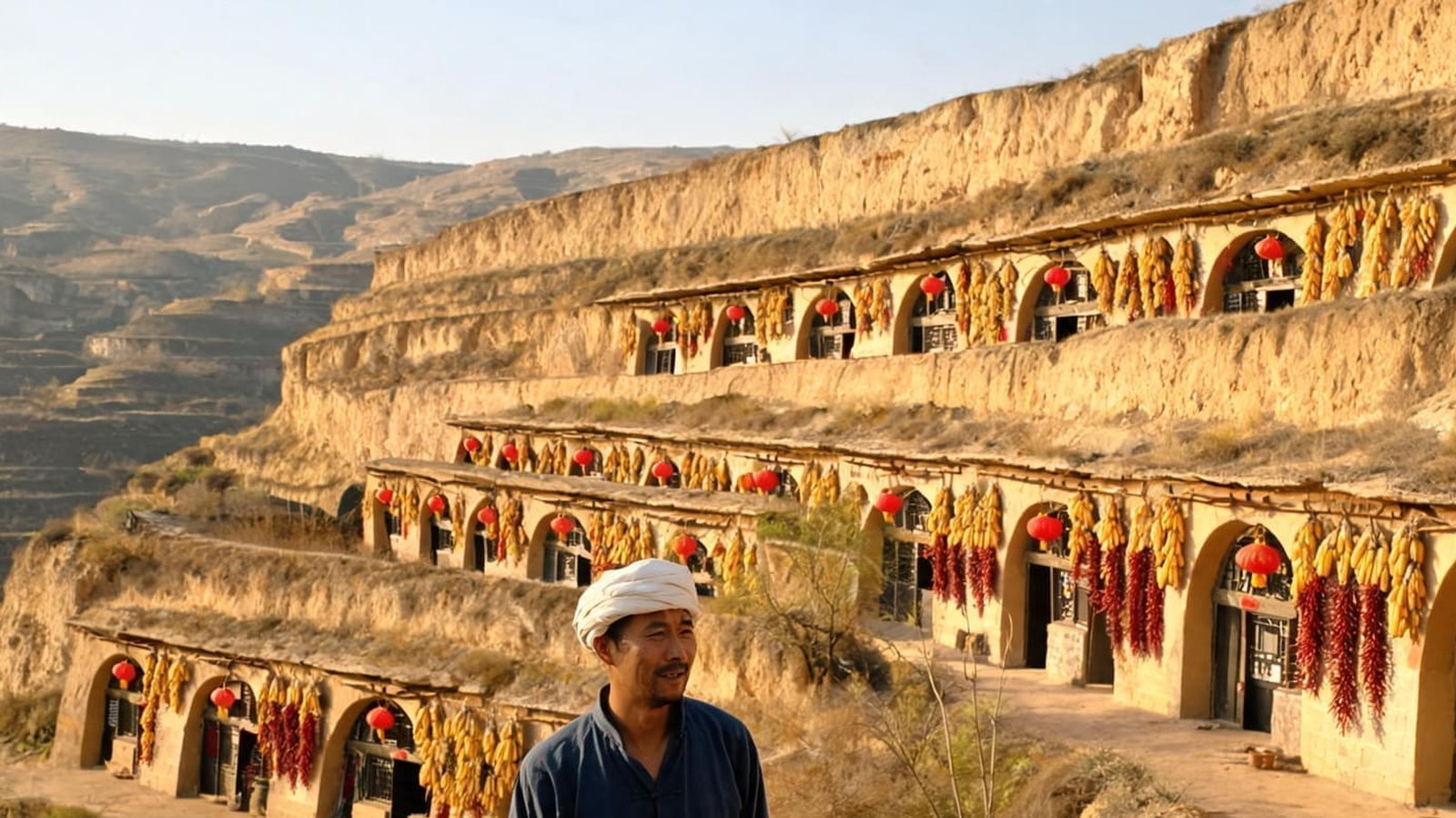
Huaxian figures in Shaanxi are finely carved, and the wanwan qiang is a tune of three sighs to a line; in the Qianlong and Jiaqing reigns scholars such as Li Fanggui wrote the 'Ten Great Plays' for it, still sung today. Tangshan in Hebei uses donkey hide, with large figures and open, sweeping cuts. The daoqing shadow play of Huanxian, Gansu, opens its mouth and out comes the accent of the loess slopes. The audience is mostly older people who know the repertoire cold — who enters when, who takes the blade — and watch with their eyes shut; what they are watching is the pair of hands behind the cloth: one tremor, and the figure's beard quivers.
Shadow Puppetry·Cultural Significance Shadow Puppetry · Cultural Significance
3

Cultural Significance

What the heart turns toward · handed down through generations

Shadow puppetry folds carving, painting, singing, percussion and storytelling into one: the figure on the screen is carved folk art, the voice behind it a branch of local opera, and the plots come largely from historical romances and tales of gods and spirits. Some scholars call it the ancestor of cinema — a beam of light, a sheet of cloth, a few moving figures — a formula that has hardly changed in two thousand years.

In 2006 shadow puppetry (Huaxian shadow puppetry) was entered on the first national list of intangible cultural heritage, item Ⅳ-91, serial no. 235. In 2011 Chinese shadow puppetry was inscribed on UNESCO's Representative List of the Intangible Cultural Heritage of Humanity.

Today troupes disperse quickly and those who can work the rods grow fewer each year. After the last show the puppeteer packs the figures into a wooden chest one by one, heads aligned the same way, and only then blows out the lamp.

+

Keep exploring

Related customs

← Scroll sideways for more →

S

Sources

Fact-checked October 2026 · every citation traceable

Primary sources are Chinese-language publications, cited for traceability. Bodies without a standard English name are listed by domain.