Regional cultureYunnan
Bai Three-Course Tea
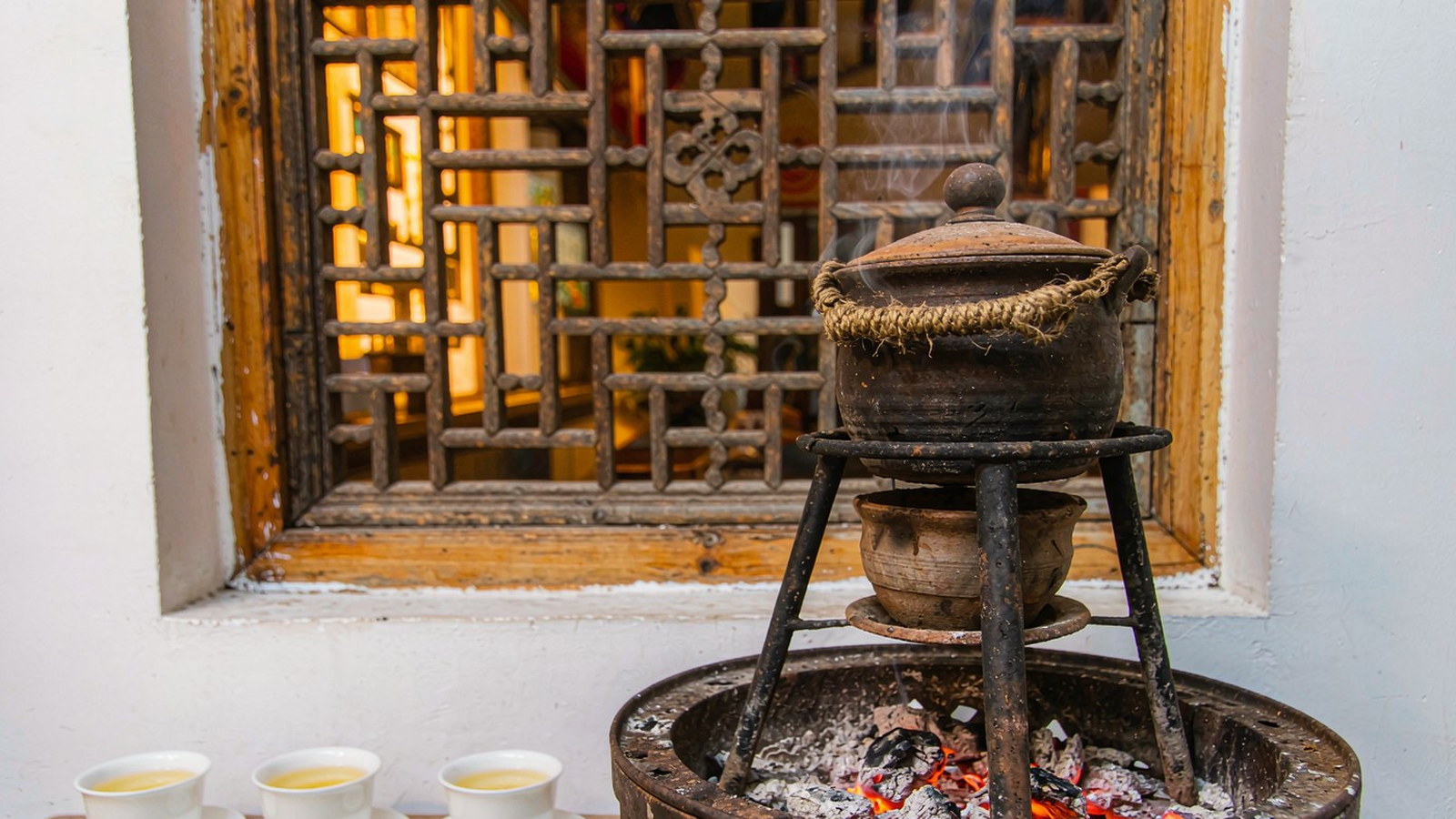
A tripod is set over the brazier and the clay pot is heated until it stings to touch. The first course is bitter, the second sweet, the third carries Sichuan pepper and cassia.
A tripod is set over the brazier and the clay pot is heated until it stings to touch. The first course is bitter, the second sweet, the third carries Sichuan pepper and cassia.
The host sets an empty pot on the charcoal to warm, throws in a handful of Cangshan green tea and shakes it as it toasts. When the leaf turns faintly gold and the aroma escapes, a little boiling water goes in and the pot roars like distant thunder — this is the first course, 'thunder tea'.
Bitter, then sweet, then a lingering aftertaste: the Bai hand a lifetime of flavours to a guest in three cups.
Traditions, echoed by a new generation
Three-course tea is the Bai way of receiving a guest; in the old courtyards of Xizhou it still arrives with the bawangbian stick dance and songs.
The bitter first course is shaken a hundred times or more, and only counts once the pot roars — tea you can hear
Listed nationally in 2014, then carried onto the UNESCO Representative List in 2022 with China's traditional tea-processing techniques
Walnuts and brown sugar in the sweet cup, Sichuan pepper and cassia in the aftertaste cup: three recipes at one table
History · Customs · Cultural meaning
 Bai Three-Course Tea · Historical Origins
One continuous line · back to the source
In the Bai language three-course tea is called shaodao zhao. Fan Chuo's ninth-century Man Shu, an account of the southern frontier, records the ancestors of the Bai brewing a drink with pepper, ginger and cassia — an early shadow of this method. When Xu Xiake reached Dali in the Ming, the monks of Mount Jizu received him with three courses, which he set down in his travel diary as 'tea taken as a pastime: first clear tea, then salted tea, then honey tea'.
The custom is said to descend from the Nanzhao period, first poured at elders' birthday celebrations and later used for weddings, house-raisings and the induction of apprentices. In November 2014 the tea custom of the Bai three-course tea was approved by the State Council for the fourth national list of intangible cultural heritage, No. Ⅹ-107, as an expansion in the folk-custom category, nominated by Dali City, Yunnan, with the Dali municipal intangible cultural heritage office as the protecting body.
Bai Three-Course Tea · Customs and Practice
Seasonal ritual · everyday life
The first course is bitter. An empty clay pot is warmed over charcoal, tea goes in, and the pot is shaken as it toasts until the leaf is faintly gold and fragrant; a splash of boiling water makes it rumble, which is why it is called thunder tea. Because the toasting takes a hundred shakes or more it is also called the hundred-shake tea. The liquor is amber; it is poured into a cup, diluted with a little hot water and handed over, bitter and cooling on the tongue.
The second course is sweet. Walnut kernels are sliced thin and simmered with brown sugar until the tea aroma fills the room; some households add honey, and it drinks sweet and fragrant. The third is the aftertaste course: honey with a little Sichuan pepper and cassia, brewed with tea and rocked as it is drunk, sweet with a hint of numbness and a bitter note at the finish. The whole sequence is governed by three courses, six rules and eighteen steps, with three small cups brought out in turn for slow, careful drinking.
The Bai set out three-course tea at festivals, birthdays, weddings and apprenticeships. From the 1980s it was combined with Bai song and dance into a stage form and promoted for visitors in Dali: the bawangbian stick dance and the octagonal drum take the stage in turn while the audience works through the three cups.
Bai Three-Course Tea · Cultural Significance
Where the heart points · carried down the generations
Three-course tea sets bitter, sweet and lingering in front of the guest. Bai families use it to receive visitors and to talk about life. On 29 November 2022, the Bai three-course tea, as one component of China's traditional tea-processing techniques and associated social practices, was inscribed with that element on the UNESCO Representative List of the Intangible Cultural Heritage of Humanity.
Dali sits where the southern Silk Road meets the Tea Horse Road: tea came up from the mountains and went out again through here. Arrive in Dali today and three-course tea is still the first courtesy many hosts offer — brazier, tripod and clay pot laid out as before, and when the water boils the pot roars again.
To admire and to use · Tradition in everyday life
 Objects
A thinner wall rings cleaner when shaken, and that is the whole trick of the first course
Case: A thinner wall rings cleaner when shaken, and that is the whole trick of the first course
 Tea
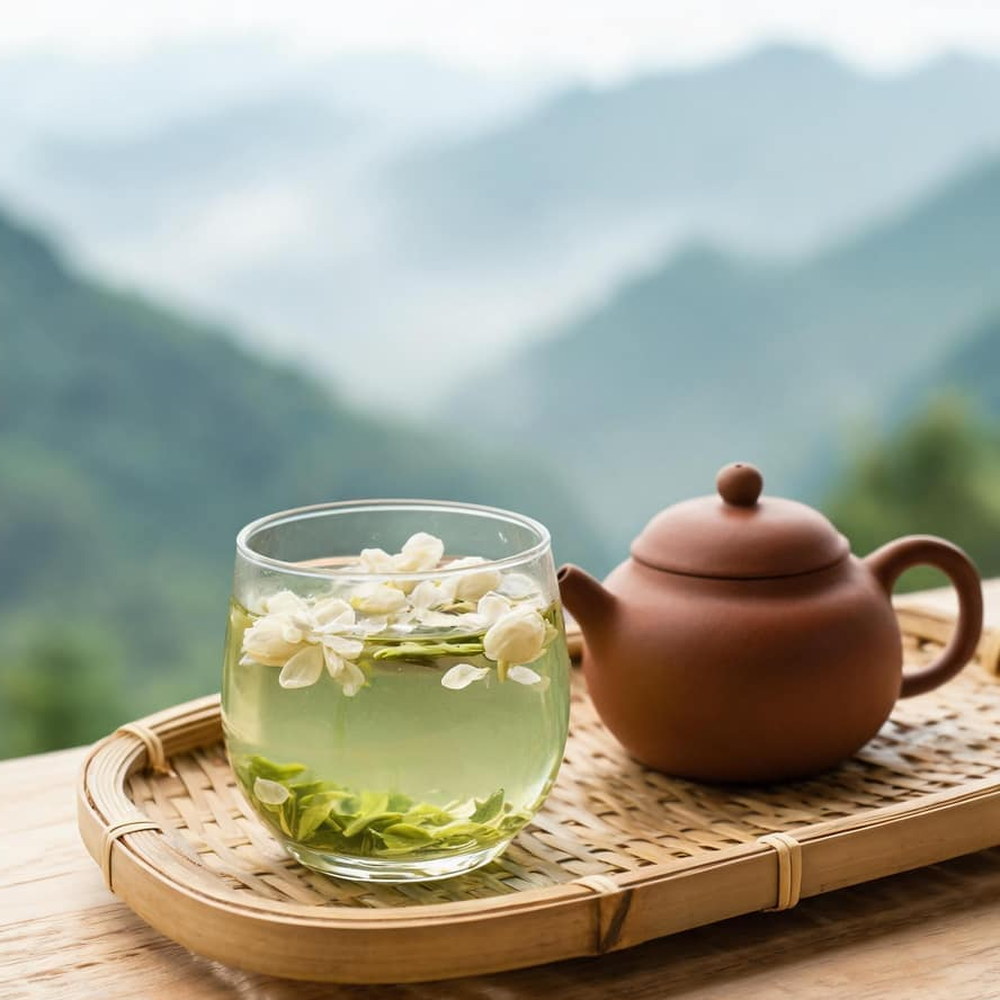
The bitter first course wants Cangshan green: a clean bitterness that turns sweet at the back of the throat
Case: The bitter first course wants Cangshan green: a clean bitterness that turns sweet at the back of the throat
 Objects
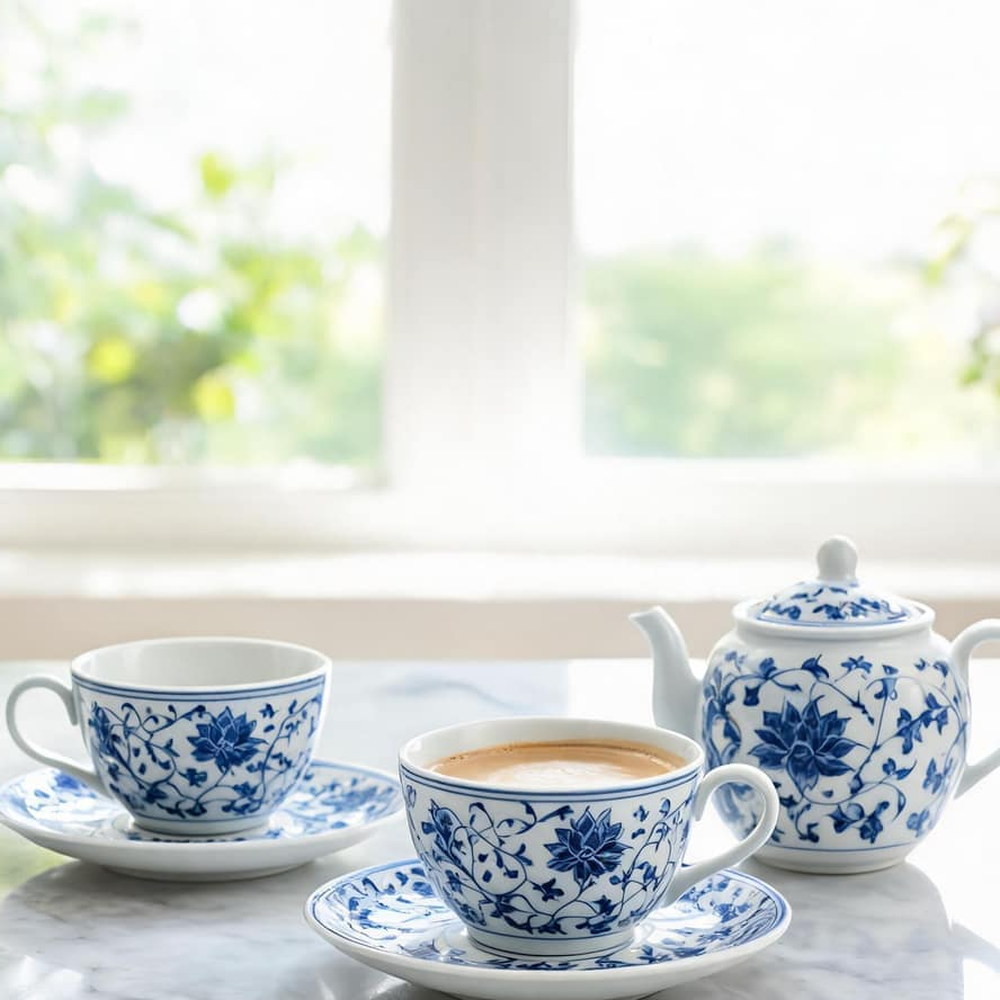
Bitter, sweet, lingering — the three cups only look right lined up in a row
Case: Bitter, sweet, lingering — the three cups only look right lined up in a row
 Food
The walnuts from the sweet course and the grilled rubing from the tea table, packed to take home
Case: The walnuts from the sweet course and the grilled rubing from the tea table, packed to take home
 Experience
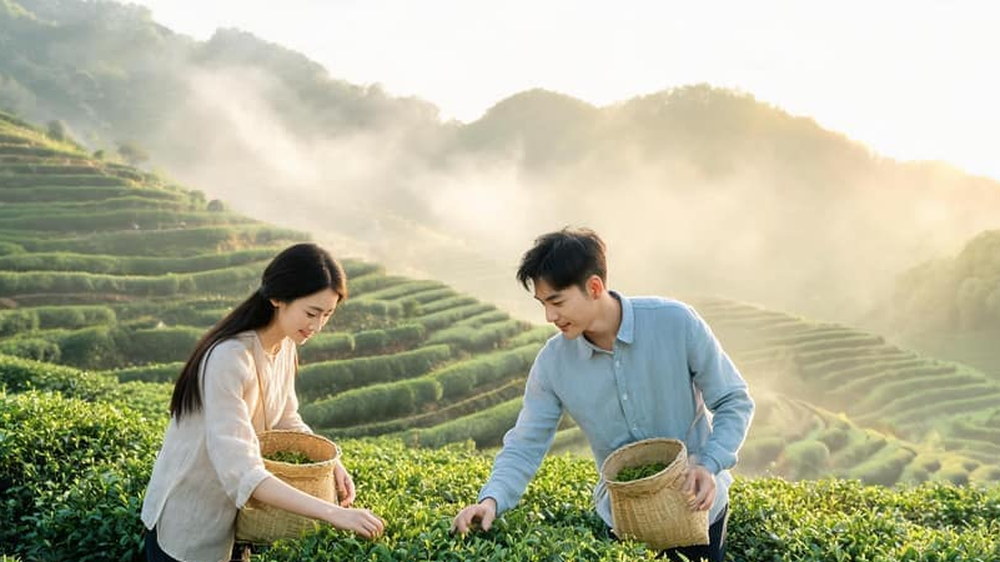
Follow the leaf from picking to firing, and the three courses afterwards suddenly make sense
Case: Follow the leaf from picking to firing, and the three courses afterwards suddenly make sense
← Scroll sideways for more →
Links lead to third-party marketplaces. This site has no promotional relationship with them.
Travel proposals · Meet the custom in its real setting
← Scroll sideways for more →
Related customs
← Scroll sideways for more →
Fact-checked October 2026 · every citation traceable
Primary sources are Chinese-language publications, cited for traceability. Bodies without a standard English name are listed by domain.