On the morning of the fifth day of the fifth lunar month, the first drumbeats break over the river and rowers bend to their paddles in unison. Mugwort and calamus hang over doorways, zongzi simmer in kitchen pots, and children wear five-coloured silk threads knotted at the wrist.
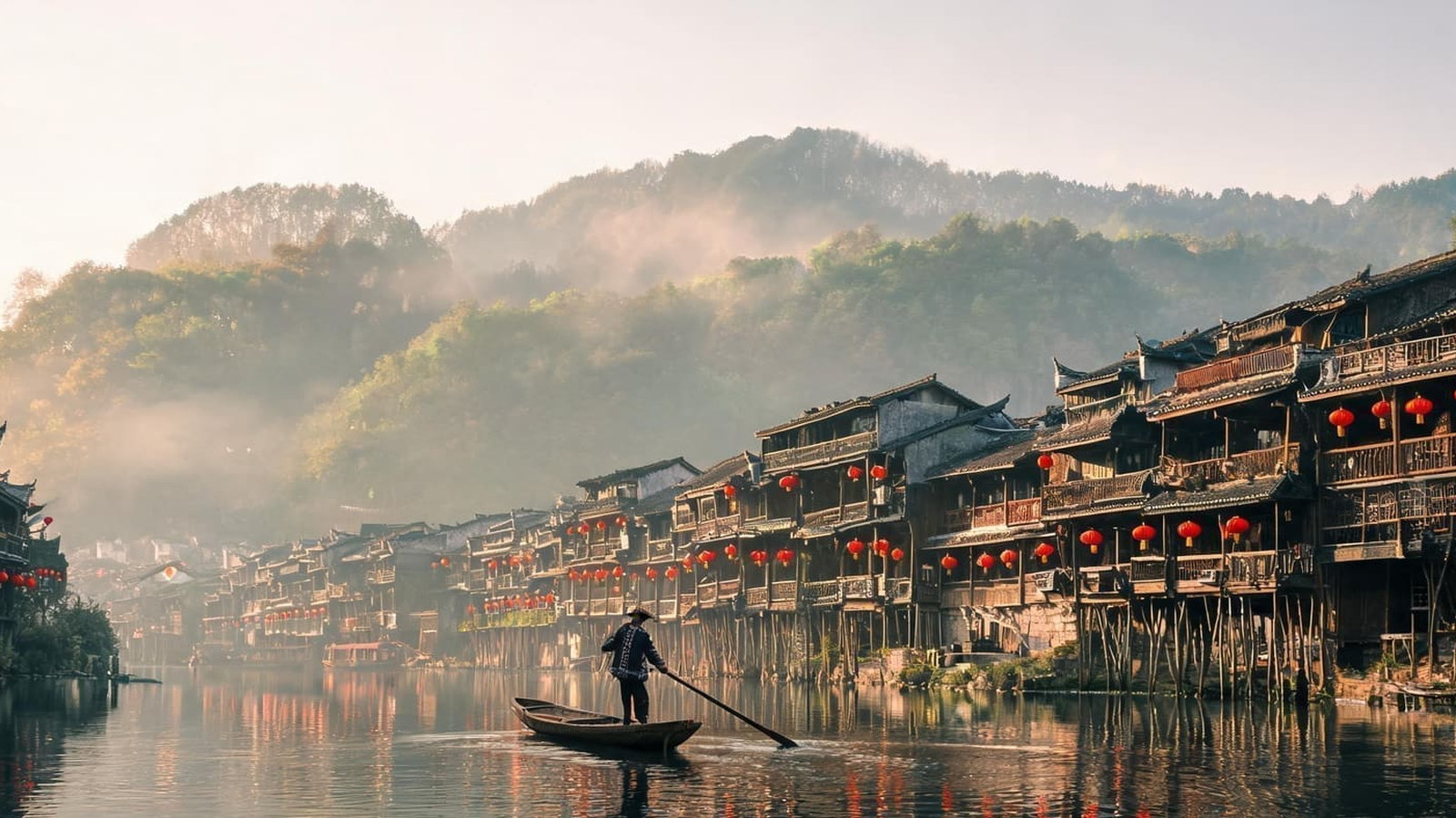
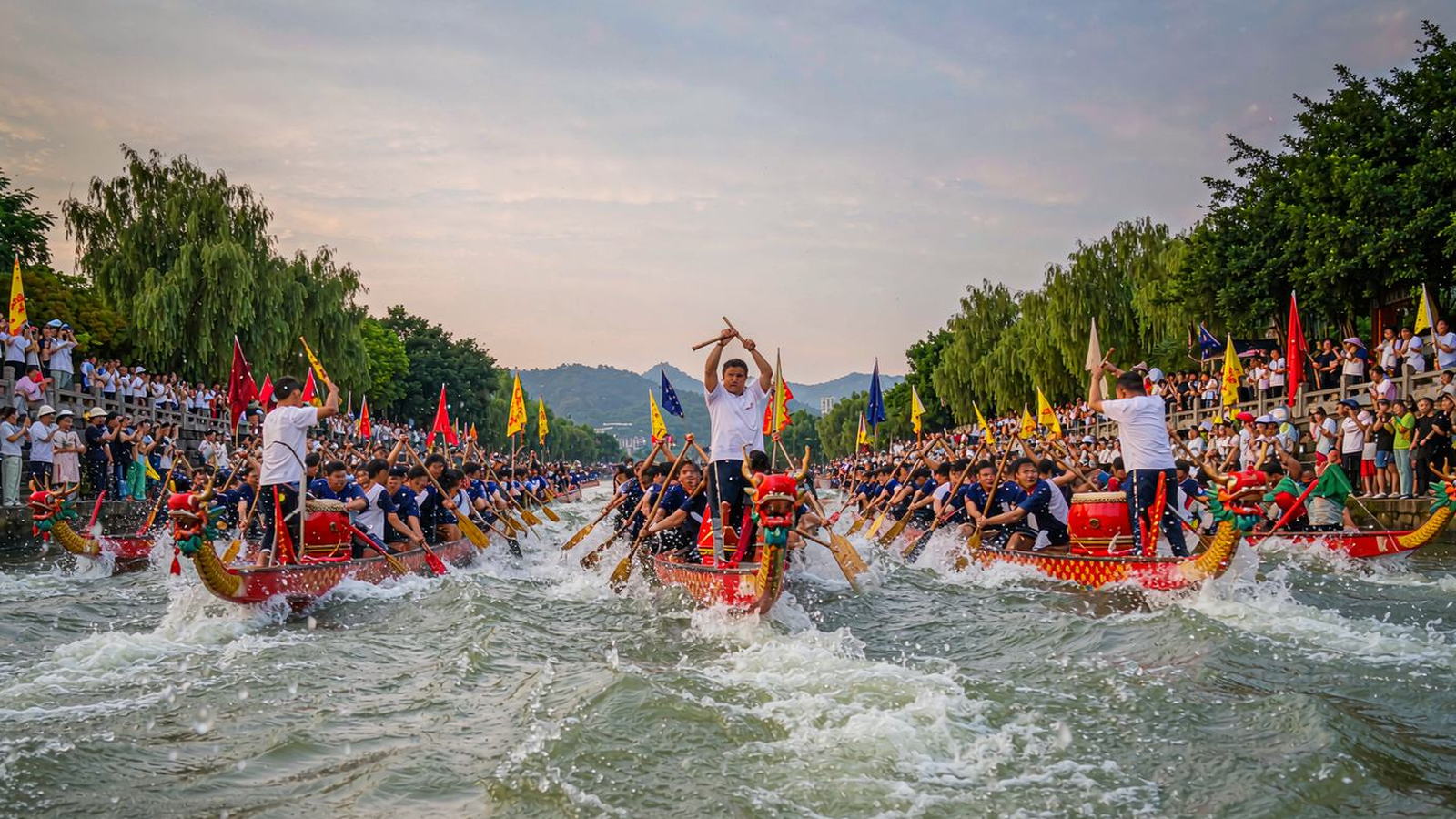
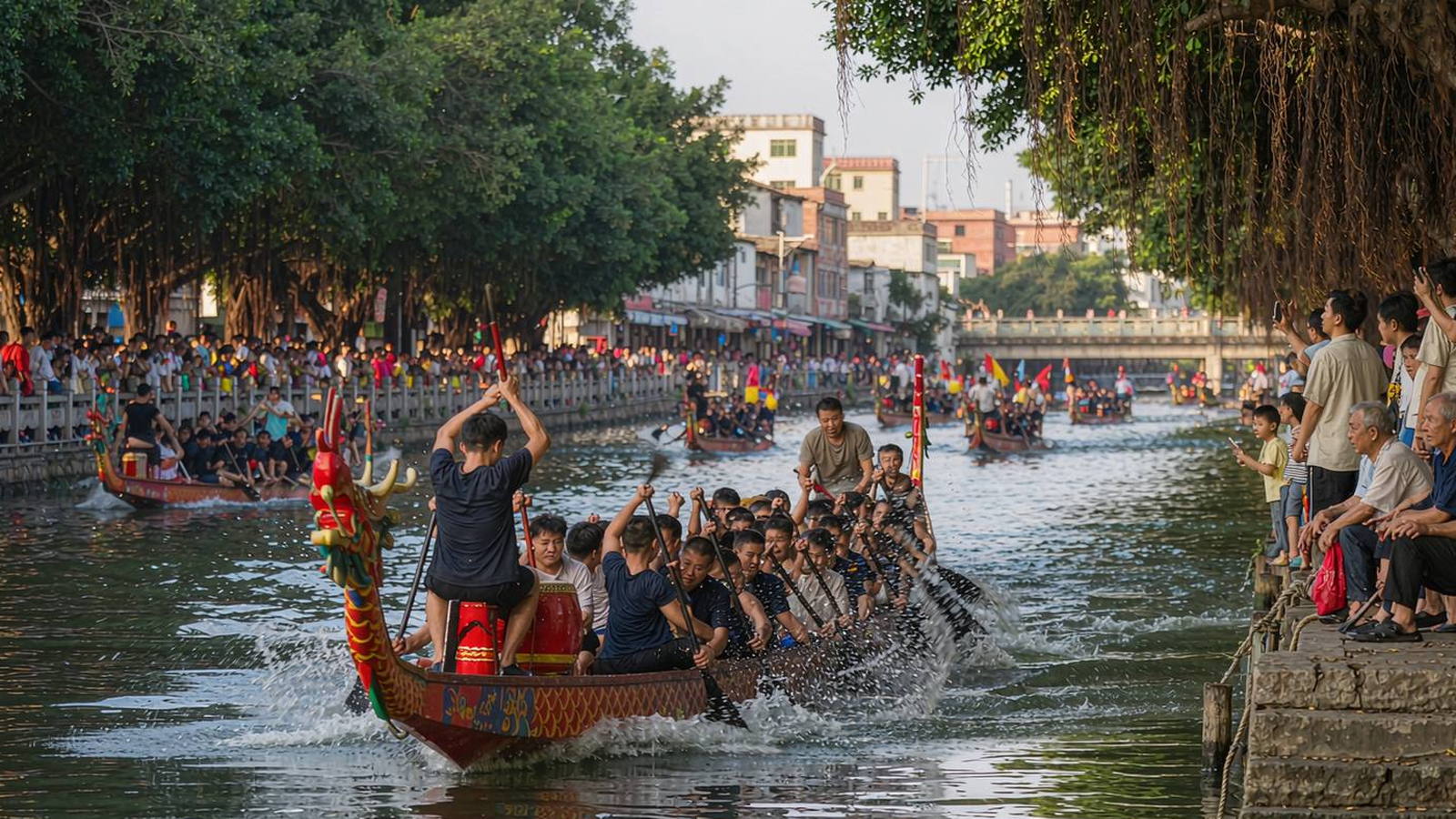
The morning mist on the Miluo River has yet to lift when the gongs and drums begin. Twenty bare-armed men drive their wooden paddles into the water in time with the drums, spray flying into their faces. On the bank, grandparents hoist children onto their toes for a better view; zongzi leaves bubble in every household pot. The whole river boils for a poet who refused to bow, two thousand years ago.
When the drums sound on the river, the two-thousand-year-old rescue begins again.
Traditions, echoed by a new generation
The Dragon Boat Festival is one of the few holidays that can pull people off their screens and out of doors. Once the drums start, everyone in the boat has only one direction to push.
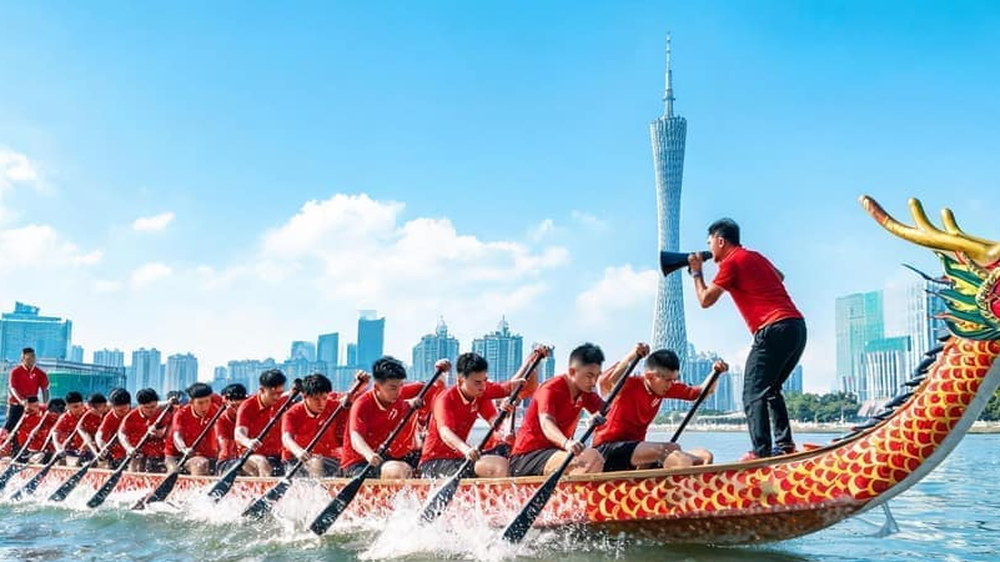
Dragon boating is teamwork made physical: one boat, one drum, and if your stroke is half a beat late, the person beside you feels it at once
The north–south zongzi debate runs all year — salty egg-yolk and pork versus red-bean paste; what is really contested is everyone's home-town tongue
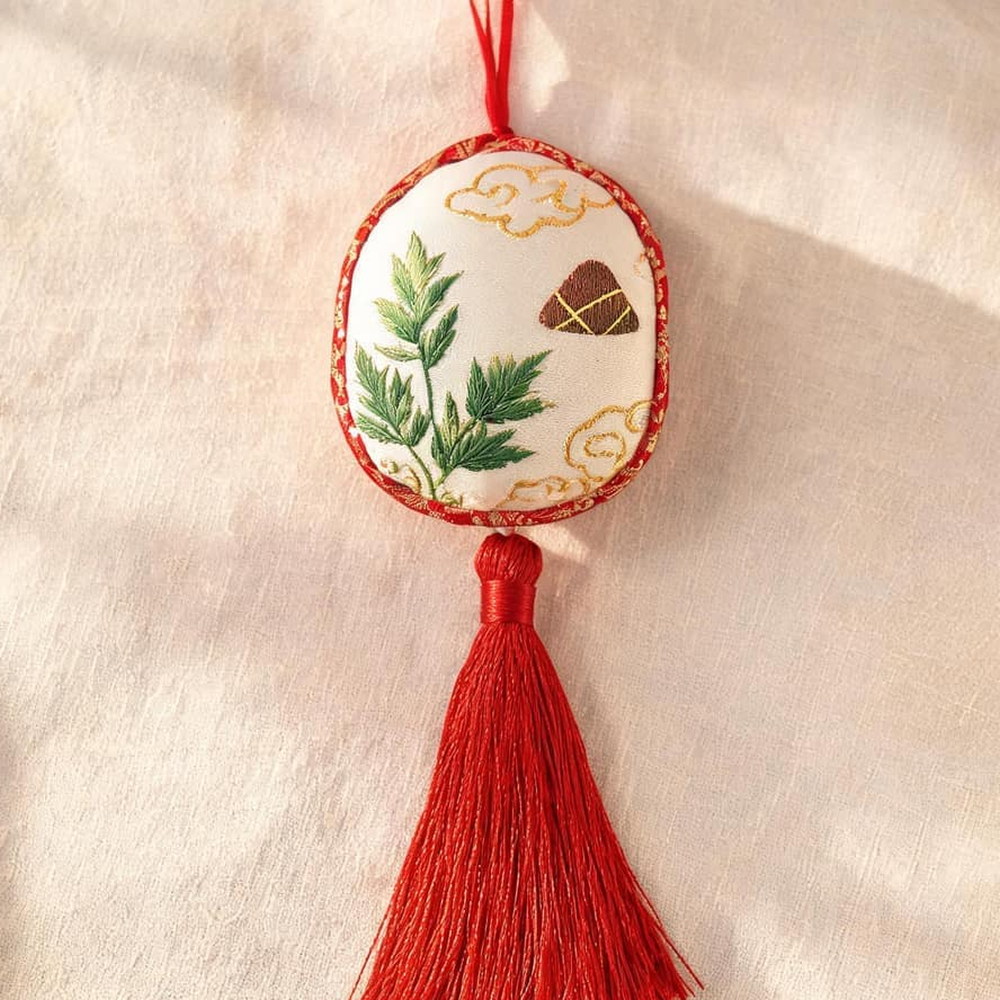
Mugwort, sachets, five-coloured threads — the old summer insect deterrents, hung today as much for peace of mind as for protection
History · Customs · Cultural meaning
The Dragon Boat Festival · Origins
One current, traced to its source
The festival's roots run older than Qu Yuan. When the fifth-month floods raised the rivers, the ancestors paddled dragon-shaped boats to sacrifice to the river dragon and pray for even rains; as the weather turned hot and growth ran wild, they gathered mugwort and calamus, boiled them for bathwater, and warded off insects and illness.
In 278 BC the Qin army breached Ying, the Chu capital, and Qu Yuan drowned himself in the Miluo River. People along the banks rowed out to save him and threw rice into the water so the fish would leave his body untouched. Two of those gestures survived — the dragon-boat race and the zongzi.
Other accounts tie the day to Wu Zixu, Cao E or Jie Zitui, and some scholars trace it instead to midsummer rites of epidemic-warding. Layered together, they make the festival as it stands today: the Qu Yuan commemoration is the most widely told story, while each custom carries its own history.
The Dragon Boat Festival · The customs
Rites of the season, texture of daily life
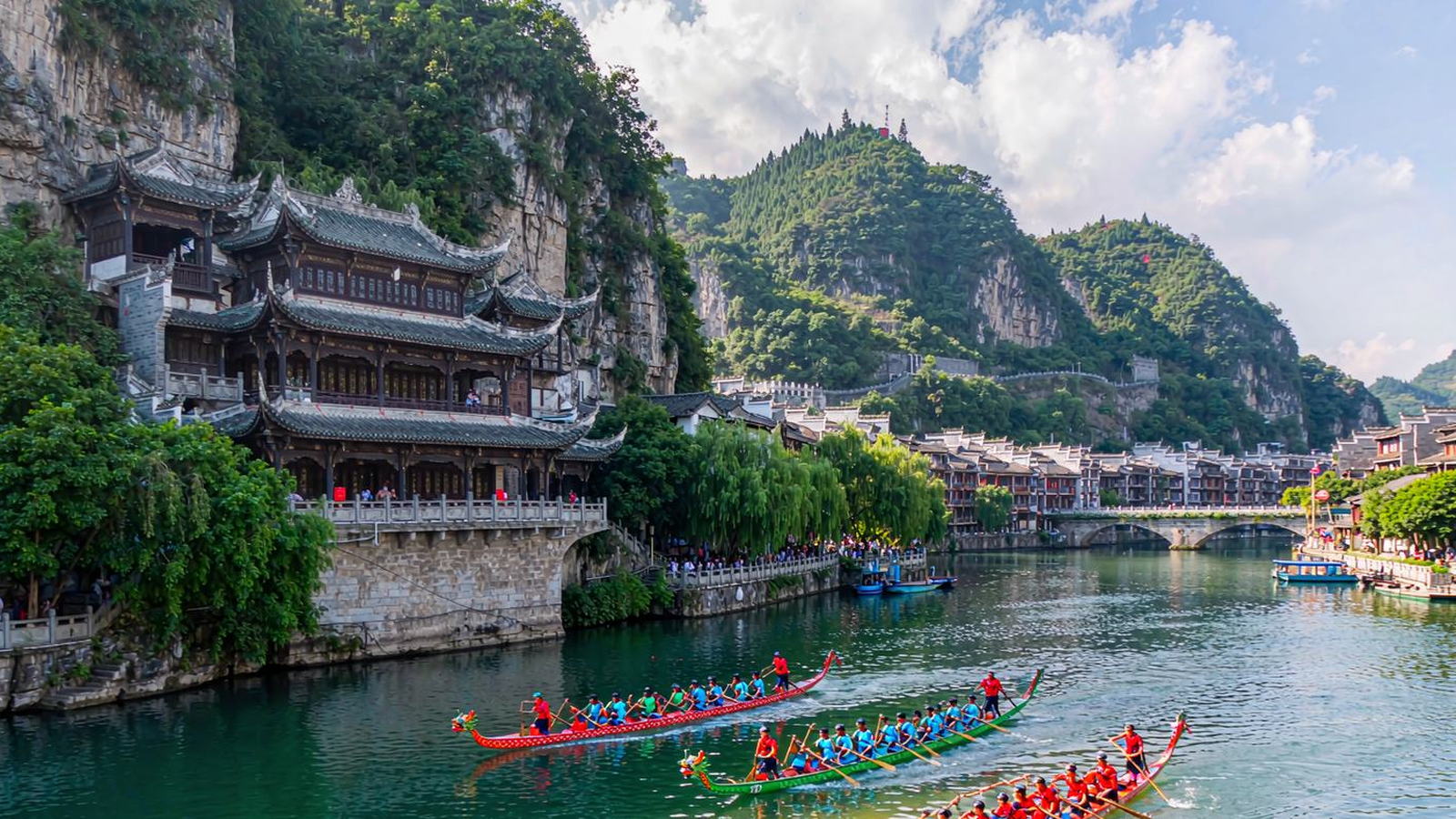
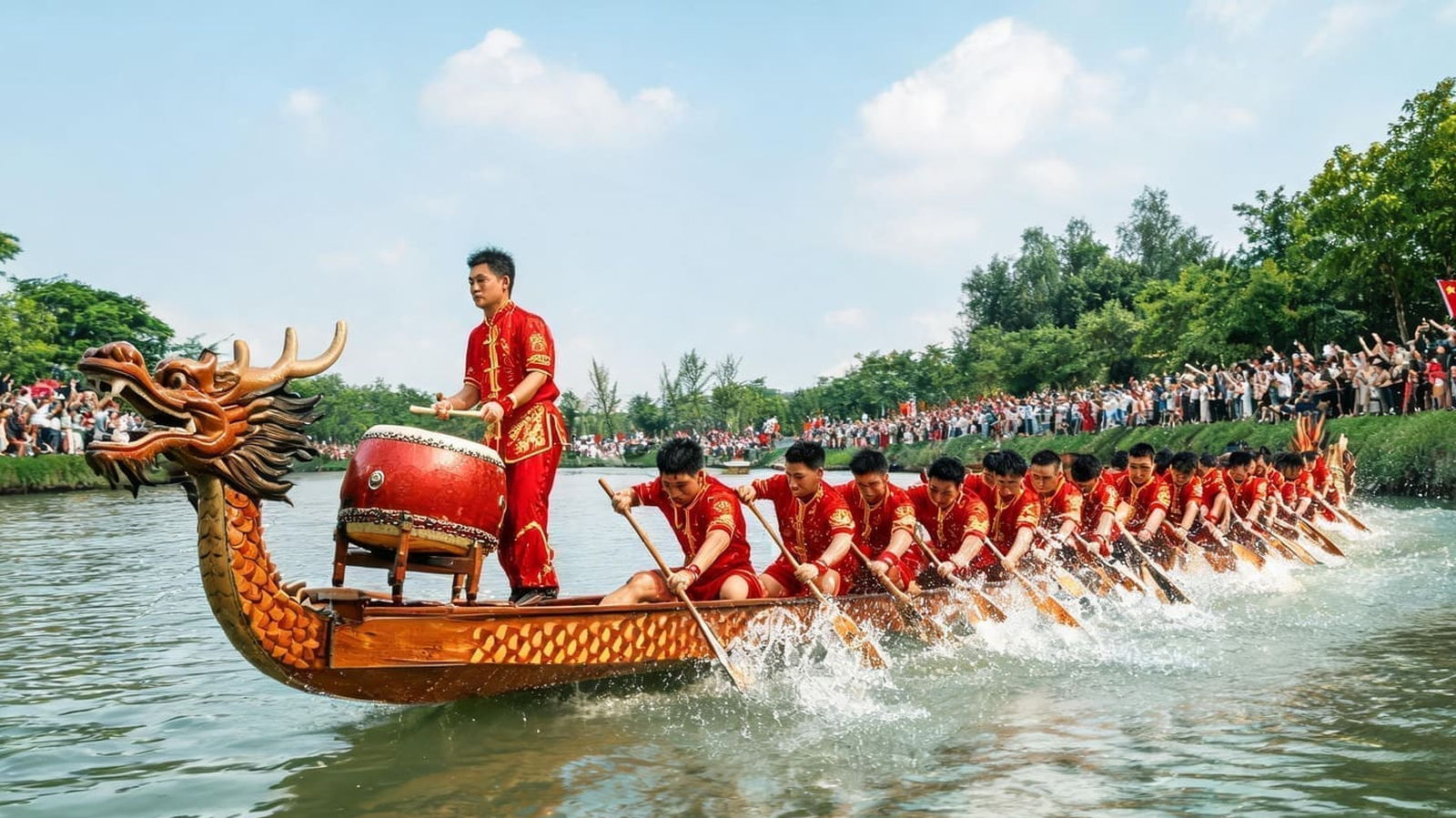
The festival's loudest hours are on the water. Before a dragon boat launches it is blessed, its painted eyes dotted and red ribbon tied on; the paddlers board to the calls, the drummer stands at the bow, and rows of paddles fall to the beat — speed dictated entirely by that drum.
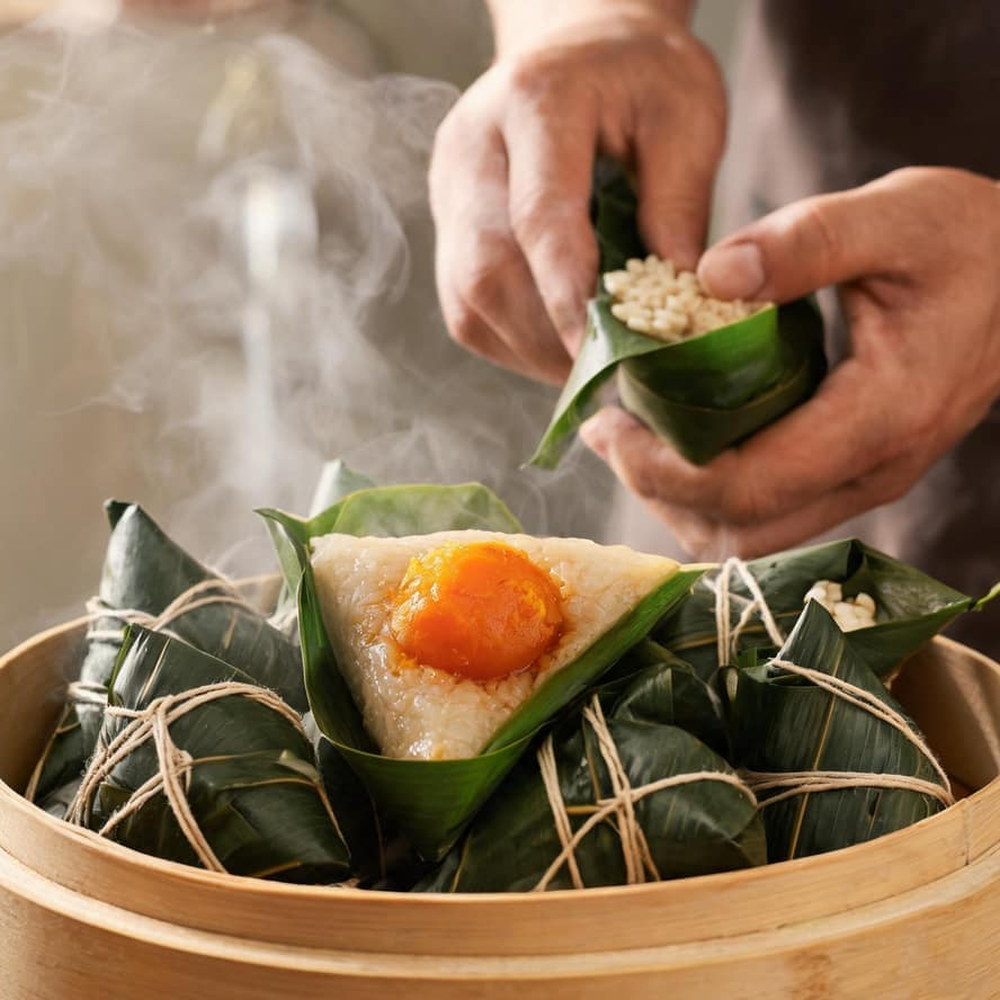
Wrapping zongzi is household work. In the south, glutinous rice is packed with salted egg yolk and pork belly; in the north, with red-bean paste and dates. Indocalamus or reed leaves, triangles or long bundles — every region ties them its own way.
Beyond the water: mugwort over the door, calamus at the lintel, realgar wine (arsenic-bearing, so yellow rice wine now stands in), five-coloured threads and sachets for the children. Some places balance eggs or hold grass-fighting games; along the Jiangnan waterways, herbal baths remain the habit.
The Dragon Boat Festival · What it means
What the heart holds, the generations pass on
At its core the festival is commemoration. After Qu Yuan's drowning, people rowed to search for him and threw food into the river hoping to keep him — gestures handed down until they became today's dragon boats and zongzi.
The other strain is protection of life. The humid heat of the fifth month bred insects and epidemics; hanging mugwort, wearing sachets and drinking medicinal wine were the plainest defences the old world had.
In May 2006 the festival entered the first batch of China's national intangible cultural heritage list as item Ⅹ-3; on 30 September 2009, the Dragon Boat Festival — jointly nominated by the customs of Zigui and Huangshi in Hubei, Miluo in Hunan and Suzhou in Jiangsu — was inscribed on UNESCO's Representative List of the Intangible Cultural Heritage of Humanity, the first Chinese festival so recognised. Since 2008 it has been a statutory public holiday in China.
To admire and to use · Tradition in everyday life
Food
Rice folded into leaves, bound with cotton string, boiled through in a big pot — open one and the indocalamus fragrance comes first
Case: Rice folded into leaves, bound with cotton string, boiled through in a big pot — open one and the indocalamus fragrance comes first
Craft
Silk pouches sewn around mugwort and patchouli, drawn shut with five-coloured cord — hang one on a bag or a rear-view mirror
Case: Silk pouches sewn around mugwort and patchouli, drawn shut with five-coloured cord — hang one on a bag or a rear-view mirror
Craft
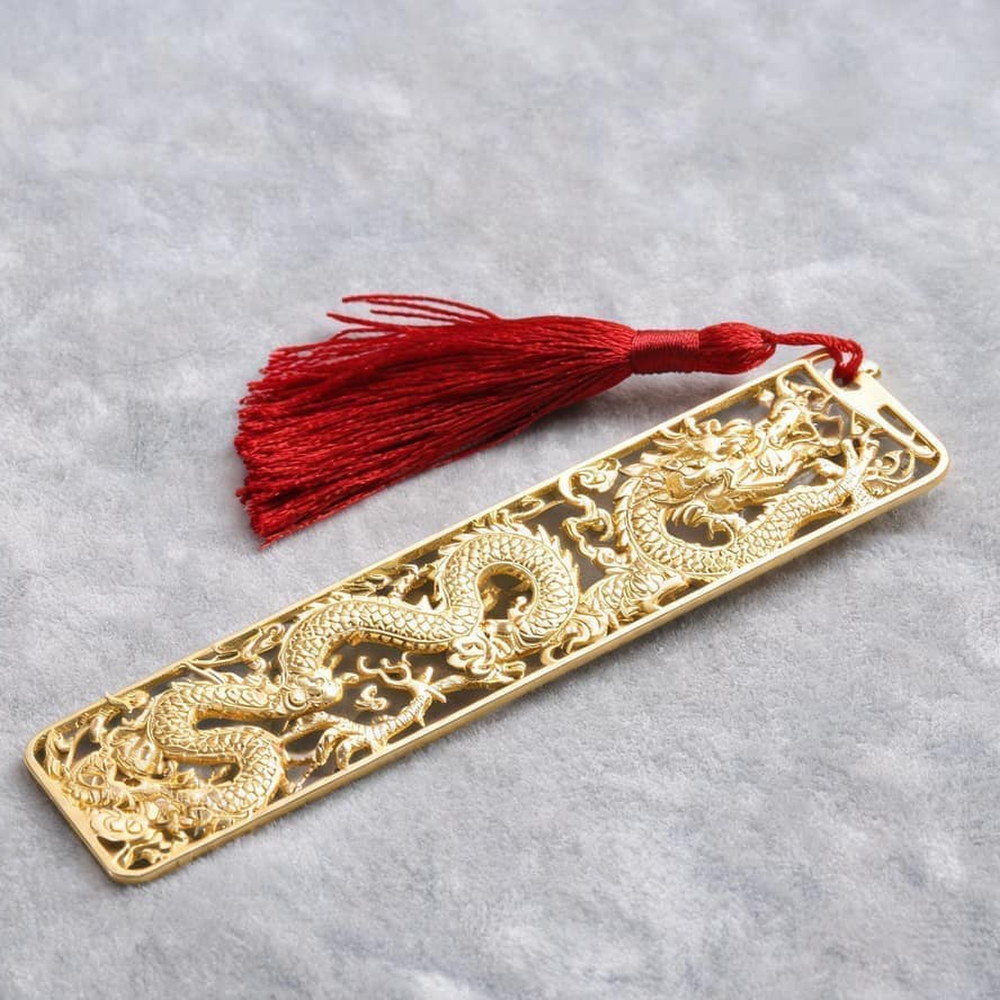
Dragon heads, paddles and drums worked into small wooden pieces — a keepsake of the river towns
Case: Dragon heads, paddles and drums worked into small wooden pieces — a keepsake of the river towns
Experience
Grip and posture first, then onto the water to the drums — one run and you are warm from head to toe
Case: Grip and posture first, then onto the water to the drums — one run and you are warm from head to toe
Home
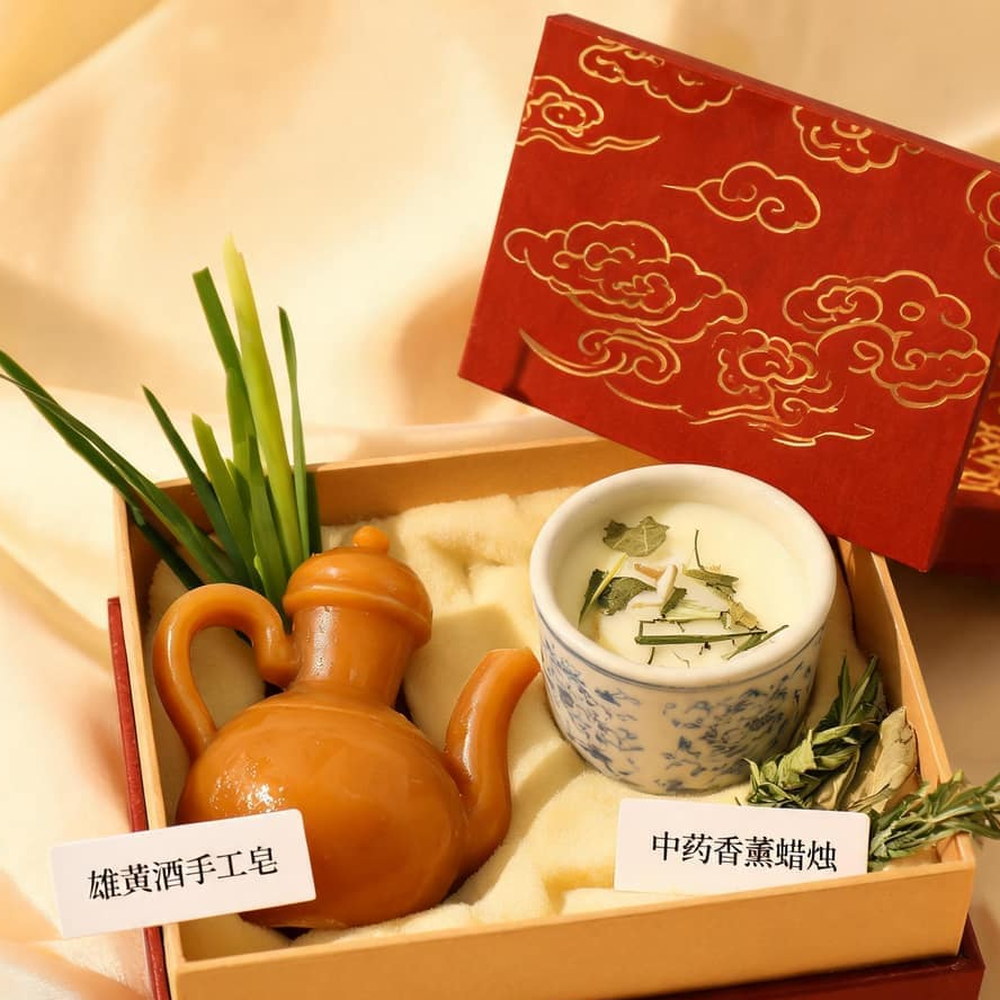
Pressed into the shape of a wine jar, scented with mugwort and herbs — a small ornament that happens to live by the basin
Case: Pressed into the shape of a wine jar, scented with mugwort and herbs — a small ornament that happens to live by the basin
← Scroll sideways for more →
Links lead to third-party marketplaces. This site has no promotional relationship with them.
Travel proposals · Meet the custom in its real setting
← Scroll sideways for more →
Related customs
← Scroll sideways for more →
Fact-checked October 2026 · every citation traceable
Primary sources are Chinese-language publications, cited for traceability. Bodies without a standard English name are listed by domain.