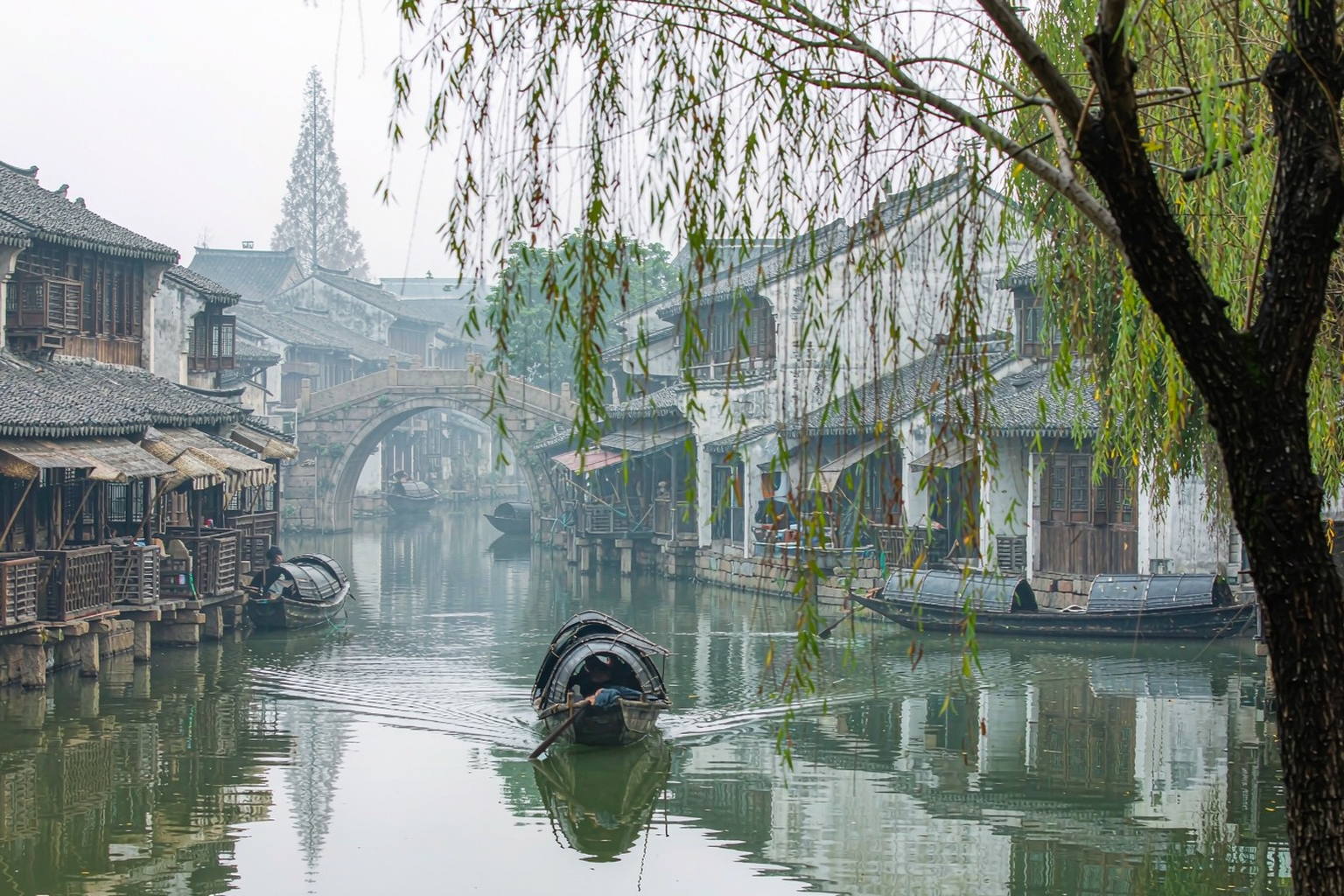
Folk artsZhejiang and Shanxi
Legend of Lanke Mountain
A woodcutter set down his axe to watch a game of Go. When he turned round, the handle had rotted away in his hand.
A woodcutter set down his axe to watch a game of Go. When he turned round, the handle had rotted away in his hand.
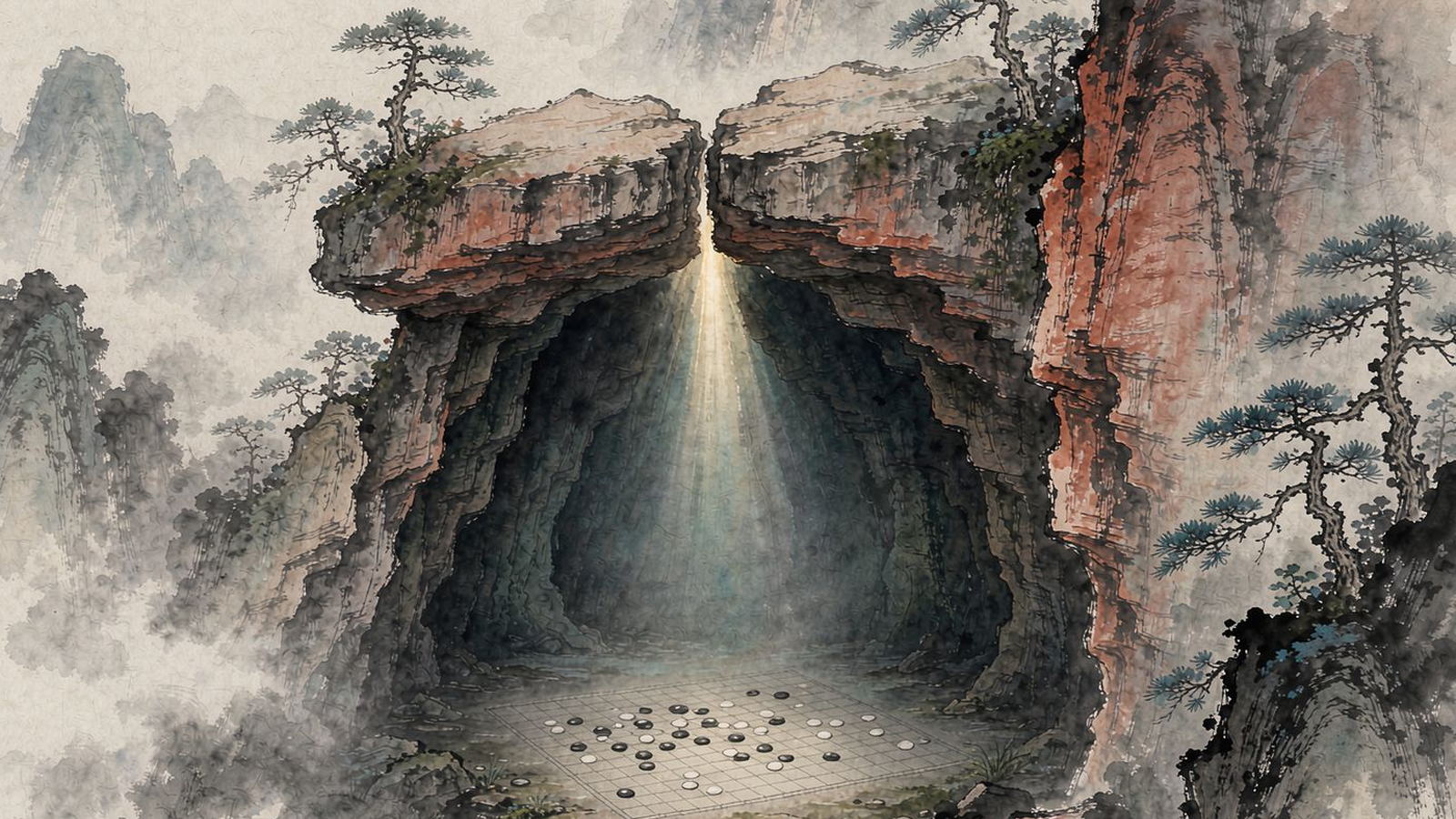
The stone beam lies across the summit like a natural bridge, and the arch beneath it is the Qingxia cave. In the Tang, Du Guangting's Record of Grotto Heavens and Blessed Places lists it as Qingxia, the eighth grotto heaven. Today a great Go board is laid out inside the cave, and the long narrow fissure in the beam is known as the thread of sky.
The game was never finished, but the axe handle rotted first: lanke, 'rotten handle', became another name for Go.
Traditions, echoed by a new generation
Some come for the unfinished game, some just to stand for a while under the stone beam on the summit. Many readers meet the line 'one day in the mountains, a thousand years in the world' in a novel first, and only later learn that it comes from Quzhou.
Go itself is national intangible heritage — in 2008 Go, Chinese chess and Mongolian chess entered the second national list together
'One day in the mountains, a thousand years in the world' has been retold for generations: one of the earliest time-travel stories
Quzhou has legislated for Go, and the Lanke Cup world open runs year after year, so the legend gains a new chapter annually
History · Customs · Cultural meaning
 Legend of Lanke Mountain · Historical Origins
One continuous line · back to the source
Lanke Mountain was originally called Shishi Mountain, standing on the east bank of the Wuxi river about ten kilometres southeast of Quzhou in Zhejiang, a little over 160 metres high and of danxia formation, with a stone beam laid across the summit like a bridge and the Qingxia cave as its arch. It took the name Lanke in the Tang and has kept it since; Du Guangting's Record of Grotto Heavens and Blessed Places calls it Qingxia, the eighth grotto heaven.
The earliest record of the legend is Yu Xi's Zhilin, of the Eastern Jin: 'In the mountains of Xin'an there is a stone chamber. Wang Zhi went into it and saw two boys playing Go; he watched, and before the game was over he looked at the axe he carried to cut firewood and found the handle rotted away. He hurried home, and nothing was as it had been.' Xin'an is the old name of Quzhou. Ren Fang's fifth-century Records of Strange Things adds the players' song and the date stones — 'Zhi held them in his mouth and did not feel hungry', 'Zhi looked, and the handle had rotted through; when he went home, none of his contemporaries remained' — and Li Daoyuan's Commentary on the Water Classic cites the story as well.
The same motif is told in Lingchuan, Shanxi, where Jizi is said to have withdrawn to Qizi Mountain and arranged black and white stones from the hillside into trigram patterns, watching the sky and setting the calendar, which is how Go is claimed to have begun there. In 2011 the legend of Lanke Mountain entered the third national list of intangible cultural heritage, No. Ⅰ-106, nominated jointly by Quzhou in Zhejiang and Lingchuan county in Shanxi, with the Quzhou cultural centre, which is also the city's intangible heritage protection centre, as the protecting body.
Legend of Lanke Mountain · Customs and Practice
Seasonal ritual · everyday life
You climb first to see the stone beam. The natural beam lies across the main peak like an enormous stone bridge; the east-west fissure in it runs thirty metres long by fifteen wide, one and a half metres at its highest and only twenty centimetres at its lowest, so that looking up from below you see a single bright line — the thread of sky. In the Qingxia cave beneath the beam a great Go board is set out.
In the old days Keshan had eight scenic spots: the highest summit, the natural stone beam, the thread of sky in the cave, the blue emptiness of the cave, the immortals' hidden board, the Sun-lagging pavilion, the Stone Bridge temple and the Xianji shrine. Baoyan Temple at the southern foot was built in 541, the seventh year of the Datong reign of Liang; the cliff inscription beneath the beam still carries the four characters 'natural stone beam' written by Li Sui, a Ming prefect. Gazetteers of the mountain were compiled five times over the centuries, and the three from the Ming Tianqi and the Qing Shunzhi and Guangxu reigns survive.
The Tang poet Meng Jiao wrote Lanke Stone: 'One day within the immortal realm, / a thousand years run out among men. / The two have not played out the board, / and all things are already void. / The woodcutter turns back down the road, / his axe handle rotted to the wind. / Only the stone beam is left, / still arching above the red rainbow.' The whole poem is cut into a stele at the foot of the mountain, and visitors often stop to read a line or two aloud.
Legend of Lanke Mountain · Cultural Significance
Where the heart points · carried down the generations
Lanke later became a byname for Go. The earliest surviving Go book, Forgetting Worry, Pure Joy, preserves a game record from Quzhou, the Lanke Diagram, together with a position diagram, the Lanke Position; the Yuan Xuanxuan Classic of Go includes a Woodcutter Position diagram, and the Ming Secret Traditions of the Stone Chamber and Secrets of the Stone Chamber Open record Go matters of Lanke as well. In Li Quan's Qing encyclopaedia of alternative names, the white Go stone acquired a refined title: the Lanke immortal guest.
Quzhou has turned the mountain into a calling card. In November 2021 the country's first local regulation on Go, the Quzhou regulations on developing and reviving Go, was approved by the Zhejiang provincial people's congress and took effect on 1 April 2022; the Quzhou Lanke Cup was upgraded from a Chinese championship to an international open, and the names Chen Zude, Nie Weiping, Ma Xiaochun, Chang Hao, Gu Li, Ke Jie and Lee Chang-ho have all appeared on its boards. The Japanese Go world still speaks admiringly of the Lanke spirit, and holds it up as a standard for itself.
To admire and to use · Tradition in everyday life
 Craft
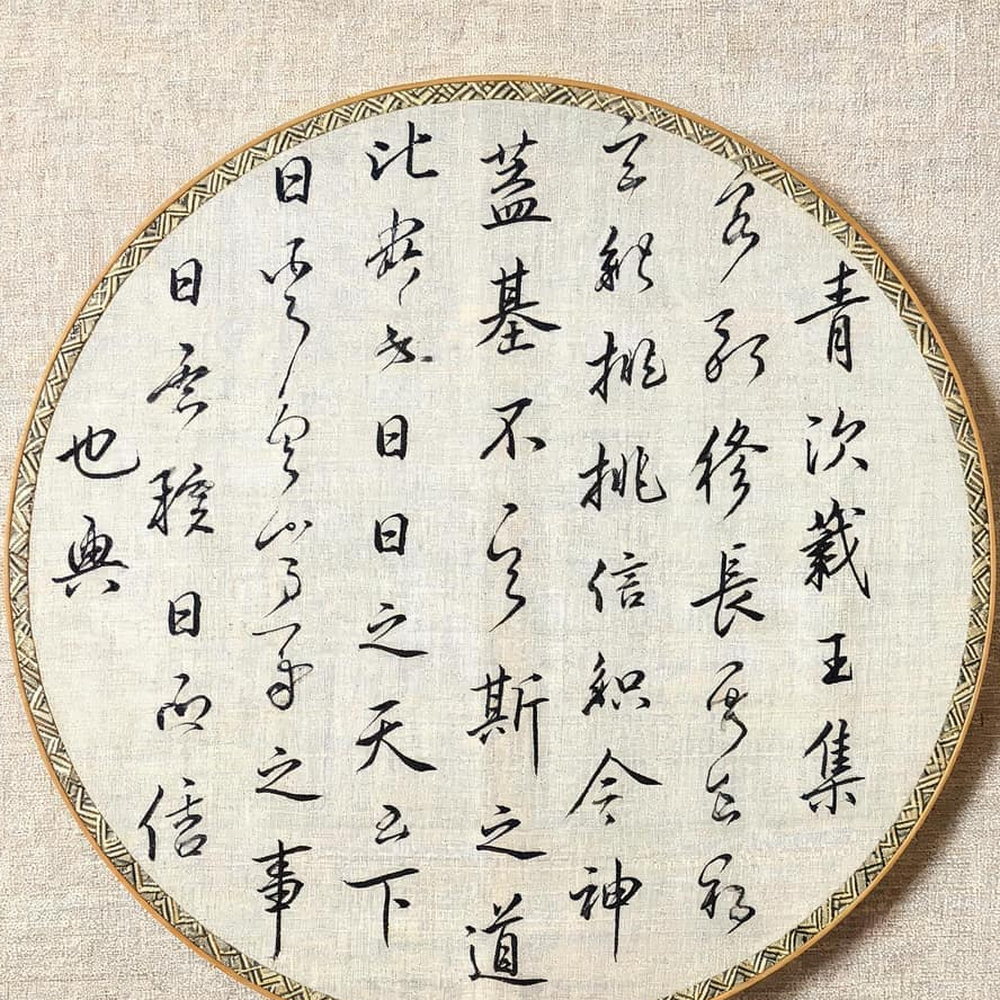
Players like the word on the leaf of a fan: one fan carries half the allusion
Case: Players like the word on the leaf of a fan: one fan carries half the allusion
 Craft
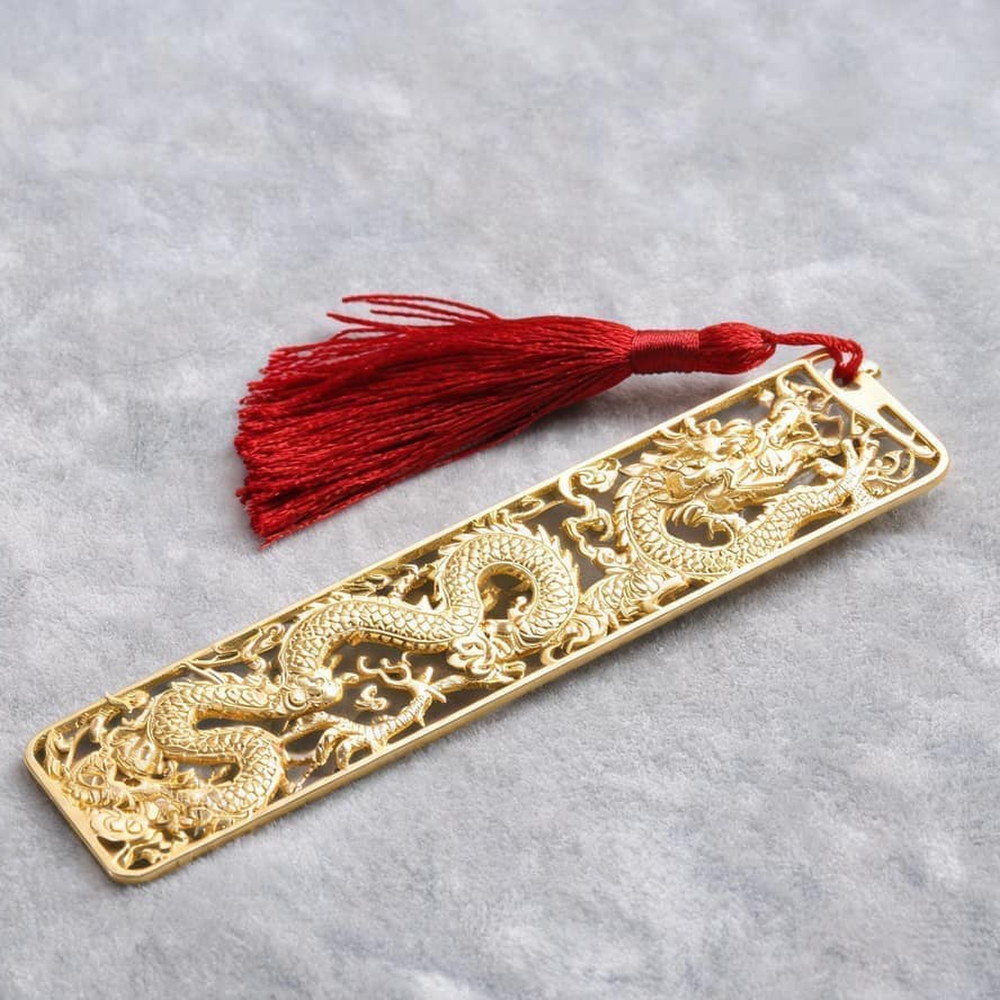
The boards of the Lanke Diagram and the Lanke Position etched into a bookmark: read the game and the story at once
Case: The boards of the Lanke Diagram and the Lanke Position etched into a bookmark: read the game and the story at once
 Craft
One black stone, one white, pinned to a bag: a private signal
Case: One black stone, one white, pinned to a bag: a private signal
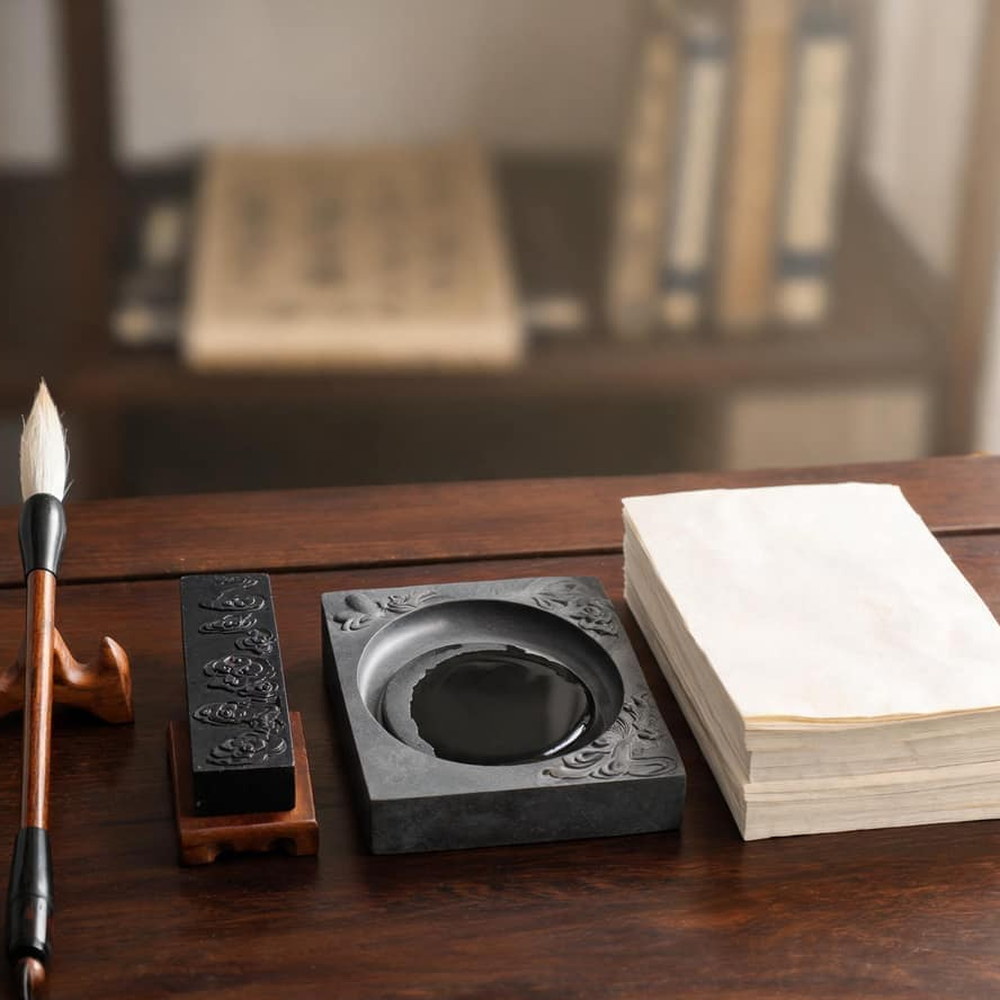 Experience
From life-and-death problems to the opening: learn to place a stone first, then go and read the game that was never finished
Case: From life-and-death problems to the opening: learn to place a stone first, then go and read the game that was never finished
← Scroll sideways for more →
Links lead to third-party marketplaces. This site has no promotional relationship with them.
Travel proposals · Meet the custom in its real setting
← Scroll sideways for more →
Related customs
← Scroll sideways for more →
Fact-checked October 2026 · every citation traceable
Primary sources are Chinese-language publications, cited for traceability. Bodies without a standard English name are listed by domain.