Miao New Year
Home/Categories/Festival/Miao New Year
FestivalGuizhou

Miao New Year

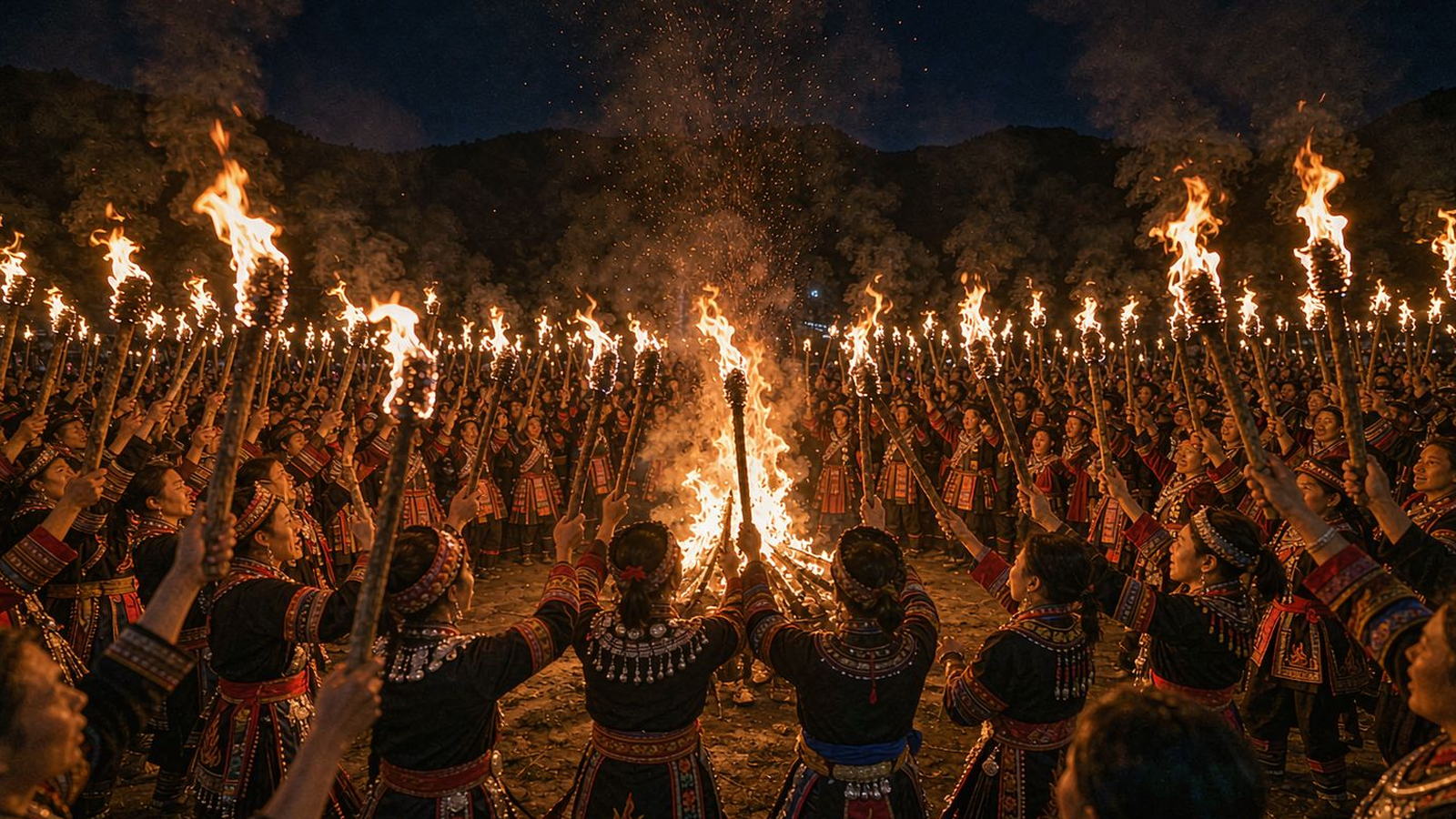
The first month of the Miao calendar: the lusheng pipes sound from one end of the village to the other. After the reunion meal, it is out with the rice wine to visit neighbouring villages — a Miao New Year that is drunk and feasted all the way to the second month.

National ICH Intangible Cultural Heritage lists · national list, inscribed 2008 · Second batch (2008) Ⅹ-83 Heritage List →
Season Festival dates First month of the Miao calendar (early to mid tenth lunar month, staggered by village) · Best time Early to mid November (the Leishan procession and long-table banquets) Travel →

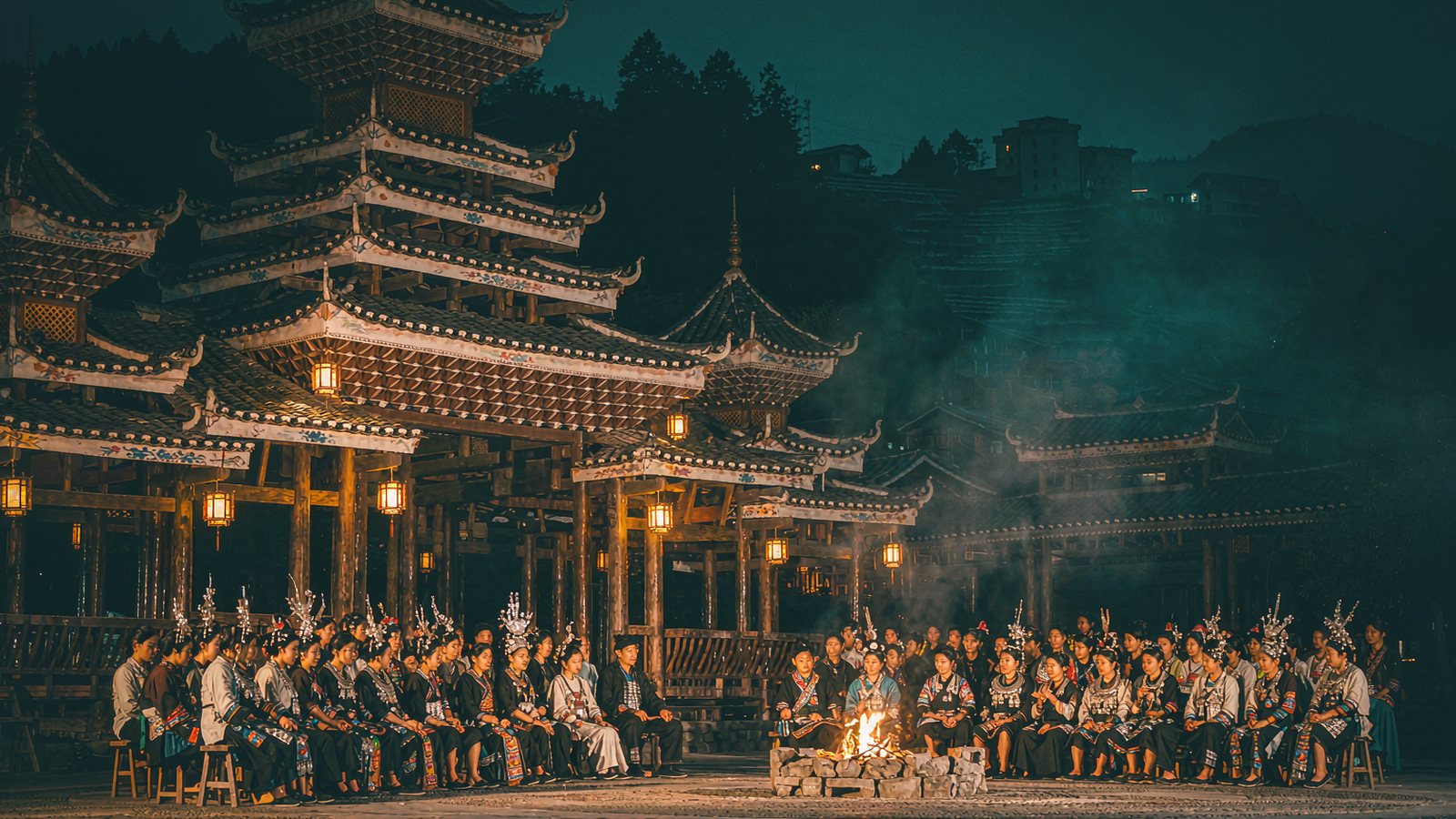
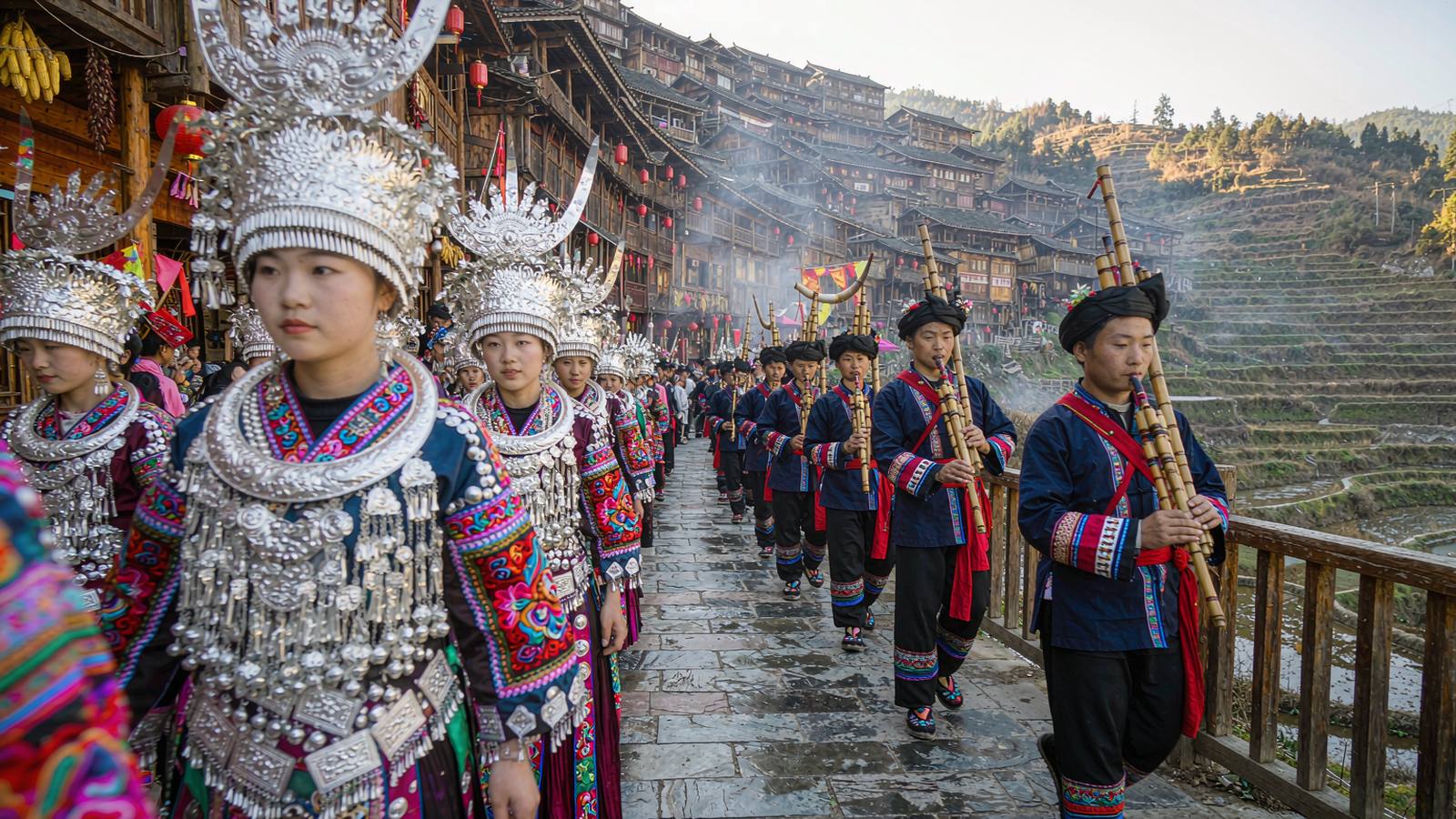
On the flagstone road below Leigong Mountain, girls in full dress walk under silver crowns that ring at every step. The lusheng band follows close behind, its melody pressed to the pace of their feet. That evening the long tables are set out along the street, and girls in festival dress stand behind the guests with wine pots, tipping a thin line of wine from high above into the bowl; the toast songs do not stop, and neither does the wine.

The Miao year does not end after twelve days — while the lusheng plays the wine keeps flowing, and the joy runs on to the Drum-Turning Festival of early spring.

01

Why young people love it

Traditions, echoed by a new generation

Miao New Year is a festival that takes turns: each village hosts in sequence, so young people can follow the wine and the singing all the way into early spring. The arrangement itself is romantic enough.

01

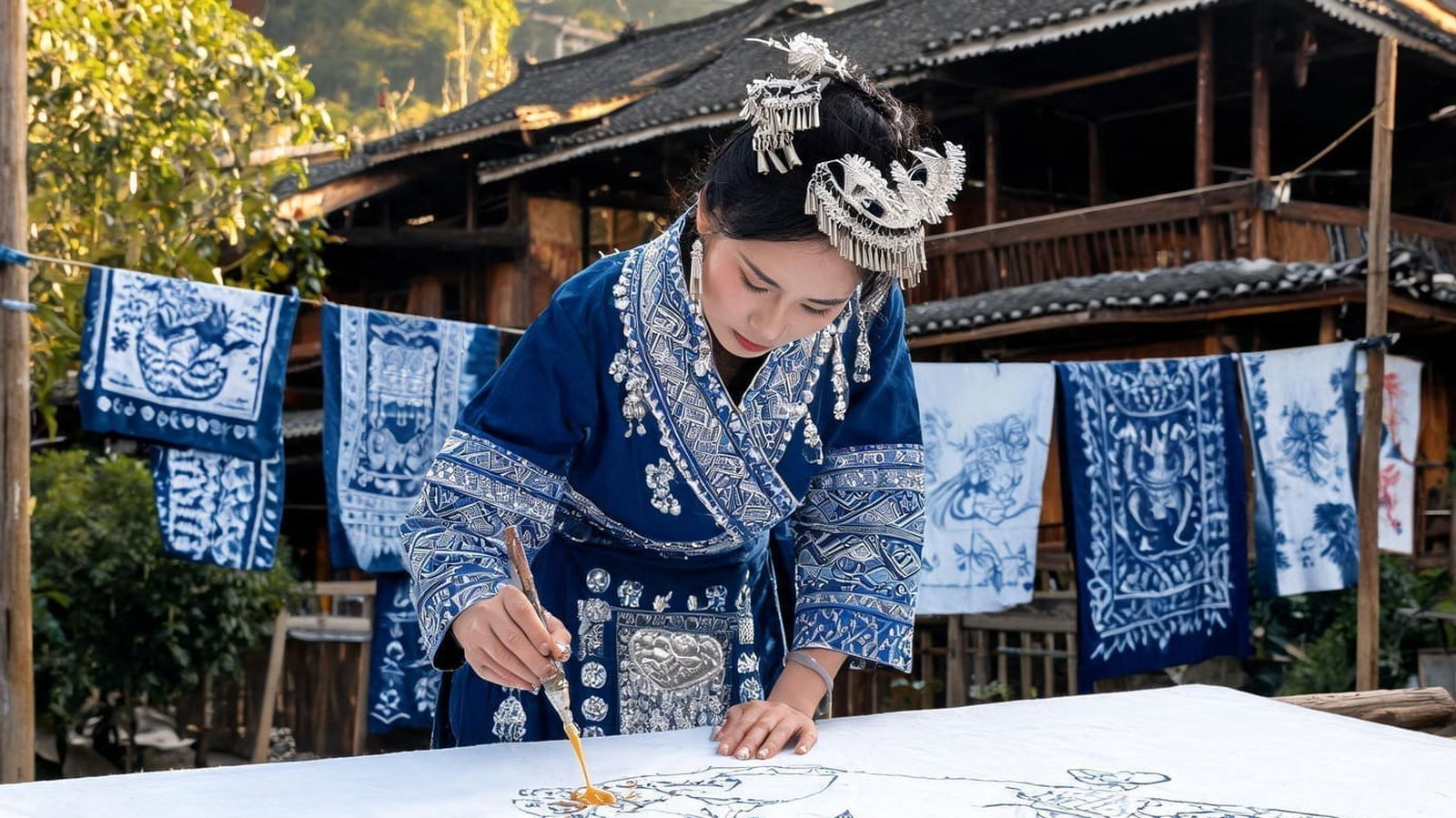
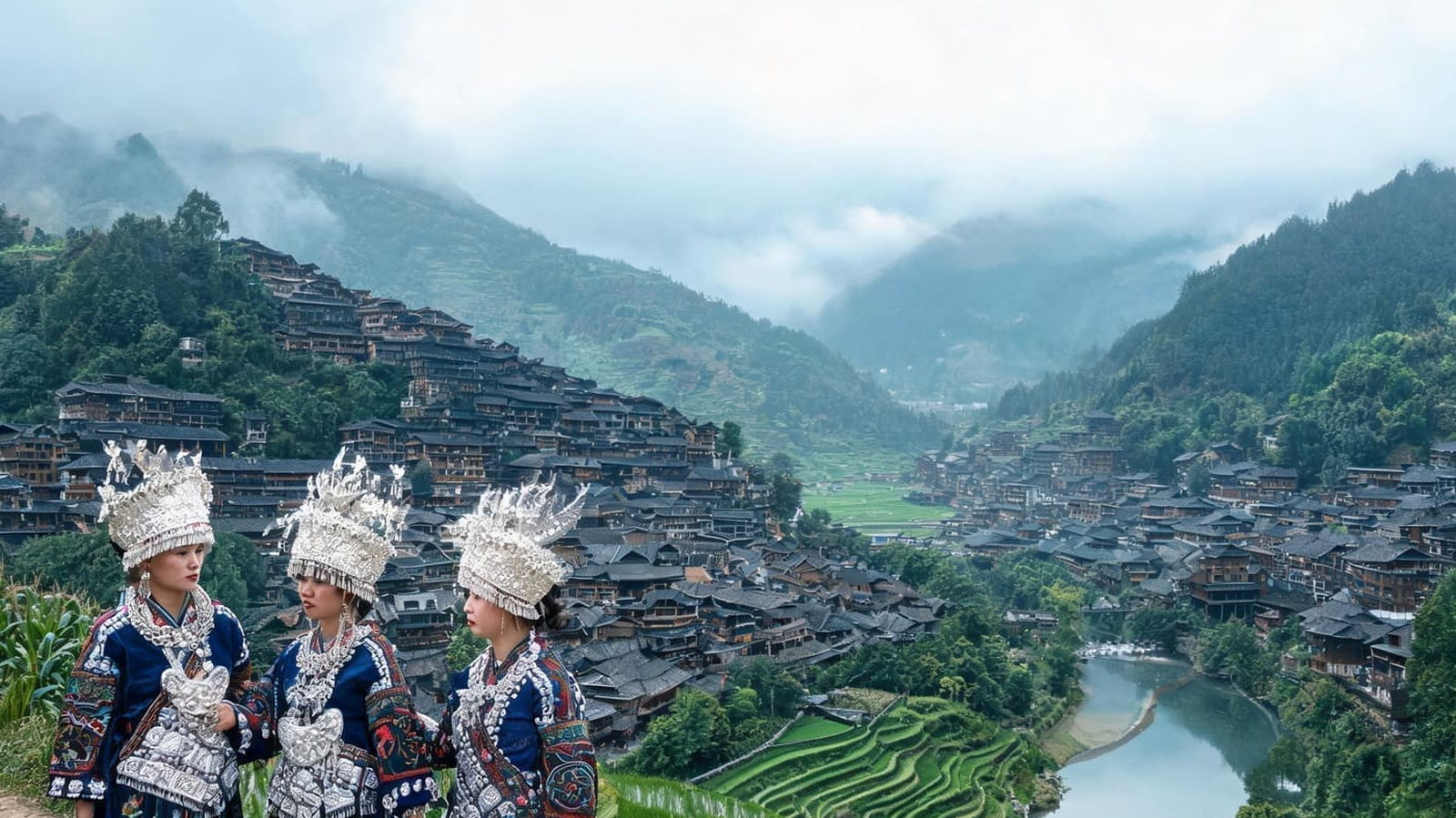
Silver crowns, silver horns and hundred-bird coats — the procession is a walking exhibition of ethnic dress

02

Village-hopping toasts, long-table banquets and the 'high mountain, flowing water' pour turn social drinking into a ritual of hospitality

03

The lusheng sounds from the autumn harvest into the new year, and one festival can run for a fortnight: slow celebrating in the truest sense

02

Origins & Practice

History · Customs · Cultural meaning

Miao New Year·Origins Miao New Year · Origins
1

Origins

One line of descent · tracing the root

Miao New Year is the new year of the Miao people, called 'Nongx Niangx' in the Miao language. In the Miao areas along the Qingshui and Duliu rivers of Guizhou, people still keep the Miao calendar, which differs from the lunar one; its first month opens the Miao year. With the harvest in and the farming year effectively over, the year begins here.

Written records of the festival's origin are lacking, but the songs remember. A ancient song of southeast Guizhou, 'Song of Releasing the Ducks', sings: 'In the tenth month we keep Miao New Year, in the eleventh the high-slope year, in the twelfth the Han year.' Around Danzhai another song tells of Awo, a Miao girl married to a poor but honest man called Di, who was carried off to the sky; each eleventh month the Miao kill pigs, hold bull fights, blow the pipes and beat the drums to bring Awo home to celebrate with them.

Because the opening of the Miao year falls at staggered times from village to village, each takes its turn as the centre of the festival — wine in your village this year, pipes in his the next. In June 2008 Miao New Year, jointly nominated by Danzhai and Leishan counties in Guizhou, was inscribed on the second national list of intangible cultural heritage as item Ⅹ-83.

Miao New Year·Customs Miao New Year · Customs
2

Customs

Seasonal rites · the life of people

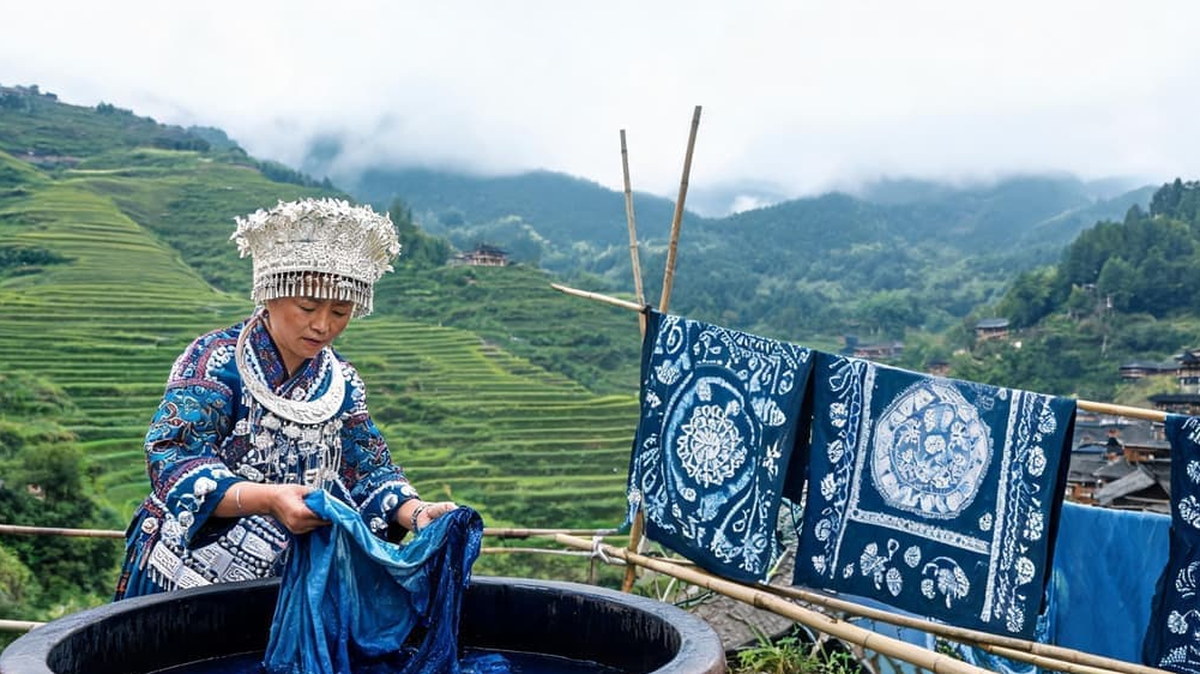
The year begins at the stove. In the days before, every household kills its year pig, pounds glutinous rice cakes, brews rice wine, grinds tofu and sews new clothes. Once the new year's eve has turned, chickens and fish are prepared for the year meal — and fish cannot be missing: on the offering table the fish and meat are laid out on leaves while the ritual specialist chants the old songs to send off and welcome the ancestors, a way of remembering the eastern homeland the Miao left behind.

The year meal runs from daylight into the night. After the reunion toast at home the men set out to visit other villages, a bowl in one house and then the next; every household invites outside guests to a 'village-hopping meal', the hostess singing toasts while the guest answers in song, and a single banquet often lasts until dawn. New Year's morning has its rules: no sweeping, no blowing on the fire, no cooking of raw food, no water carried out of the house — all for a lucky year.

Then come the days of pipe and drum. In the lusheng ground the girls change into full dress to dance the pipe dance and tread the drum, while young men from other villages come at night to sing in courtship, the 'youfang'; in fine weather they dance until daybreak. By the bull pond the fights begin, the whole field accompanied by lusheng and the deep mangtong pipes. A Miao New Year usually lasts five to twelve days, and the young then move on to the next village's celebration; the pipes play on into the Drum-Turning Festival of the second month, when they are put away and dancing stops, and the year's rejoicing is finally over.
Miao New Year·Cultural meaning Miao New Year · Cultural meaning
3

Cultural meaning

What the heart turns to · handed down through generations

Miao New Year joins calendar-keeping, sacrifice and harvest celebration in one. It marks the yield of a year's work and makes offerings to ancestors and spirits, and to the maple, bamboo, rock 'mother' and wells that the Miao regard as guardians. Run through its sequence, the festival holds the lusheng dance, silverwork, Miao embroidery and the calendar songs of the year — nowhere is the culture of a Miao village seen so completely.

In Leishan today the village-by-village observance has become a joint celebration with a procession of ten thousand: the Gaopai lusheng band, the Zhang'ao bronze-drum team and the hundred-bird-coat contingent come down the road together, and a thousand-place long-table banquet fills the street. As young people leave the villages the atmosphere thins, yet each new year the pipes below Leigong Mountain still sound on time — one reason the festival is listed nationally and stands in need of transmission.

03

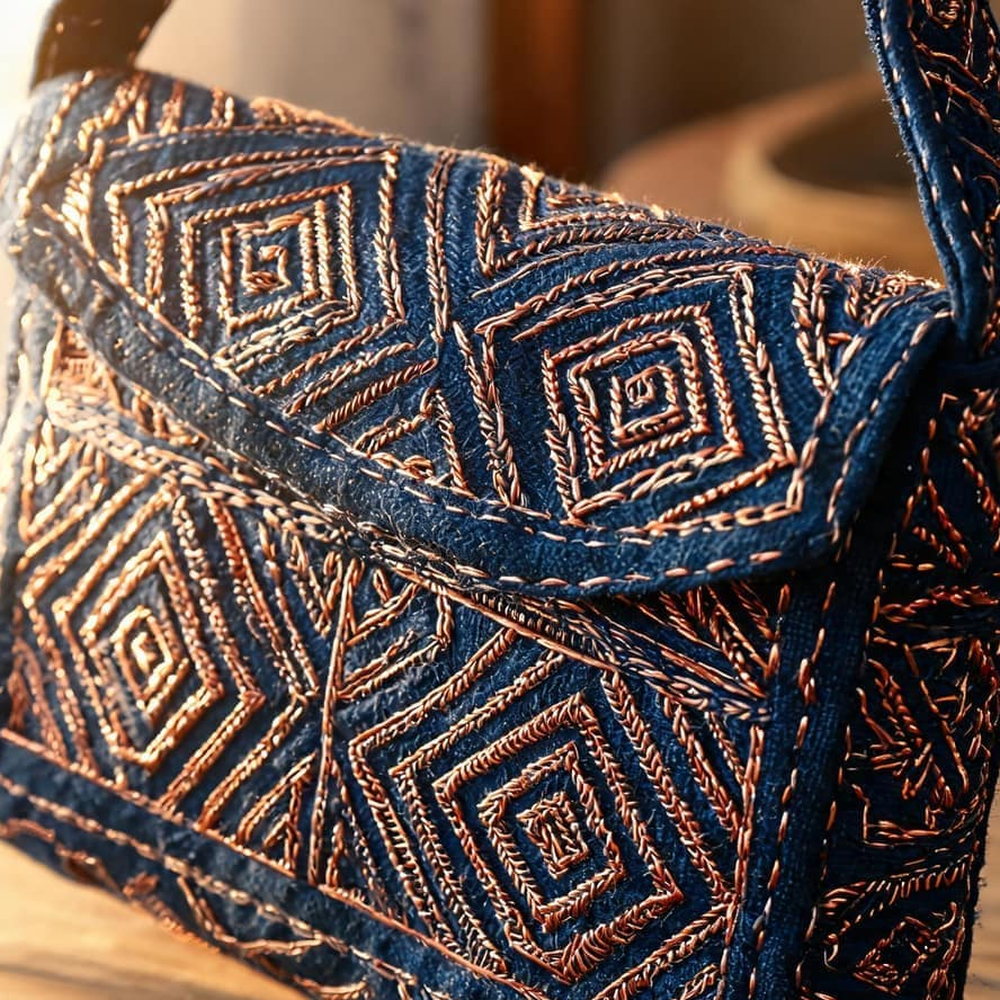
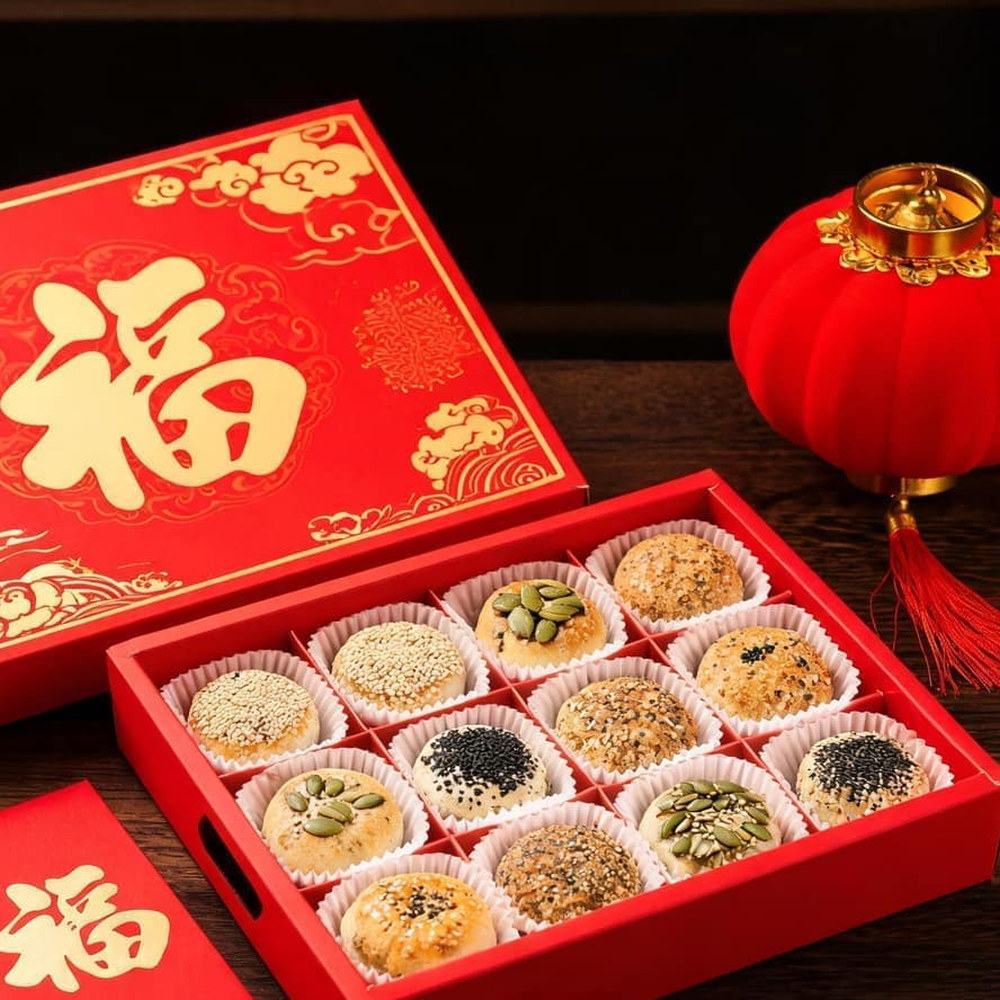
Folk goods · Bring the tradition home

To admire and to use · Tradition in everyday life

← Scroll sideways for more →

Links lead to third-party marketplaces. This site has no promotional relationship with them.

04

Where to experience Miao New Year

Travel proposals · Meet the custom in its real setting

← Scroll sideways for more →

+

Keep exploring

Related customs

← Scroll sideways for more →

S

Sources

Fact-checked October 2026 · every citation traceable

Primary sources are Chinese-language publications, cited for traceability. Bodies without a standard English name are listed by domain.