Chinese Paper-Cutting
Home/Categories/Traditional crafts/Chinese Paper-Cutting
Traditional craftsNationwide (northern Shaanxi, Yuxian, Yangzhou and more)

Chinese Paper-Cutting

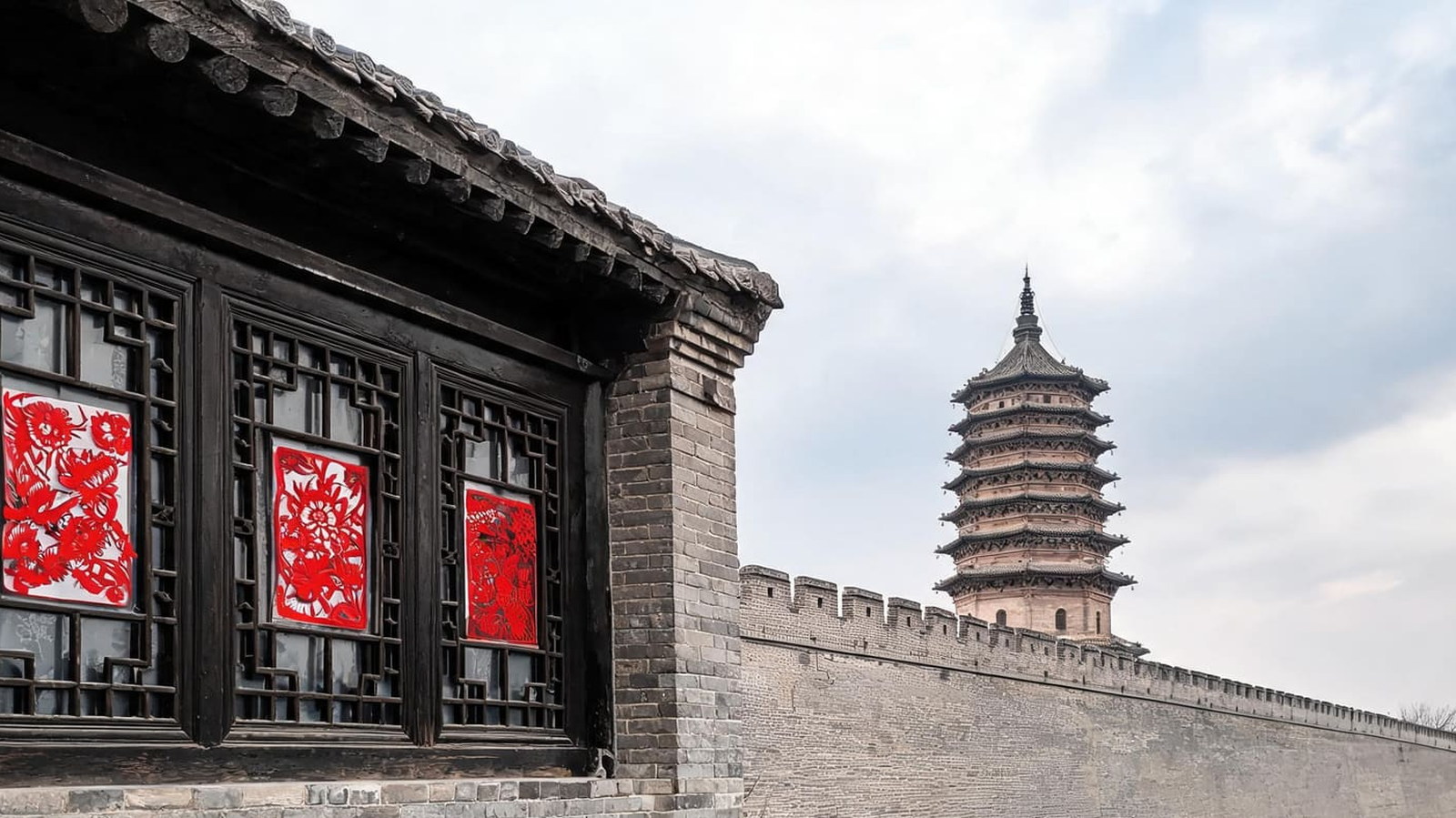
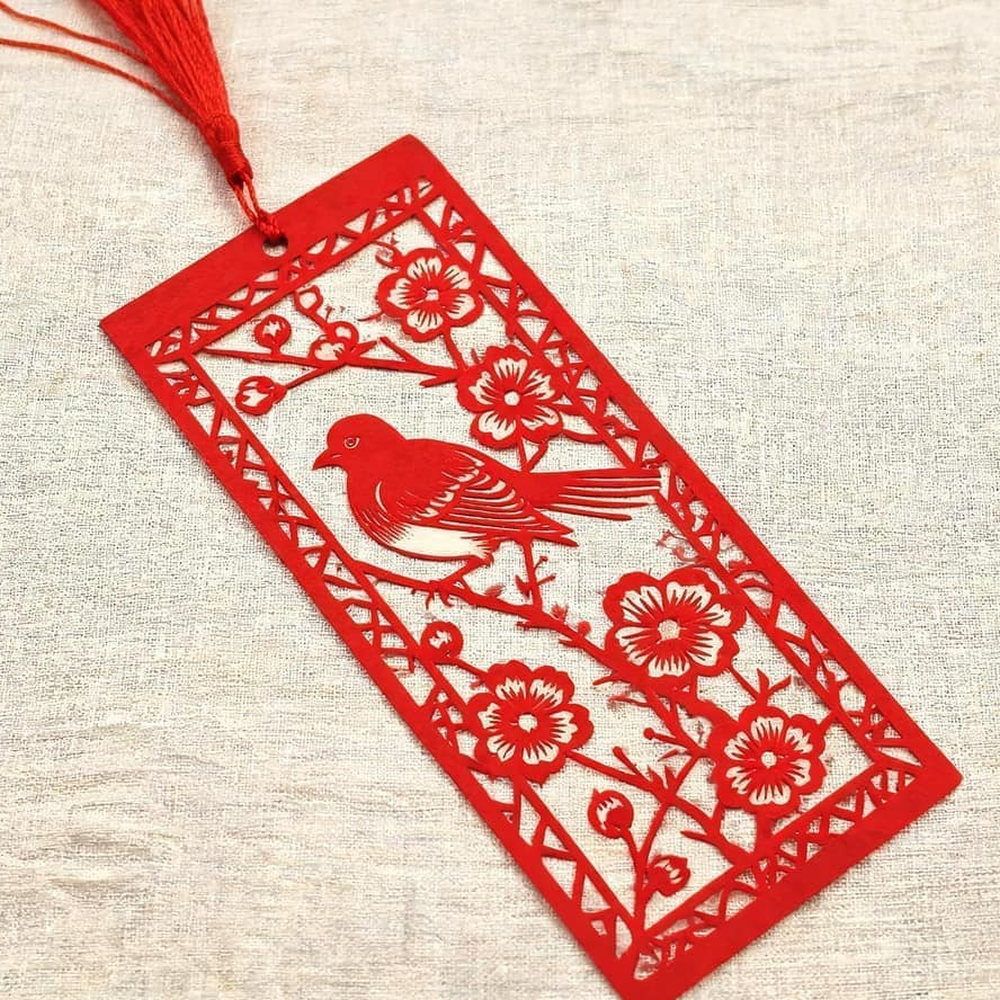
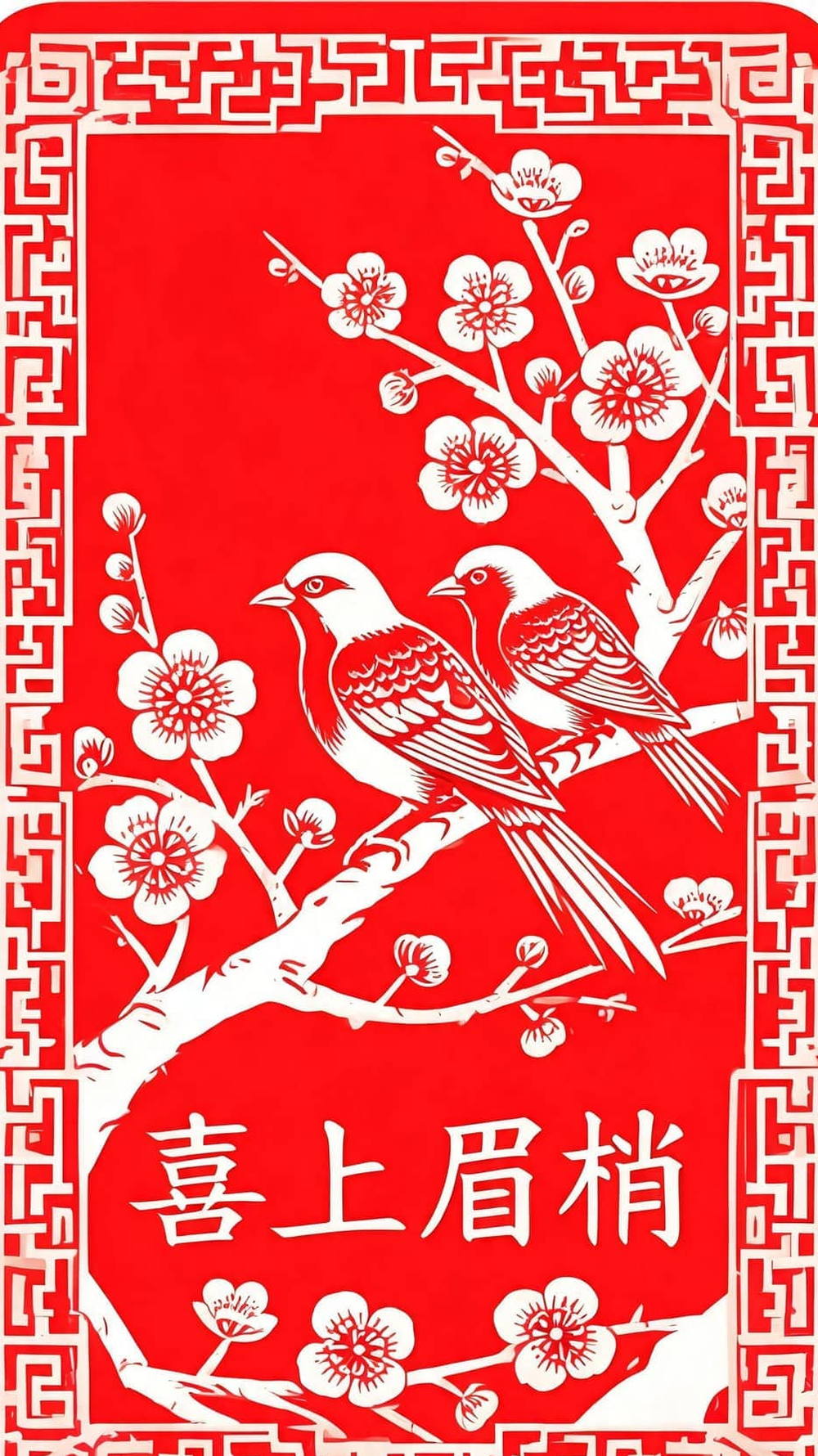
When the twelfth month comes, a stack of red paper spreads across the kang. The scissors turn inside the fold, shavings falling in layers onto the apron — open the paper, and a magpie already stands on a plum branch while a chubby baby laughs hugging a carp. Such window flowers will be up on the panes before long.

UNESCO ICH Intangible Cultural Heritage lists · national list, inscribed 2006 · First batch (2006) Ⅶ-16 · UNESCO ICH Representative List, inscribed 2009 Heritage List →
Season Festival dates Best kept with the twelfth-month window-flower season · Best time All year — watch inheritors cutting live Travel →

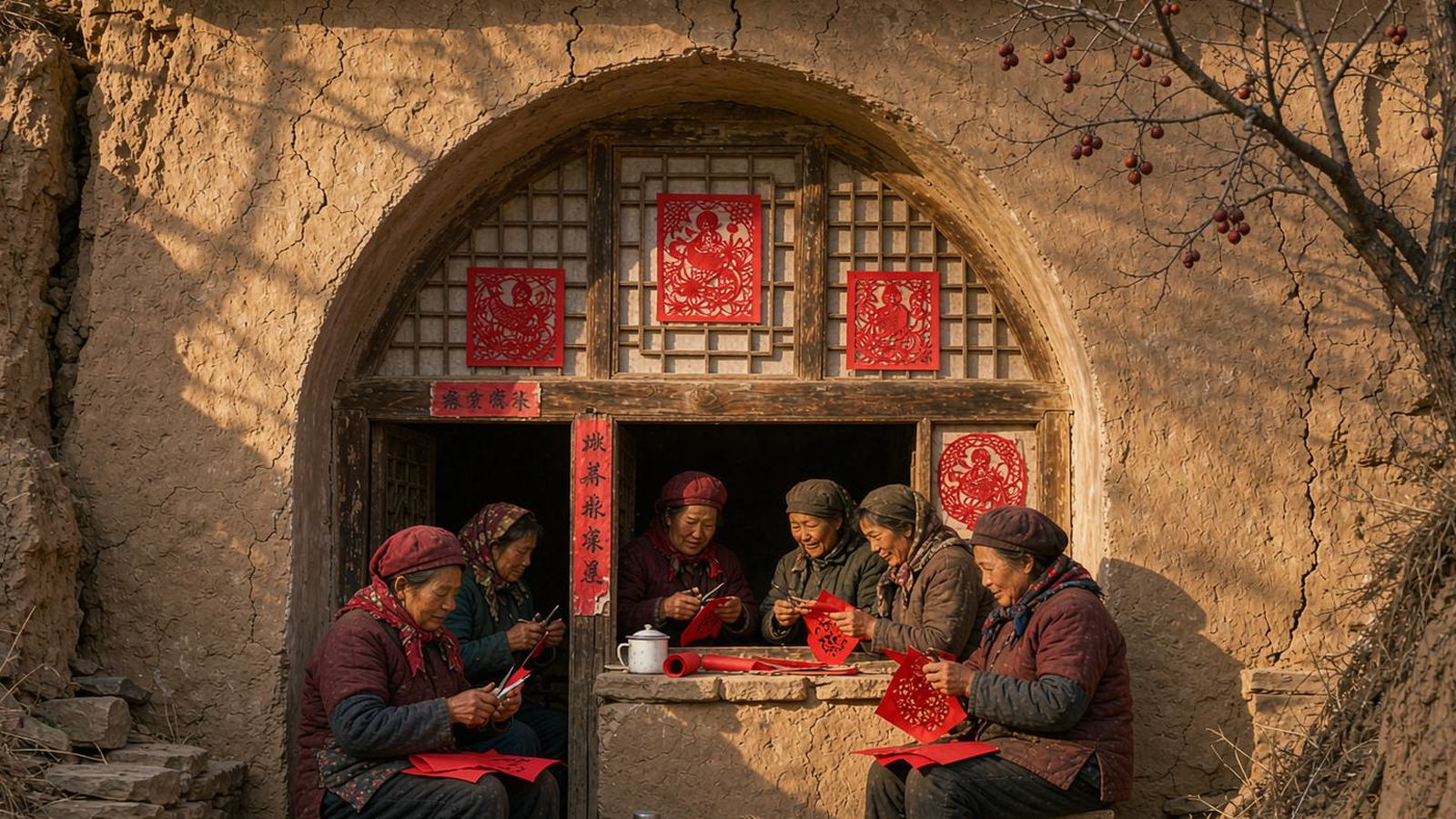
Inside a cave dwelling in northern Shaanxi, the window paper lets in a yellowed light. An old woman sits cross-legged on the kang, the scissors swimming through red paper, shavings settling on her trousers. Opened out: a magpie on a plum branch, a baby with a carp. Then, paste bowl in hand, she brushes the cuttings onto the panes one by one, pressing each corner flat with a fingertip.

The shavings fall to the floor, and flowers bloom on the window.

01

Why the young are falling for it

Traditions, echoed by a new generation

Fold the red paper four ways, cut, and only on opening do you learn what you have made. The hollows let the light through; on the window, the work is visible from both inside and out.

01

Fold, cut against the fold, and the reveal waits for the unfolding; botch one sheet, take another and start again

02

Red paper, scissors, paste — every household owns them; no workshop required

03

In 2009, Chinese paper-cutting was inscribed on UNESCO's Representative List of the Intangible Cultural Heritage of Humanity

02

Origins & Practice

History · Customs · Cultural meaning

Chinese Paper-Cutting·Origins Chinese Paper-Cutting · Origins
1

Origins

One current, traced to its source

The craft's age is counted from paper itself. The earliest surviving examples were excavated at Astana, Turpan, Xinjiang — Northern Dynasties rosettes, folded and cut in perfect symmetry, a ring of geometry at the centre: the same hand as today's window flowers.

The Tang used paper-cutting to call souls home. Fleeing the An Lushan rebellion with his family, Du Fu sheltered one night at the old ramparts of Pengya, and wrote: 'Warm water washed my feet; paper was cut to summon my soul' — a frightened child crying at night, and the host cutting paper to calm him.

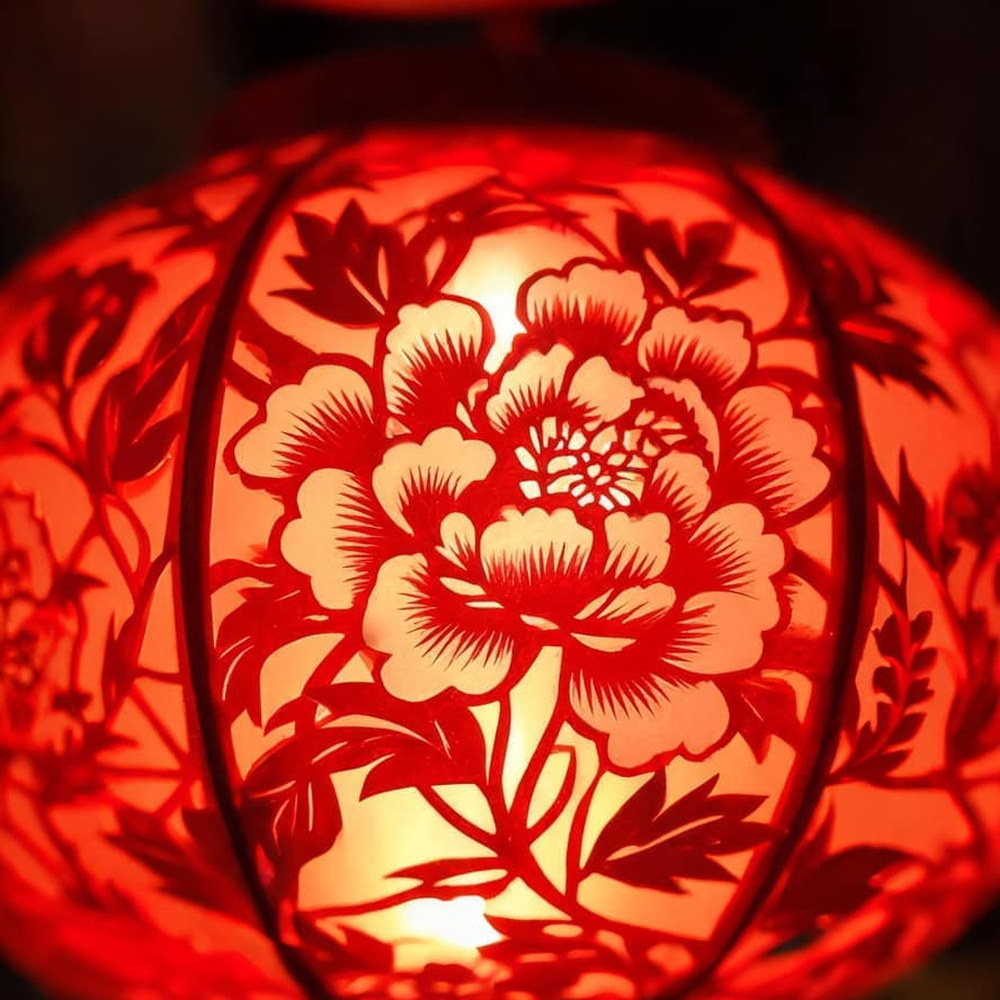
By Ming and Qing, cut paper was the handwork of every festival — window flowers, door lintel streamers, lamp decorations, the 'joy' flowers on wedding chests. Cut in the twelfth month, pasted on New Year's Eve, taken down at spring's opening with the paste still ghosting the paper.

Chinese Paper-Cutting·The customs Chinese Paper-Cutting · The customs
2

The customs

Rites of the season, texture of daily life

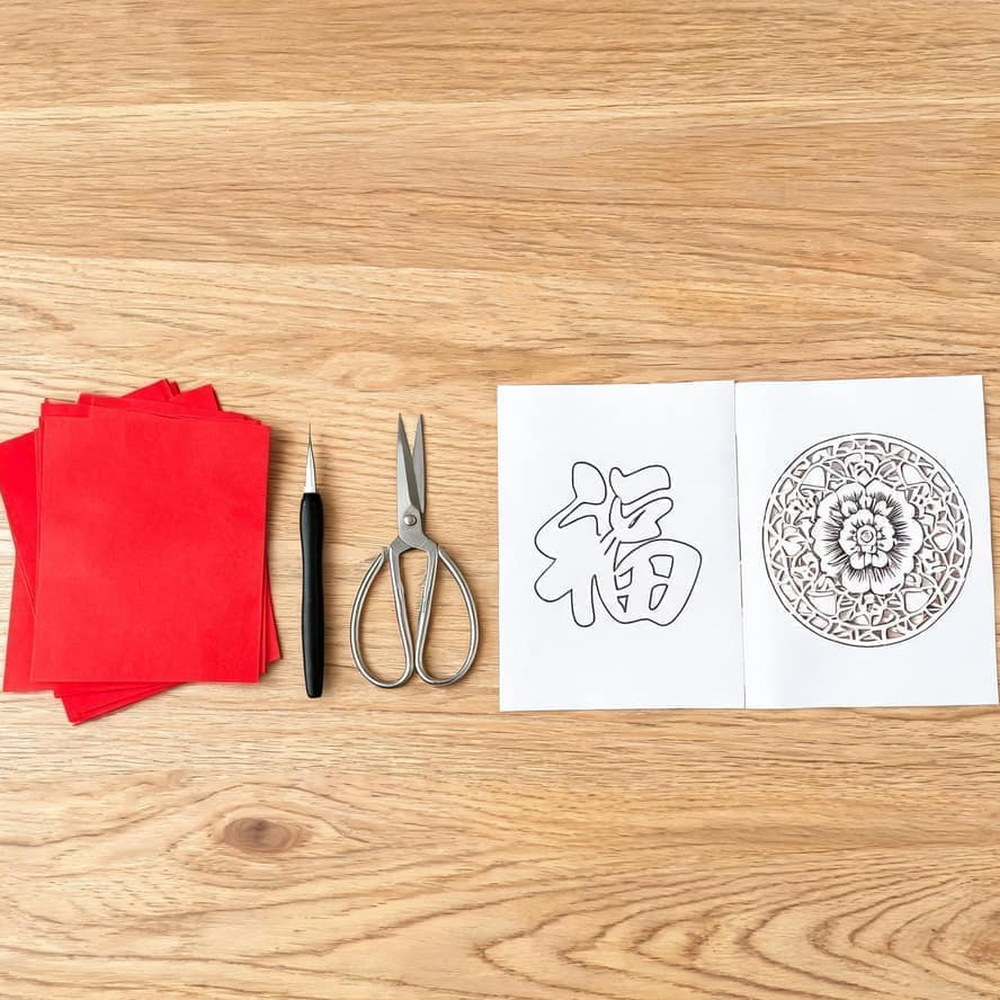
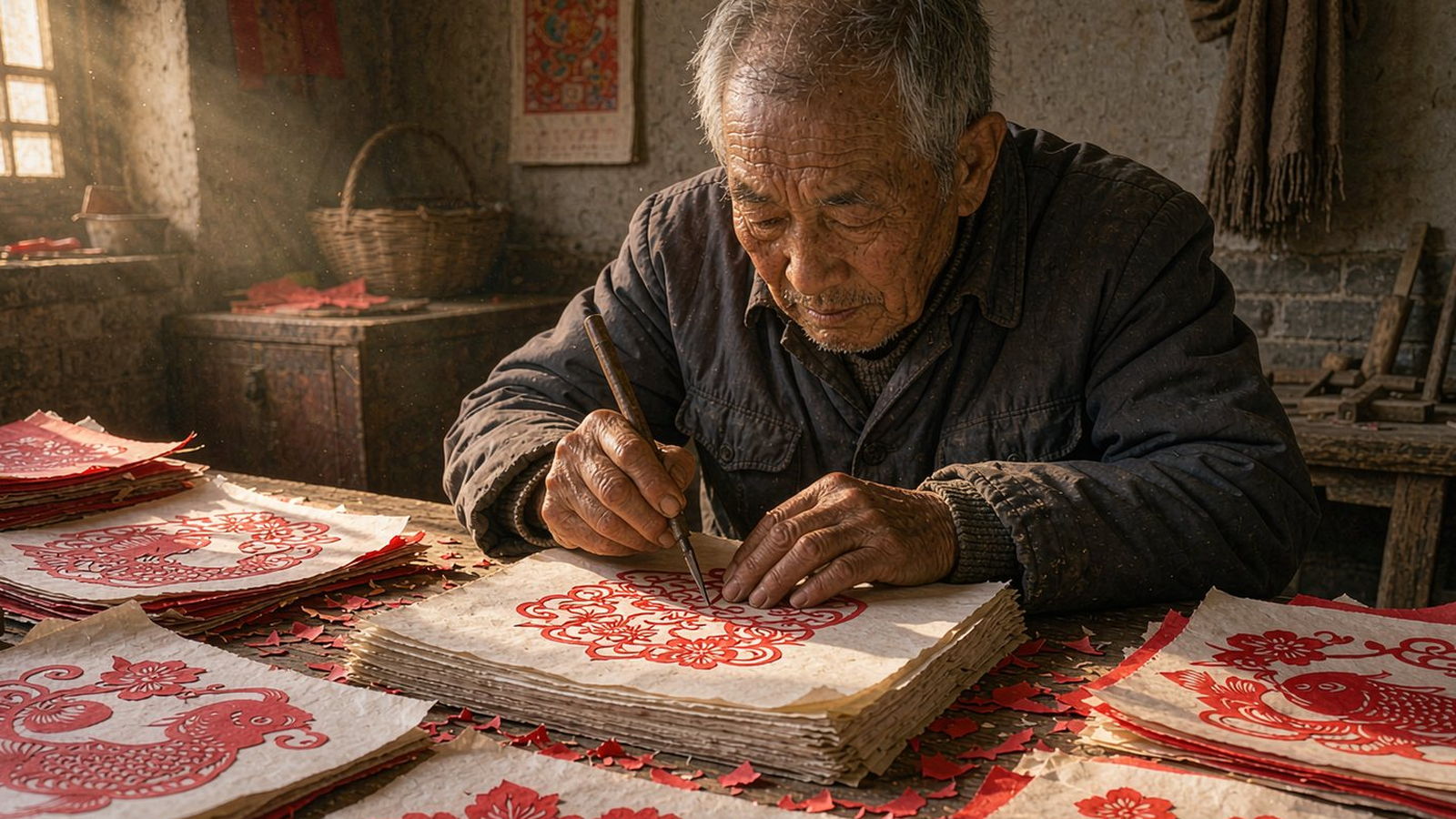
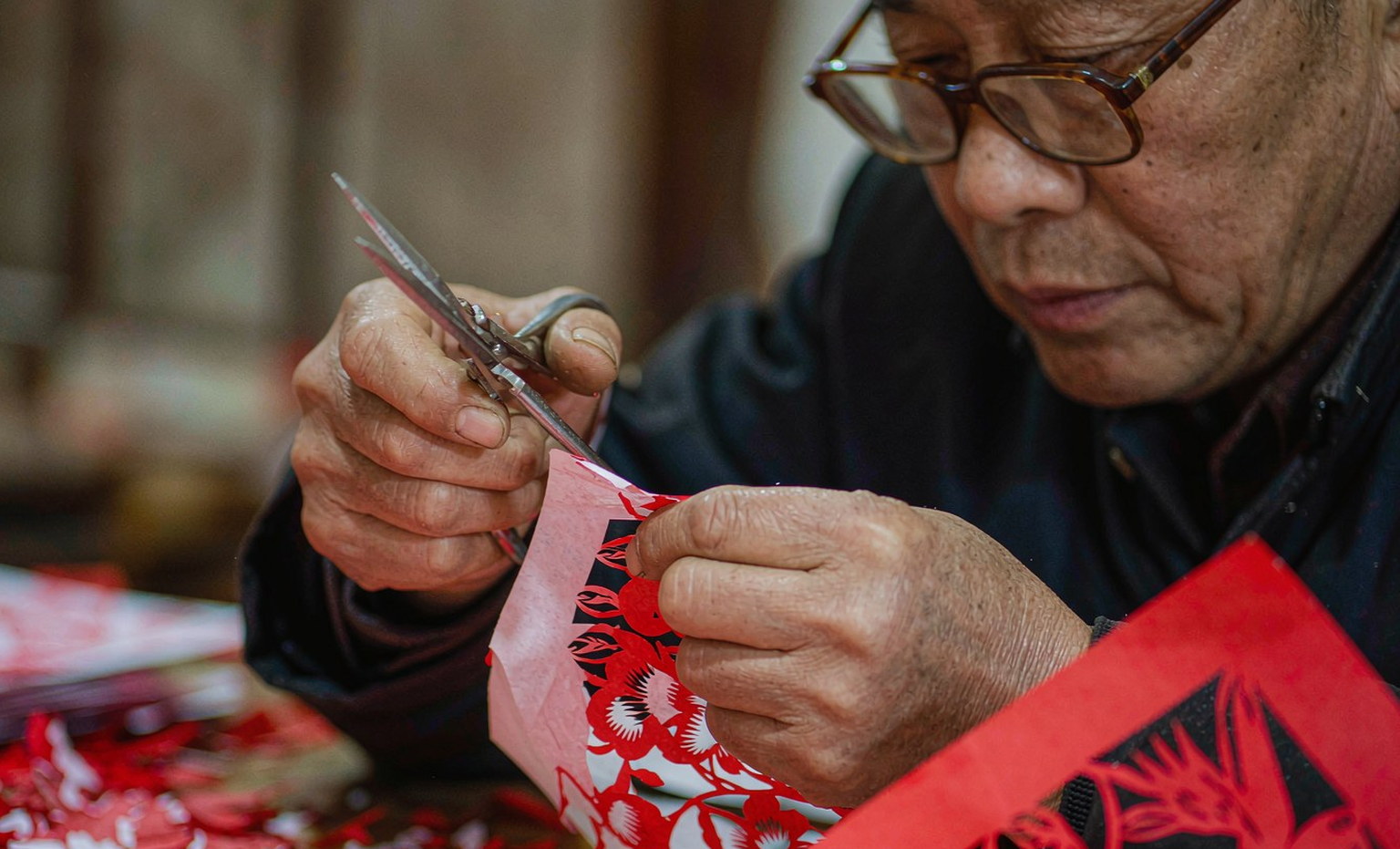
The kit is simple: one pair of scissors, one sheet of red paper. The maker folds the paper and lets the blade walk inside it — no drawn pattern is 'cutting blind', the whole picture carried in the mind. Only on unfolding is the verdict in: magpie on plum, carp leaping the gate, baby embracing fish — the days the farming family hopes for.

The north cuts bold: the window flowers of northern Shaanxi carry the blunt strength of the loess slopes, leaving whole blank spaces on animals' bodies. The south cuts fine: Yangzhou's lines run thinner than hair. Yuxian, Hebei, goes its own way — paper stacked and stabbed in a bundle with the knife, recessed cuts leading and relief cuts supporting, then colours dabbed on after: red is red, green is green, like stage costume.

Each cut pattern has its post: window flowers on the panes, streamers on the lintel, ceiling rosettes and lamp flowers indoors, the wedding 'joy' pressed at the bottom of the chest. Among the farm women the patterns travelled too — a bundle of samples pinned with paper twists; whenever someone cut a new design it passed hand to hand through the neighbouring villages, one pattern walking through a thousand hamlets.

Chinese Paper-Cutting·What it means Chinese Paper-Cutting · What it means
3

What it means

What the heart holds, the generations pass on

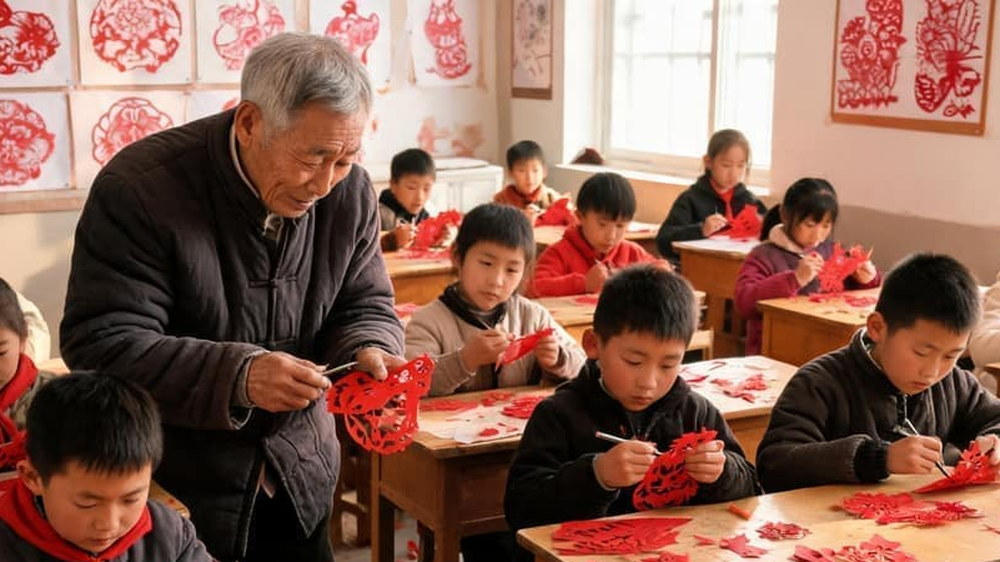
Paper-cutting needs no workshop and no great tools — the kang's edge is the studio. In the patterns live the hopes of the new year, the blessings of weddings, the wishes for children; passed down at the fingertips, woman to woman, one cut at a time. Once the paper is cut, the words are all said.

In 2006, paper-cutting entered the first batch of the national intangible cultural heritage list as item Ⅶ-16, serial no. 315; in 2009, Chinese paper-cutting joined UNESCO's Representative List of the Intangible Cultural Heritage of Humanity.

Machine-cut window flowers are now cheap and perfectly even — a yuan buys a stack at the stall. Yet at the year's end someone still sits on the kang with scissors: one close and one open of the blades, the shavings fall, and the window has flowers on it.

03

Folk goods · Bring the tradition home

To admire and to use · Tradition in everyday life

← Scroll sideways for more →

Links lead to third-party marketplaces. This site has no promotional relationship with them.

04

Where to experience Chinese Paper-Cutting

Travel proposals · Meet the custom in its real setting

← Scroll sideways for more →

+

Keep exploring

Related customs

← Scroll sideways for more →

S

Sources

Fact-checked October 2026 · every citation traceable

Primary sources are Chinese-language publications, cited for traceability. Bodies without a standard English name are listed by domain.